
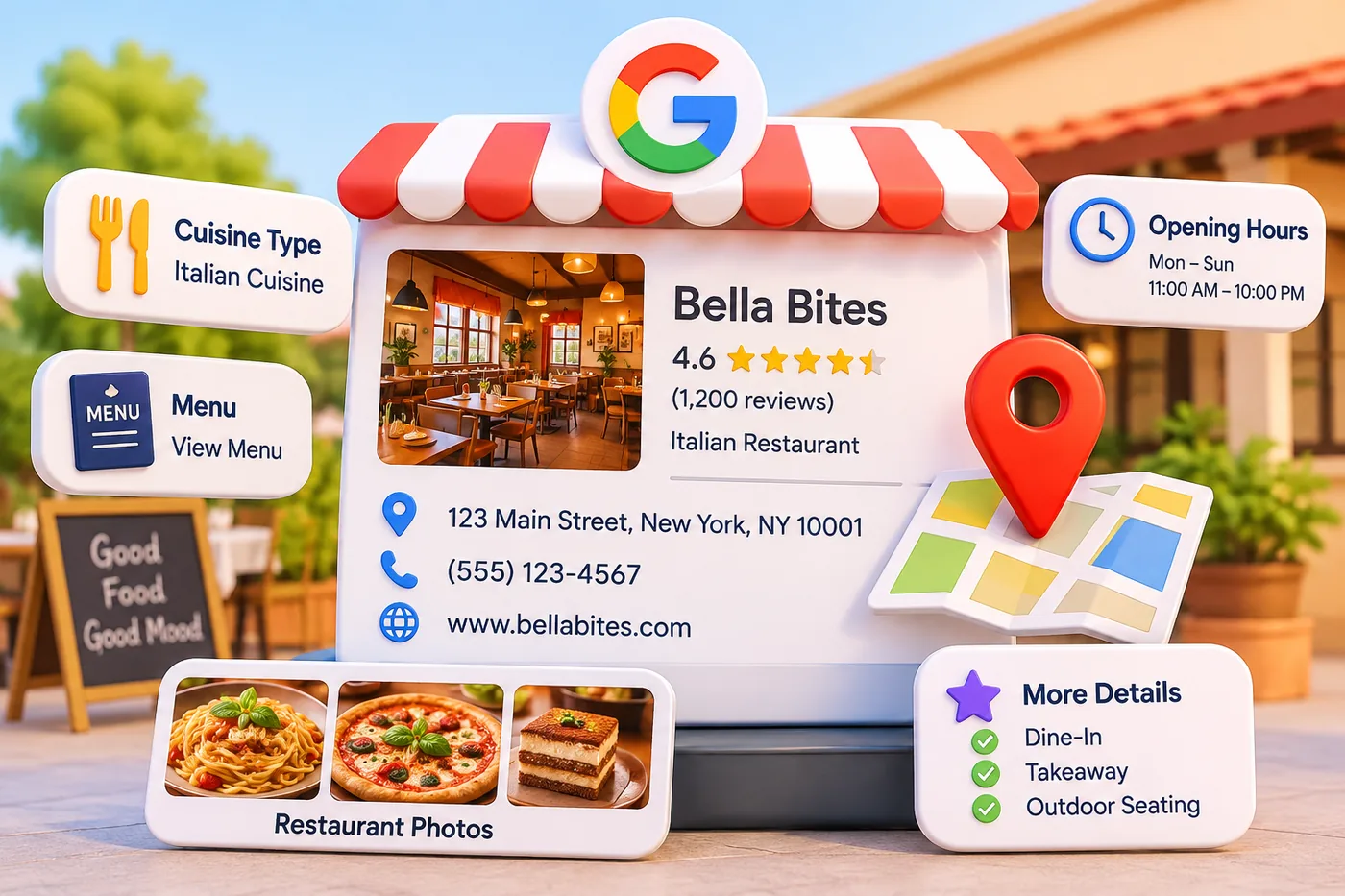
Why Local SEO Matters for Electrical Contractors
Local SEO helps electrical contractors capture urgent repairs, residential installations, and commercial contracts by securing top rankings in Google Maps and local search. Optimizing business categories, building service-specific landing pages, earning verified customer reviews, and tracking geo-grid visibility turns nearby searches into booked service calls.
Electrical contractors often rely on local customers to generate consistent business, but reaching those customers requires more than providing quality services. When homeowners or businesses search for an electrician nearby, they usually turn to Google to find reliable professionals. If your business does not appear in relevant search results, potential customers may choose a competitor instead.
This is where local SEO for electrical contractors becomes important. By improving your local search visibility, optimizing your Google Business Profile, and targeting relevant local keywords, you can make it easier for nearby customers to discover your services. A strong online presence for electricians also helps build credibility through customer reviews, accurate business listings, and useful website content.
With a platform like[Happy Rank](/), electrical contractors can monitorGoogle Maps rankings, track local visibility, and identify opportunities to improve their search performance. Consistent local SEO strategies can help turn online searches into valuable service inquiries.
How Local SEO Connects Electrical Contractors With Nearby Customers
Electrical contractors need to reach customers who are actively searching for electrical services in their service areas. Most homeowners and businesses prefer finding nearby professionals when they need wiring repairs, electrical installations, panel upgrades, or emergency assistance.Local SEO for electrical contractors helps businesses appear in relevant search results and connect with people who are more likely to need their services. By targeting location-based searches and improving online visibility, contractors can attract potential customers without relying entirely on traditional advertising.
How Customers Search for Electrical Services Locally
When people experience electrical problems, they often search online for immediate solutions. Their searches usually include specific services or location-based phrases, such as:
- Electrician near me
- Emergency electrical repair services
- Residential electrician in my area
- Commercial electrical contractors nearby
- Electrical panel installation services
These searches reveal what customers need and how urgently they need it. Someone searching for an emergency electrician may want immediate assistance, while someone looking for an electrical panel upgrade may compare multiple contractors before making a decision.
Understanding these search patterns helps contractors develop relevant local SEO keywords and create content that matches customer needs.
Why Appearing in Google Local Search Results Matters
Google displays local businesses through Google Maps and local search results when users look for nearby services. Appearing in these results gives electrical contractors an opportunity to reach customers who might not discover their websites through general searches.
The Google local pack is particularly important because it highlights relevant businesses with useful details, including contact information, customer reviews, locations, and directions. A well-maintained Google Business Profile for electricians can help potential customers evaluate available services and contact a contractor more easily.
Strong local search rankings can also improve opportunities for website visits, phone calls, and service inquiries. However, visibility alone does not guarantee new customers. Contractors must provide accurate business information and make it easy for people to take the next step.
How Local SEO Supports Different Electrical Services
Electrical contractors often provide multiple services, so their online presence should reflect the different needs of their customers. They can create dedicated website pages and optimize their business profiles for services such as:
- Residential electrical services:Wiring, lighting installation, and home electrical repairs.
- Commercial electrical services:Electrical maintenance, installations, and system upgrades.
- Emergency electrical services:Urgent troubleshooting and electrical fault repairs.
Using relevant service-based keywords alongside location information helps contractors reach more specific audiences. This makes electrician local SEO an effective way to connect with nearby customers searching for the exact electrical services a business provides.
How Google Business Profile Improves Local Visibility for Electricians
A well-optimized Google Business Profile helps electrical contractors appear when potential customers search for nearby electrical services. It provides essential business information directly in Google Search and Google Maps, making it easier for homeowners and businesses to discover available contractors. Since many customers compare local businesses before choosing an electrician, maintaining an accurate and informative profile can improve visibility and encourage more service inquiries. A complete Google Business Profile for electricians also gives contractors an opportunity to highlight their services, share business updates, and establish credibility with potential customers.
Building a Complete and Accurate Business Profile
Electrical contractors should begin by providing accurate and consistent business information. An incomplete profile may leave potential customers uncertain about service availability, business locations, or contact details.
Important profile elements include:
- Business name:Use the actual business name without adding unnecessary keywords.
- Business category:Select the most relevant primary category, such as Electrician.
- Phone number:Provide a working number that customers can use to request assistance.
- Business hours:Keep operating hours and holiday schedules updated.
- Service areas:Identify the locations where electrical services are available.
- Business description:Explain the company's experience, specialties, and available services.
These details help customers understand what the business offers and how to contact the contractor.
Using Services, Photos, and Updates to Attract Customers
A Google Business Profile allows contractors to showcase their electrical services and provide useful information before customers make contact. Listing individual services helps potential customers understand whether a contractor handles their specific requirements.
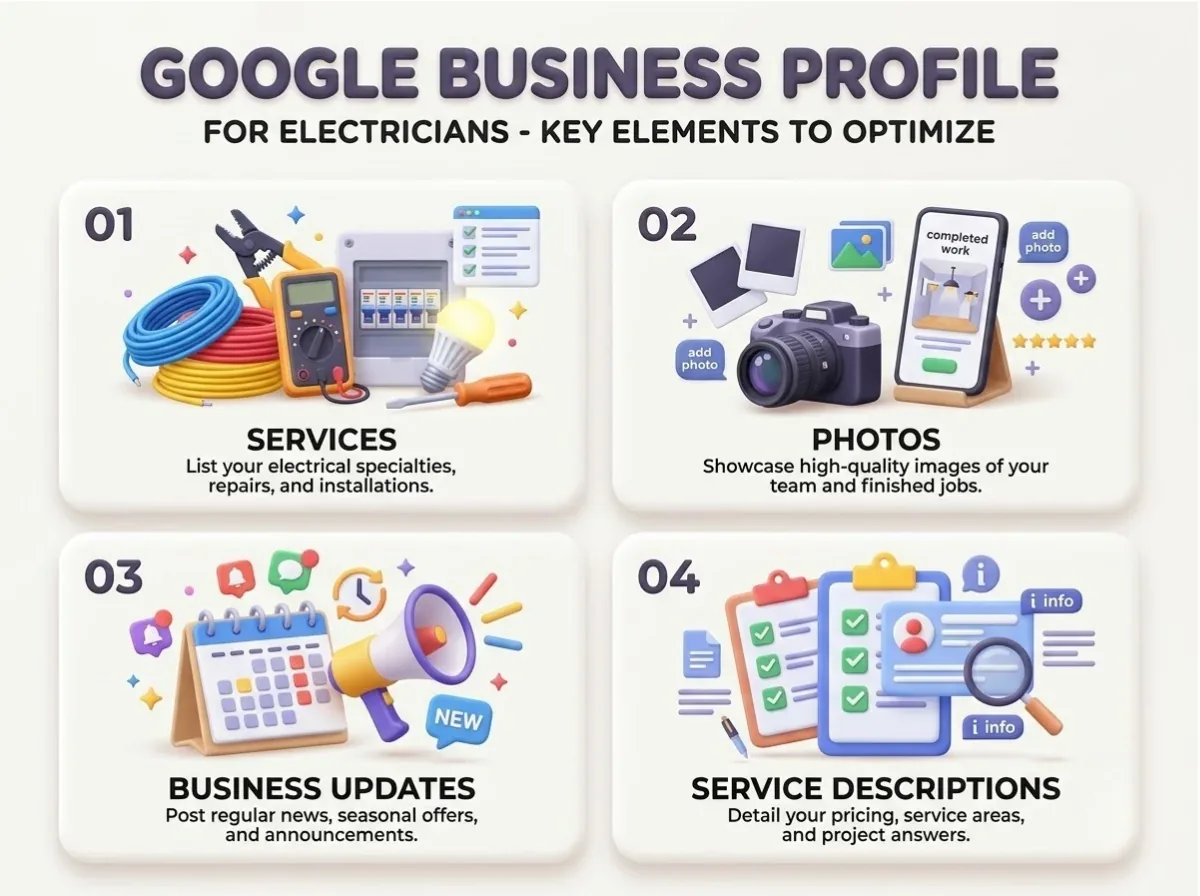
Adding genuine project photos can also help customers understand the quality and range of work a contractor performs. Regular updates keep the profile informative and relevant.
Maintaining Profile Accuracy and Customer Engagement
Creating a profile is only the first step. Electrical contractors should review their business information regularly to ensure that phone numbers, operating hours, and service areas remain accurate. They should also respond professionally to customer reviews and answer relevant questions whenever possible.
Consistent profile management supports a better customer experience and helps businesses maintain reliable information across online platforms. By keeping their profiles complete, updated, and engaging, contractors can strengthen their local search visibility and create more opportunities to connect with nearby customers.
How Local SEO Helps Electrical Contractors Generate More Qualified Leads
Improving online visibility is valuable, but electrical contractors also need to turn that visibility into actual service inquiries. Local SEO helps businesses reach people who are actively looking for electrical repairs, installations, maintenance, and other specialized services. By targeting relevant search terms and providing useful website information, contractors can attract visitors who are more likely to become customers. A focused local SEO strategy for electrical contractors connects search visibility with business opportunities by helping potential customers find the right services and take action.
Targeting High-Intent Local Keywords
Not every search represents the same customer requirement. Some people are researching electrical problems, while others are ready to hire a professional. Contractors should target keywords that reflect specific services and customer needs.
For example, searches such as "emergency electrician near me" indicate an immediate requirement, whereas "electrical panel upgrade cost" may come from someone comparing available options.
The following table highlights different keyword opportunities:
| **Keyword Type** | **Example Search Term** | **Customer Intent** |
|---|---|---|
| Emergency services | Emergency electrician near me | Immediate assistance |
| Residential services | Home wiring electrician | Residential electrical work |
| Commercial services | Commercial electrical contractor | Business electrical requirements |
| Installation services | Lighting installation near me | Hiring an installation professional |
| Repair services | Electrical outlet repair | Fixing an existing problem |
Using relevant local SEO keywords helps contractors attract visitors whose requirements match their available services.
Optimizing Service Pages for Local Search
A business website should clearly explain the electrical services it provides and the locations it serves. Instead of placing every service on one general page, contractors can create dedicated pages for residential wiring, electrical panel upgrades, lighting installations, and commercial maintenance.
Each page should include:
- A clear description of the electrical service.
- Relevant service-area information.
- Naturally incorporated location-based keywords.
- Contact details and an easy way to request an estimate.
- Useful information about the service process.
These elements improve the customer experience while supporting local website optimization. A mobile-friendly design is equally important because many customers search for electricians using smartphones.
Turning Local Website Traffic Into Service Inquiries
Attracting visitors is only part of lead generation. Contractors must make it simple for potential customers to contact them once they find the website. Clear phone numbers, click-to-call buttons, short contact forms, and visible appointment options can reduce barriers to inquiries.
For example, someone searching for an emergency electrical repair should be able to locate the contractor's phone number without navigating through multiple pages. Similarly, customers planning electrical upgrades should have a straightforward way to request estimates.
By combining relevant keywords, optimized service pages, and clear calls to action,local SEO for electricianscan help convert targeted website traffic into qualified leads and create more opportunities for business growth.
How Electrical Contractors Can Measure and Improve Local SEO Performance
Local SEO requires ongoing attention because search visibility, customer behavior, and competitor performance can change over time. Electrical contractors should regularly evaluate their optimization efforts to understand which strategies generate meaningful results. Tracking performance also helps identify areas that need improvement, whether it involves updating business information, improving website content, or targeting new service-related keywords. Using reliable local SEO tracking tools allows contractors to make informed decisions and maintain a stronger online presence.
Tracking Important Local SEO Metrics
Monitoring the right performance metrics helps electrical contractors understand how customers discover and interact with their businesses. Instead of focusing only on search rankings, contractors should evaluate actions that can lead to actual service inquiries.
Some important metrics include:
- Google Maps rankings:Shows how prominently a business appears in local map results.
- Local keyword rankings:Tracks visibility for searches related to electrical services and locations.
- Google Business Profile interactions:Measures profile views, website clicks, calls, and direction requests.
- Website traffic:Helps identify how many visitors reach the website through organic search.
- Conversion rate:Measures how many website visitors complete actions such as submitting contact forms or requesting estimates.
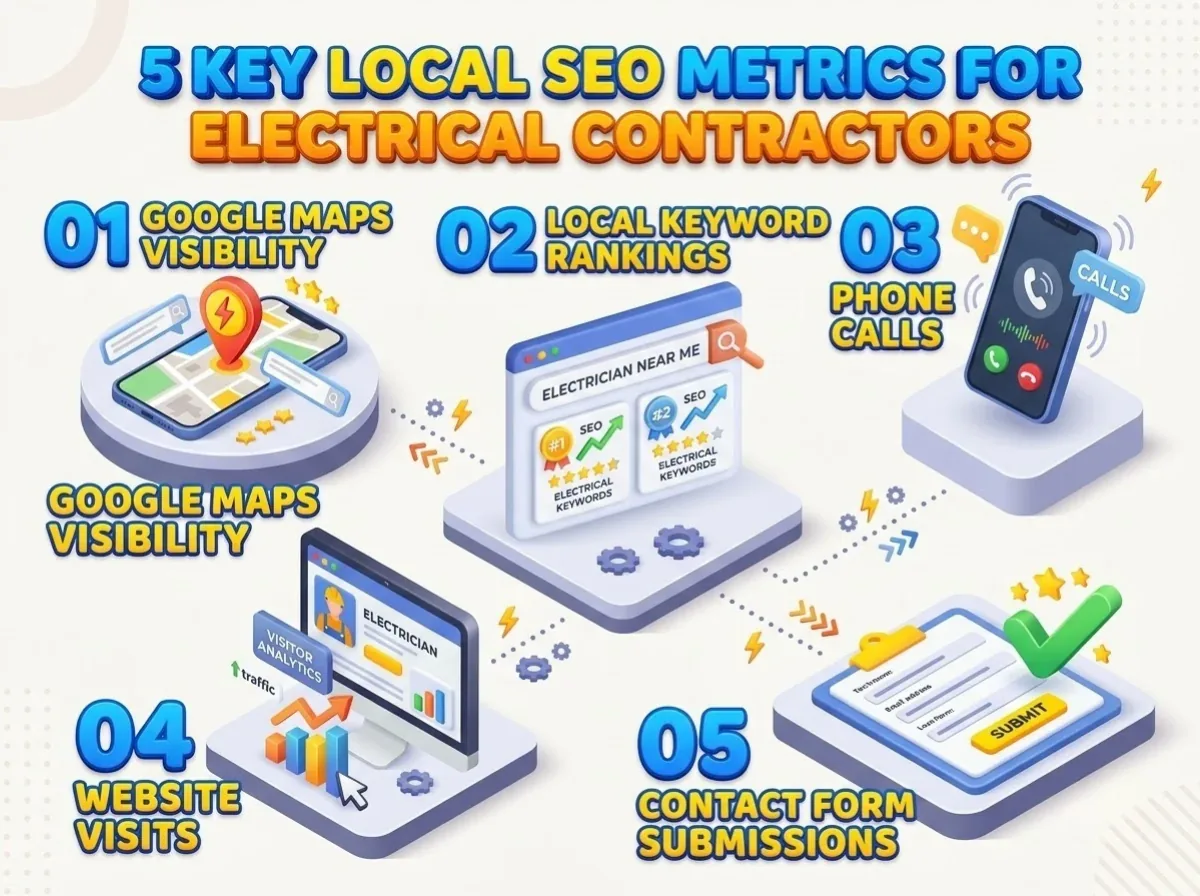
Reviewing these metrics regularly helps contractors understand whether their local SEO strategy is supporting business goals.
Monitoring Competitors in Local Search Results
Electrical contractors should also observe how competing businesses perform in their target service areas. Reviewing competitor Google Business Profiles, customer reviews, service pages, and website content can reveal opportunities to improve their own online presence.
For example, a competitor may receive more visibility because it has detailed service pages, accurate business information, or a stronger review profile. Contractors can use these observations to identify gaps and improve their optimization efforts without copying competing content.
Using Local SEO Tools to Manage Optimization
Managing rankings, business listings, reviews, and performance reports manually can become time-consuming.Local SEO software helps organize these activities and makes it easier to monitor changes across different locations.
By combining regular performance tracking with competitor monitoring and consistent improvements, electrical contractors can strengthen their local search presence and build a more reliable source of customer inquiries.
Conclusion
Local SEO plays an important role in helping electrical contractors connect with nearby customers, improve online visibility, and generate qualified service inquiries. From optimizing a Google Business Profile and building customer trust through reviews to targeting relevant keywords and creating location-specific service pages, every effort contributes to a stronger local presence.
However, maintaining visibility requires consistent monitoring and regular improvements. Tools like Happy Rank help electrical contractors track Google Maps rankings, monitor local search performance, and identify opportunities to improve their online presence.
By understanding performance metrics and keeping business information accurate, contractors can make better marketing decisions and reach more potential customers. A well-planned local SEO strategy not only helps electrical businesses compete in local search results but also creates more opportunities to attract customers, build lasting relationships, and support sustainable business growth.
When customers need reliable cleaning services, they often turn to Google Maps to find nearby providers, compare businesses, and evaluate customer feedback. For cleaning companies, appearing in relevant local cleaning searches creates opportunities to connect with people actively looking for residential or commercial cleaning solutions. Strong cleaning service visibility also helps businesses showcase their offerings, share essential contact details, and build credibility through genuine reviews.
However, simply having a Google Business Profile does not guarantee consistent customer inquiries. Companies need to maintain accurate business information, target relevant service areas, and monitor their local search performance. Understanding how Google Maps optimization supports customer discovery can help cleaning businesses develop a more effective approach to attracting local customers.
With tools like[Happy Rank](/), businesses can monitor Google Maps rankings, evaluate local search visibility, and identify opportunities to strengthen their presence in competitive service areas.
How Google Maps Connects Cleaning Companies With Local Customers
Google Maps helps cleaning companies connect with people searching for professional cleaning services in their area. By displaying relevant business information, customer reviews, service details, and contact options, it makes it easier for potential customers to discover and evaluate local providers. Understanding how customers use Google Maps can help cleaning businesses improve their visibility and attract relevant inquiries.
Understanding How Customers Discover Cleaning Services on Google Maps
When people need professional cleaning assistance, they often turn to Google Maps to find service providers operating nearby. Searches such as "house cleaning near me," "commercial cleaning services," and "deep cleaning companies" help customers discover businesses that match their location and requirements. For cleaning businesses, appearing in these results creates opportunities to connect with people actively looking for cleaning solutions.
Google Maps for cleaning companies does more than display business locations. It gives potential customers access to essential information, including operating hours, contact details, service descriptions, website links, and customer reviews. These details help people compare providers before deciding whom to contact. A complete and accurate profile also creates a professional first impression and makes it easier for customers to evaluate available services.
Identify Different Types of Local Cleaning Searches
Not every customer searches for the same type of cleaning service. Understanding different search intentions helps businesses present relevant offerings and attract suitable inquiries.
Cleaning companies serve customers with different requirements, from routine household maintenance to specialized commercial cleaning. The following table highlights common cleaning services, related searches, and what potential customers expect.
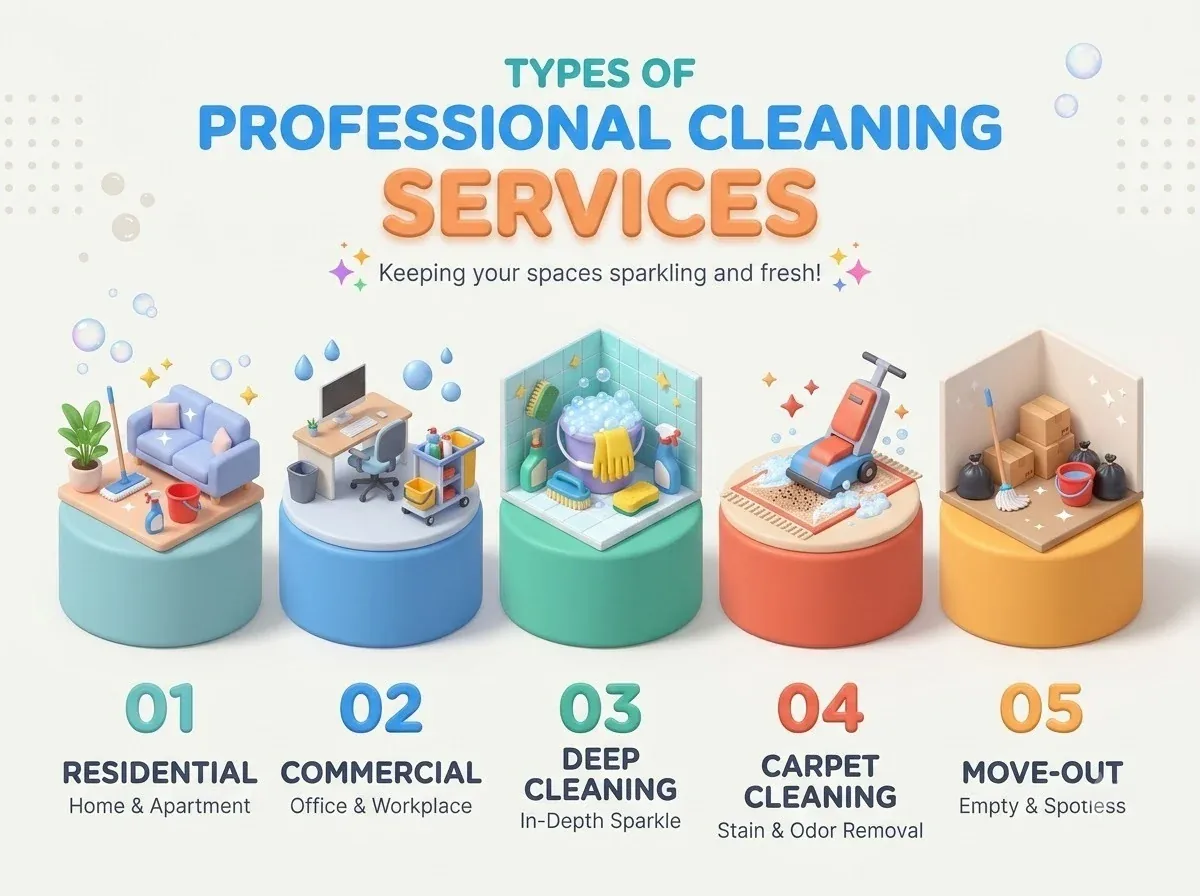
By highlighting these services in their Google Business Profile, cleaning companies can make their offerings easier to understand and connect with customers searching for specific cleaning solutions in their area.
Understand the Factors That Influence Customer Decisions
Finding a cleaning company on Google Maps is only the first step. Customers also evaluate whether a business meets their expectations before making contact. Several factors influence their decisions:
- Business location and service availability:Customers generally prefer providers who serve their neighborhood or business location. Clearly defined service areas communicate where a company operates.
- Customer reviews and ratings:Genuine feedback gives potential customers an idea of service quality, reliability, and professionalism.
- Business information and contact accessibility:Accurate phone numbers, operating hours, service descriptions, and website links make it easier to request estimates or ask questions.
These elements contribute to local search visibility and help cleaning businesses establish credibility. An optimized Google Business Profile for cleaning services supports customer discovery and creates opportunities to generate more cleaning service leads. Consistent attention to these details can help businesses compete more effectively in local search results.
Build Customer Trust Through Reviews, Photos, and Business Reputation
Customer trust plays an important role in choosing a cleaning service. Reviews, business photos, and professional responses help potential customers understand a company's service quality and reliability before making a booking.
Strengthen Your Cleaning Company's Reputation on Google Maps
Choosing a cleaning company often involves more than comparing prices and service lists. Customers want to know whether a provider is dependable, professional, and capable of delivering satisfactory results. Google Maps helps them evaluate these qualities through customer reviews, business photos, ratings, and profile information. For cleaning companies, maintaining a positive online presence can make a difference when potential customers compare local providers.
A strong online business reputation also helps customers make informed decisions by providing useful information about other people's experiences. Although reviews alone do not guarantee better rankings, genuine customer feedback can help businesses establish credibility and encourage more inquiries.
Develop a Consistent Approach to Collecting Customer Reviews
Customer reviews provide valuable insight into the quality of cleaning services. Businesses can encourage customers to share honest feedback after completing an appointment. A simple follow-up message with a direct Google review link makes the process convenient.
Cleaning companies should focus on collecting genuine feedback rather than requesting only positive comments. They should also avoid offering discounts, gifts, or other incentives in exchange for reviews. Consistent feedback helps potential customers understand what to expect before booking a service.
Respond to Customer Reviews and Manage Feedback
Responding to reviews shows that a cleaning company values customer experiences. Professional responses can strengthen relationships and demonstrate accountability.
- Acknowledge positive feedback:Thank customers for sharing their experiences and recognize specific aspects of the service they appreciated.
- Address negative reviews:Respond calmly, acknowledge the concern, and explain how the business can address the issue.
- Maintain professional communication:Keep responses helpful, respectful, and focused on resolving customer concerns.
These practices support customer engagement and help maintain a professional Google Business Profile for cleaning services.
Showcase Cleaning Results Through Relevant Visual Content
Photos give potential customers a better understanding of a cleaning company's work. Genuine images of completed projects, equipment, and service activities can make a business profile more informative and engaging.
| **Photo type** | **What it communicates** | **Customer benefit** |
|---|---|---|
| Before-and-after photos | Visible cleaning results | Helps evaluate service quality |
| Completed cleaning projects | Finished residential or commercial work | Builds confidence |
| Cleaning equipment | Tools used during service | Demonstrates preparedness |
| Team and workplace photos | Business operations and staff | Creates familiarity |
Businesses should upload clear, authentic images and obtain appropriate permission before sharing customer property photographs.
A combination of genuine reviews, professional responses, and relevant images creates a more informative online presence. By consistently managing these elements, cleaning companies can strengthen customer trust, improve their online reputation, and encourage potential customers to consider their services.
Improve Google Maps Visibility Across Your Cleaning Service Areas
Cleaning companies often serve multiple neighborhoods, towns, or commercial districts. Reaching customers across these locations requires more than creating a business profile. Businesses need to establish their relevance in the areas they genuinely serve and provide useful information that matches local search requirements. A focused local SEO strategy can help improve Google Maps visibility and make cleaning services easier for nearby customers to discover.
Target Location-Specific Keywords for Cleaning Services
Customers frequently include location names when searching for cleaning providers. For example, someone might search for "house cleaning services in Austin" or "commercial cleaners near downtown." Including relevant location-based keywords in website content helps search engines understand which services and locations a business covers.
Cleaning companies can use these keywords naturally in service pages, website headings, and relevant business descriptions. They should also create useful content around specific services, such as residential cleaning, office maintenance, and carpet cleaning. Each page should provide genuine information about the services available in that location rather than repeating similar content with different city names.
Strengthen Local SEO Through Consistent Business Information
Consistent business information helps customers identify and contact the correct cleaning company. Differences in business names, phone numbers, or addresses across online platforms can create confusion.
Companies should review their listings and maintain accurate details across relevant directories and business platforms. Important information includes:
- Business name and contact details:Use consistent and accurate information across online listings.
- Service area information:Clearly communicate the neighborhoods and locations the company serves.
- Local citations:Maintain relevant business listings across trustworthy directories.
- Website information:Ensure contact details and service descriptions match the business profile.
These practices support local business credibility and help maintain accurate accurate local business listings
Develop Location-Relevant Content for Different Cleaning Services
Creating useful location-specific website content helps cleaning companies address the needs of different customer groups. Rather than relying on one general service page, businesses can organize their content around their main cleaning services and operating locations.
| **Content type** | **Example topic** | **Purpose** |
|---|---|---|
| Residential cleaning page | House cleaning services in Austin | Reach local homeowners |
| Commercial cleaning page | Office cleaning in downtown Austin | Attract business customers |
| Specialized service page | Carpet cleaning in North Austin | Target specific service searches |
| Location guide | Cleaning services available in nearby neighborhoods | Explain service coverage |
Each page should contain original details about service availability, customer requirements, and the solutions offered. Avoid creating multiple nearly identical pages simply to target different locations.
By combining relevant keywords, consistent business details, and useful location-based content, cleaning companies can strengthen their local search presence. These efforts help search engines understand their service coverage while making it easier for potential customers to find suitable cleaning providers.
Track Google Maps Performance and Convert Visibility Into Customer Leads
Improving Google Maps visibility is important, but cleaning companies also need to understand whether their efforts are reaching potential customers. Monitoring performance helps businesses identify which locations generate attention, which services attract interest, and where improvements may be necessary. By tracking relevant local SEO performance metrics, cleaning companies can make informed decisions and develop a more effective approach to attracting new customers.
Measure the Effectiveness of Your Google Maps Strategy
Google Business Profile provides performance information that helps businesses understand how customers discover and interact with their listings. Reviewing these insights regularly can reveal whether profile optimization and local SEO activities are generating meaningful engagement.
Some important metrics cleaning companies should monitor include:
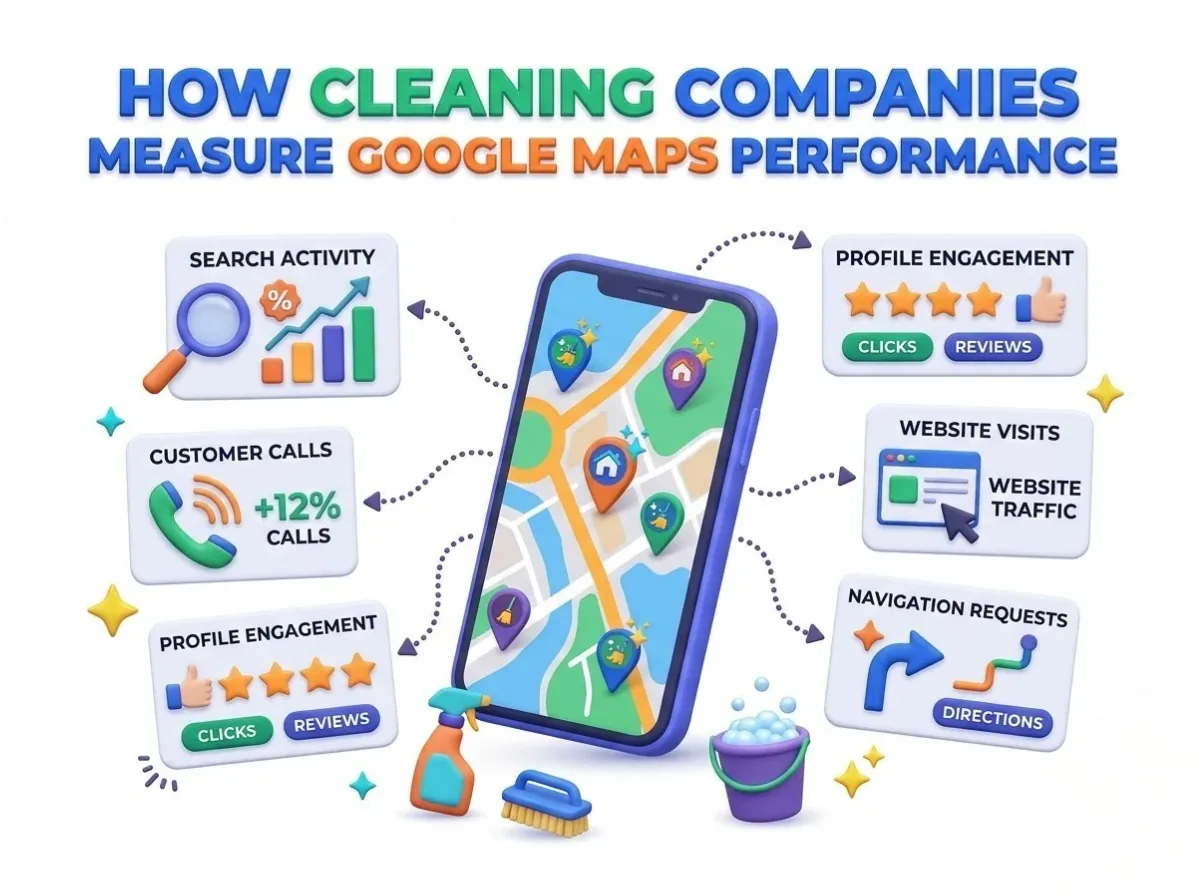
These customer engagement metrics provide useful insights into how people interact with a cleaning company's online presence. Businesses can use this information to identify customer interests and evaluate their local marketing efforts.
Identify Local Ranking Gaps and Competitor Opportunities
Monitoring rankings across different service areas helps cleaning companies understand where their businesses appear in local search results. A company may perform well in one neighborhood but receive limited visibility in another. Checking local keyword rankings across multiple locations can reveal these differences.
Businesses should also review competitor profiles to understand how other cleaning providers present their services, collect customer reviews, and maintain business information. This comparison can highlight opportunities to improve service descriptions, strengthen online reputation, or target relevant search terms.
Turn Local Search Visibility Into Qualified Customer Inquiries
Visibility becomes more valuable when potential customers take action. Cleaning companies should make it simple for interested people to contact them after discovering their business on Google Maps.
- Provide clear service information:Explain available cleaning solutions and service coverage.
- Make contact details accessible:Keep phone numbers, website links, and business hours accurate.
- Respond promptly:Handle calls and customer inquiries professionally.
- Simplify booking inquiries:Make it easy for customers to request estimates or discuss their cleaning requirements.
Regularly reviewing Google Maps performance,local search visibility, and customer inquiries helps cleaning companies understand what is working and where to focus their efforts. This approach supports better decision-making and creates more opportunities to convert local searches into cleaning service customers.
Conclusion
Google Maps gives cleaning companies an effective way to connect with nearby customers searching for residential and commercial cleaning services. Maintaining an optimized Google Business Profile, collecting genuine customer reviews, sharing relevant photos, and targeting service areas can improve local visibility and build customer trust. However, attracting consistent inquiries also requires businesses to monitor their performance and identify opportunities for improvement.
This is where[Happy Rank](/)can help cleaning businesses. By tracking Google Maps rankings, monitoring local search visibility, and evaluating performance across different locations, businesses can better understand how customers discover their services and where they need to improve. Combining these insights with consistent profile management and relevant local SEO practices helps cleaning companies strengthen their online presence. With a focused approach to local customer acquisition, businesses can reach more potential customers, generate meaningful inquiries, and build stronger relationships within their service areas.
Independent restaurants often compete with popular dining chains and established food businesses for attention in local search results. When customers search for places to eat nearby, they usually compare menus, reviews, locations, and ratings before deciding where to dine. This makes local SEO for independent restaurants essential for attracting nearby customers and building a stronger online presence.
By improving Google Business Profile for restaurants, targeting relevant local restaurant keywords, and maintaining accurate business information, restaurant owners can increase their chances of appearing in Google Search and Maps. However, improving visibility requires consistent effort and performance monitoring.
Tools like[Happy Rank](/)help restaurant owners track Google Maps visibility, monitor local restaurant rankings, and understand how their business performs against nearby competitors. With the right restaurant SEO strategy, independent restaurants can reach more potential diners, generate customer inquiries, and turn online searches into meaningful visits.
Build a Strong Local Search Foundation for Your Restaurant
Independent restaurants need more than a menu and contact page to attract customers through search engines. Their websites and online business listings should make it easy for potential diners to understand what they offer, where they are located, and how to visit. A strong local search presence starts with accurate business information, a user-friendly website, and clear details about the restaurant's services. These basics also help search engines understand the business and connect it with relevant local restaurant searches.
Create a Website That Supports Local Restaurant Searches
A restaurant website should give visitors quick access to the information they need before choosing where to eat. Start with a mobile-friendly design that makes browsing comfortable on smartphones and tablets. Include essential pages such as Home, Menu, About Us, Contact, and Reservations.
Make sure your restaurant's address, phone number, opening hours, and location details are easy to find. Add clear buttons for reservations, online orders, and directions. You can also use descriptive page titles such as "Italian Restaurant in [City]" to support relevant restaurant search visibility.
Maintain Consistent Restaurant Information Across Online Directories
Your restaurant's business information should remain consistent wherever customers find it online. Start by checking your NAP (Name, Address, Phone Number)details across your website, Google Business Profile, social media accounts, and online directories.
Pay attention to small differences, such as abbreviations in street names, outdated phone numbers, or incorrect postal codes. Update old listings whenever business information changes. Consistent online business listings make it easier for customers to identify and contact your restaurant.
Add Restaurant-Specific Structured Data to Your Website
Restaurant schema markup helps search engines understand important details about your business. It provides structured information about your restaurant, making it easier for search engines to interpret relevant website content.
A complete Google Business Profile helps potential customers find and learn about your restaurant. Make sure your profile includes essential information, such as your restaurant name, contact details, location, cuisine, menu, operating hours, and high-quality photos. Accurate and updated details make it easier for nearby diners to discover your restaurant and decide whether to visit.
Using the appropriate LocalBusiness structured data and the more specific Restaurant type can help search engines understand your business information.
Make Your Restaurant Website Easy to Navigate
A well-organized website helps visitors find information without unnecessary effort. Keep your navigation simple and make important pages accessible from the main menu. Link relevant pages together so visitors can move easily between your menu, location, and reservation options.
For example, someone browsing your dinner menu should be able to find the reservation page without returning to the homepage. These improvements create a better user experience, support website usability, and make it easier for potential diners to take the next step.
A strong local search foundation gives independent restaurants a better starting point for improving online discovery. Once your website and business information are properly organized, you can focus on optimizing your Google Business Profile to reach more nearby customers.
Optimize Your Google Business Profile for More Visibility
When people search for restaurants nearby, Google often displays business profiles alongside map results. These listings help potential diners compare restaurants, check operating hours, explore food photos, and find directions before deciding where to eat. For independent restaurants, an optimized Google Business Profile(GBP)can improve local discovery and make essential business information easier to access. Keeping the profile complete, accurate, and engaging also helps customers make informed dining decisions.
Choose the Right Primary and Secondary Business Categories
Your restaurant's business categories help Google understand what type of food business you operate. Choose the most accurate primary category that describes your restaurant's main offering. For example, an Italian restaurant should select an appropriate Italian restaurant category rather than a general business category.
You can also add relevant secondary categories to describe additional services or specialties. A restaurant offering pizza, pasta, and dine-in services may qualify for other relevant categories based on its actual operations. Avoid selecting unrelated categories simply to appear in more searches. Accurate Google Business Profile categories help connect your restaurant with relevant customer searches.
Complete Your Restaurant Profile With Accurate Information
An incomplete business profile can leave potential customers without important details. Fill out every relevant section and make sure the information matches your website and other online listings.
Pay attention to these details:
- Business name:Use your restaurant's actual business name.
- Address and phone number:Provide accurate contact and location information.
- Opening hours:Include regular and holiday operating hours.
- Menu link:Direct customers to your current food and beverage menu.
- Reservation link:Make it easy for diners to book a table.
- Dining attributes:Highlight available options such as outdoor seating, takeaway, and delivery.
Accurate restaurant business information helps customers know what to expect before visiting.
Use High-Quality Food and Restaurant Photos
Visual content plays an important role when customers compare dining options. Upload clear, authentic photographs of popular dishes, restaurant interiors, outdoor seating, and the storefront. These images give potential diners a better understanding of your food and atmosphere.
Update your Google Business Profile photos regularly, especially when introducing seasonal menus, new dishes, or changes to your dining space. Choose well-lit images that accurately represent the restaurant rather than relying on heavily edited visuals.
Publish Google Business Profile Posts for Restaurant Updates
Use Google Business Profile posts to share seasonal menus, upcoming events, special dishes, and important announcements. Add relevant photographs, short descriptions, and clear calls to action where appropriate. Regular updates help customers discover what's happening at your restaurant and encourage them to explore your offerings.
An actively maintained profile makes your restaurant easier to evaluate online. By keeping information accurate and sharing useful updates, you can strengthen your local search visibility and help more nearby diners consider visiting.
Use Local Keywords to Reach Nearby Diners
Appearing in local search results depends partly on understanding the phrases potential customers use when looking for places to eat. Someone searching for an Italian restaurant nearby has a different requirement from someone looking for an affordable family dining experience. Independent restaurants can attract more relevant visitors by targeting local restaurant keywords that reflect their cuisine, location, and dining options. A focused restaurant keyword research strategy helps connect website content with customer search intent and improves opportunities to appear in relevant local searches.
Find Keywords Based on Cuisine, Location, and Dining Intent
Start by identifying the terms customers are likely to use when searching for your restaurant. Consider your cuisine, neighborhood, signature dishes, and the dining experiences you offer. Include both general restaurant searches and specific phrases that indicate what customers want.
For example:
| **Keyword type** | **Search keyword example** | **Customer intent** |
|---|---|---|
| Cuisine-based | Italian restaurant near me | Finding a specific cuisine |
| Location-based | Best restaurant in [city] | Discovering nearby dining options |
| Budget-based | Affordable family restaurant near me | Finding budget-friendly meals |
| Food-specific | Best seafood restaurant in [city] | Searching for a particular food |
| Experience-based | Romantic dinner restaurants near me | Finding a suitable dining atmosphere |
Use keyword research tools and search suggestions to identify relevant variations. Focus on phrases that match your actual offerings rather than targeting unrelated high-volume searches.
Optimize Website Pages With Relevant Restaurant Keywords
Once you identify relevant search terms, incorporate them naturally into your website content. Add primary and secondary keywords to page titles, meta descriptions, headings, and relevant descriptions. Your homepage can target the restaurant's main cuisine and location, while dedicated menu pages can focus on specific food categories.
For example, a Mexican restaurant can use phrases such as Mexican restaurant in [city]and authentic Mexican food near me where they fit naturally. Avoid repeating the same keyword unnecessarily. The goal is to create useful content that answers customer questions while supporting restaurant website optimization.
Create Location-Focused Content Around Local Dining Interests
Your blog can help attract customers searching for local food experiences. Publish useful articles about seasonal menus, neighborhood food events, popular dining occasions, and local cuisine preferences. You could also create content highlighting special dishes or explaining how your restaurant prepares its signature meals.
Include relevant local dining keywords and link articles to appropriate menu or reservation pages. This creates useful connections between your content and the services you offer.
Optimize Menu Pages for Specific Food Searches
Menu pages should do more than display dish names and prices. Organize food items into clear categories, use descriptive dish names, and include short explanations of ingredients or preparation methods where useful. Keep menu details updated and make the page easy to browse on mobile devices.
A well-optimized menu helps customers understand your offerings while improving your chances of appearing in relevant food-related local searches. Combining keyword research with useful website content makes it easier for nearby diners to discover your restaurant.
Strengthen Local Trust Through Reviews and Local Content
Customers often look beyond menus and food photographs when deciding where to eat. They also consider other diners' experiences, restaurant reputation, and the business's connection to the local community. Independent restaurants can build credibility by encouraging honest customer feedback, maintaining active communication, and creating content that reflects local interests. These activities support local brand awareness, strengthen customer relationships, and contribute to a more recognizable online presence. A consistent approach to online reputation management can also help restaurants stand out when potential diners compare nearby options.
Encourage Customers to Share Honest Restaurant Reviews
Customer reviews provide useful information about food quality, service, cleanliness, and the overall dining experience. Encourage satisfied customers to share honest feedback on Google after their visit. You can make the process easier by displaying a Google review QR code on receipts, table cards, or takeaway packaging.
Keep review requests polite and voluntary. Avoid offering discounts, free meals, or other incentives in exchange for positive reviews. Consistently collecting genuine feedback helps build a more authentic restaurant online reputation and gives potential customers useful insights when choosing where to dine.
Respond to Positive and Negative Reviews Professionally
Responding to reviews shows customers that your restaurant values their experiences. Thank people who share positive feedback and acknowledge specific details they mention about your food or service.
Negative reviews also deserve attention. Instead of becoming defensive, acknowledge the concern, apologize when appropriate, and offer a constructive response. For example, if a customer mentions a long waiting time, explain how your team is working to improve service efficiency.
Monitor recurring comments to identify areas that need attention. Professional Google review management can strengthen customer relationships while helping restaurants understand expectations and improve their dining experience.
Build Local Authority Through Community Partnerships
Independent restaurants can strengthen their local presence by participating in neighborhood activities and building relationships with nearby businesses. Consider collaborating with local food bloggers, event organizers, community groups, and complementary businesses.
Some practical opportunities include:
- Participating in neighborhood food festivals and community events.
- Partnering with nearby businesses for relevant promotions.
- Sponsoring local gatherings or charitable activities.
- Inviting local food bloggers to experience your restaurant.
- Earning genuine mentions and backlinks from relevant local websites.
These activities can increase local brand awareness, create referral opportunities, and support your restaurant's online credibility.
Use Social Media and Food Content to Support Local Discovery
Share engaging content that highlights signature dishes, seasonal menus, kitchen activities, and special restaurant events. Use relevant location tags and local references to help nearby audiences recognize your business. Encourage customers to tag your restaurant when sharing their dining experiences.
Maintain consistent business details across social media and your website. While social engagement does not directly guarantee higher search rankings, an active presence can increase brand recognition and encourage more people to discover your restaurant.
Building trust requires consistent communication and genuine customer relationships. Combined with useful local content, these efforts can make your restaurant more recognizable and appealing to nearby diners.
Track Local SEO Performance and Improve Your Strategy
Implementing local SEO activities is only part of improving your restaurant's online presence. You also need to understand which efforts are generating visibility and encouraging potential customers to visit. Regular performance tracking helps independent restaurant owners identify successful strategies, recognize areas that need improvement, and make informed marketing decisions. By monitoring local SEO performance, you can understand how customers discover your restaurant and whether your optimization efforts are supporting business growth.
Monitor Important Local SEO Performance Metrics
Start by tracking metrics that show how your restaurant performs across Google Search and Maps. Google Business Profile performance data and website analytics can help you understand customer interactions and identify opportunities for improvement.
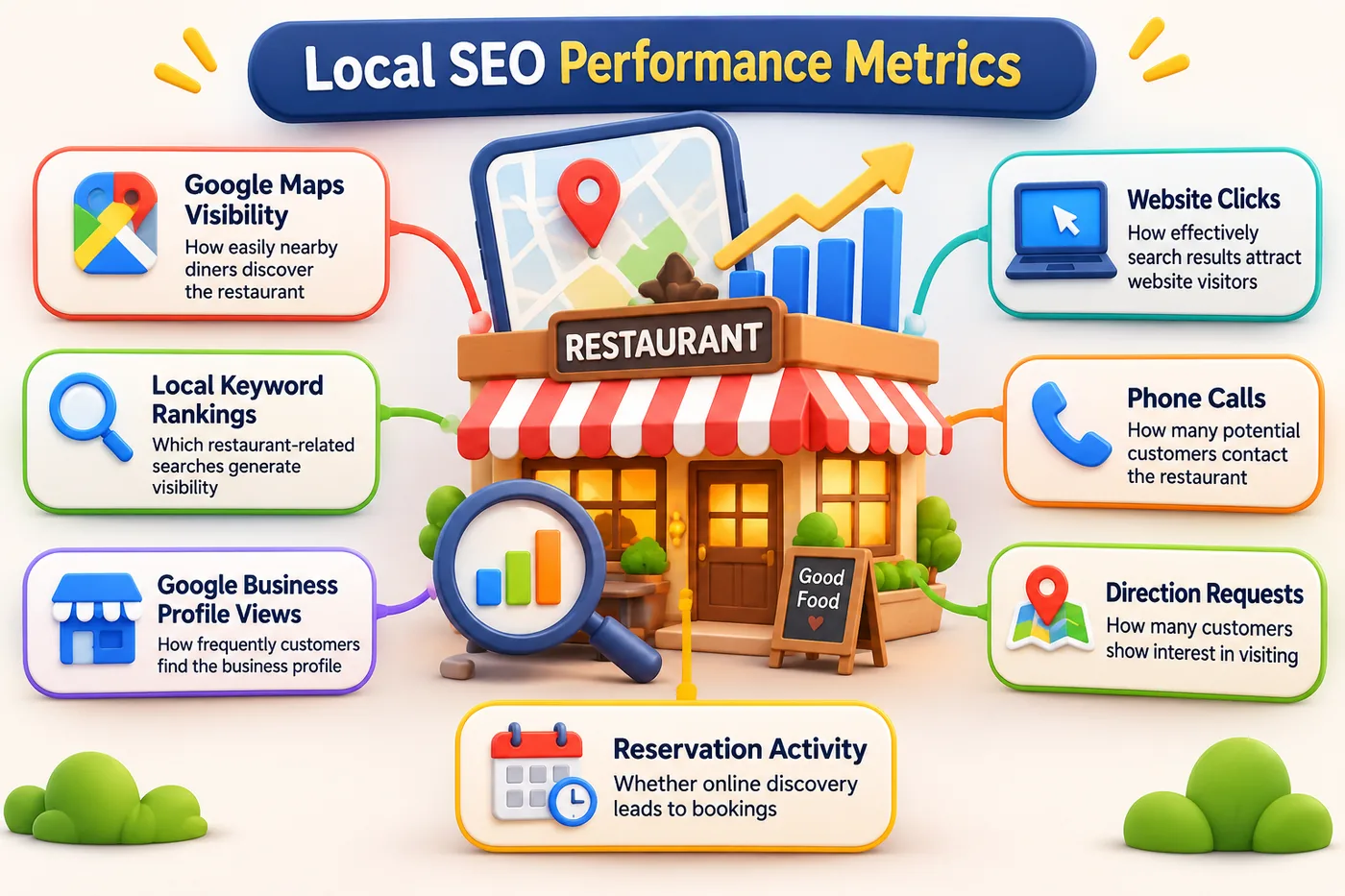
Review these metrics regularly instead of focusing on rankings alone. Customer actions provide additional context about how well your restaurant SEO strategy supports business goals.
Analyze Competitor Rankings in Nearby Areas
Independent restaurants should understand how competing businesses appear in local search results. Identify nearby restaurants offering similar cuisines, dining experiences, or price ranges. Compare their Google Maps visibility, business categories, customer reviews, photographs, and website content.
Pay attention to neighborhoods where competitors consistently appear in relevant searches. These observations can reveal opportunities to improve your own local restaurant rankings. For example, if competing restaurants receive visibility for specific cuisine-related searches, consider whether your website and business profile clearly communicate similar offerings.
Use Local SEO Reporting to Identify Performance Gaps
Regular reporting helps you understand whether your optimization activities are producing meaningful improvements. Review keyword ranking reports, Google Business Profile performance, and competitor activity to identify changes over time.
Tools like Happy Rank help restaurant owners monitor Google Maps rankings, track local search visibility, and understand how their business performs across different areas. These insights can help identify locations and search terms that need additional attention.
Update Your Local SEO Strategy Based on Results
Use performance insights to make practical improvements. Update outdated business information, improve underperforming website pages, refresh menu content, and address recurring customer feedback. If certain searches generate visibility but few customer interactions, review whether your website and business profile provide the information diners need.
Consistent monitoring and adjustments help independent restaurants maintain a stronger local search presence. By measuring results and responding to performance changes, restaurant owners can make their local SEO efforts more effective over time.
Conclusion
Building a strong local search presence takes consistent effort, but independent restaurants can make meaningful progress by focusing on the right strategies. From optimizing your website and Google Business Profile to targeting relevant local restaurant keywords, managing customer reviews, and creating useful local content, every improvement helps potential diners discover your business. Tracking Google Maps visibility, monitoring competitor activity, and reviewing customer engagement also help identify opportunities to strengthen your online presence.
Managing these activities becomes easier with the right tools.[Happy Rank](/)helps restaurant owners monitor local search rankings, track Google Maps visibility, and understand how their business performs against nearby competitors. These insights support better decisions and more focused optimization efforts. With a consistent restaurant local SEO strategy, independent restaurants can improve their online discoverability, attract nearby diners, and turn local searches into more opportunities for reservations and restaurant visits.
Frequently asked questions
Why is local SEO critical for electrical contractors?
Homeowners and business managers search locally when facing electrical hazards, panel upgrades, or lighting projects. Appearing at the top of local pack results captures these high-value leads.
Which Google Business Profile categories should electricians choose?
Set 'Electrician' as your primary category. Add relevant secondary categories such as 'Electrical installation service' or 'Lighting contractor' only if you actively perform those services.
How can electricians rank for emergency electrical calls?
Create a dedicated 24-hour emergency electrical page with clear click-to-call buttons, mention emergency availability in your GBP services, and maintain fast response times.
Why do electrical websites need separate pages for each service area?
Location-specific pages allow you to rank for neighboring towns and suburbs without diluting your main site's focus or confusing search engines.
How do geo-grid rank trackers help electrical businesses?
Geo-grids visualize your exact rank at coordinates across your entire service territory, revealing where competitors outrank you and where to focus content efforts.