
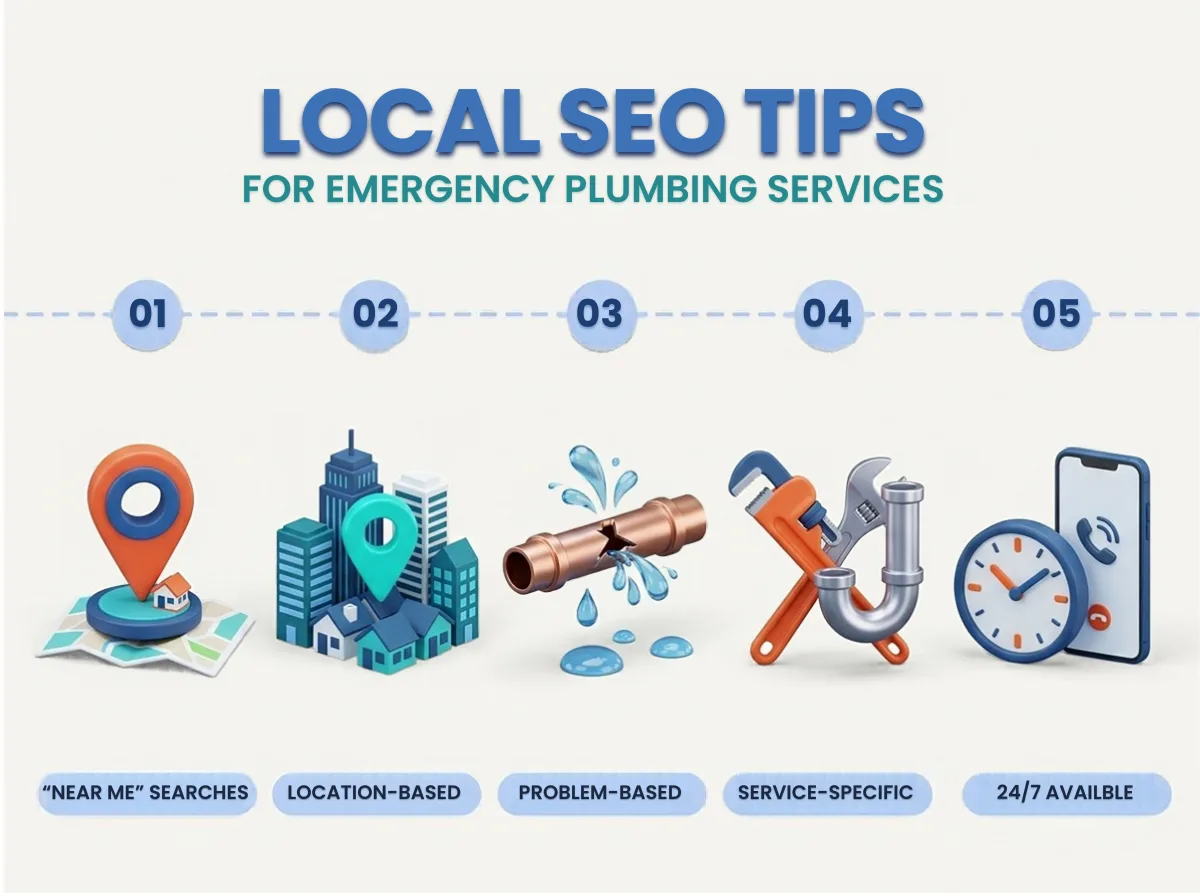
Local SEO Tips for Emergency Plumbing Services
Emergency plumbers improve local SEO by keeping their Google Business Profile accurate, with specific categories, listed emergency services, correct hours and realistic service areas. Build a dedicated page for each urgent service with a click-to-call button, keep the site fast on mobile, earn genuine reviews, keep listings consistent, and track rankings and calls across the service area.
Emergency plumbing problems rarely happen at a convenient time. A burst pipe, overflowing drain, or sudden water leak can send homeowners searching for an emergency plumber near me who can respond quickly. For plumbing businesses, appearing in those local search results can make the difference between gaining a new customer and losing the opportunity to a competitor. That is where local SEO for emergency plumbers becomes essential. A strong local SEO strategy helps plumbing companies improve their Google Maps visibility, reach nearby customers, and attract more relevant service inquiries. From optimizing a Google Business Profile to targeting local plumbing keywords, earning genuine customer reviews, and improving website performance, every step helps potential customers find and trust your business. However, maintaining strong local visibility requires consistent effort and performance tracking. Tools like Happy Rank help businesses monitor local search rankings, identify visibility gaps, and understand where improvements may be needed. With the right approach, emergency plumbing companies can strengthen their local presence and connect with customers when they need professional help the most.
Optimize Your Google Business Profile for Emergency Searches
When someone discovers a burst pipe or a serious water leak, they usually want a plumber who serves their area and can respond as soon as possible. I recommend starting local SEO with your Google Business Profile because it gives potential customers essential information about your business directly in Google Search and Google Maps. A complete, accurate profile can help customers understand what you do, where you operate, and how to contact you.
Choose the Right Business Categories and Services
Your business category helps Google understand what type of service you provide. I suggest choosing the most specific primary category that accurately represents your plumbing business, then adding relevant secondary categories only when they genuinely apply. You should also list the services you offer so customers can quickly determine whether you can handle their plumbing emergency. For example, your profile may include services such as:
- Emergency plumbing services for urgent residential plumbing problems.
- Burst pipe repair to address damaged pipes and water leaks.
- Emergency drain cleaning for severe drain blockages.
- Water heater repair for eligible urgent heating and hot water problems.
- Leak detection and repair to help locate and resolve plumbing leaks.
Keep your service information accurate and avoid adding unrelated categories just to target more keywords. Google's Business Profile guidelines recommend using a small number of relevant categories that best describe your business.
Keep Business Hours and Contact Information Accurate
Imagine a homeowner searching for a 24-hour plumber near me at midnight. If your profile displays outdated hours or an incorrect phone number, you could lose that inquiry before the customer even visits your website. I recommend reviewing your business information regularly, particularly if your emergency availability changes. Make sure your phone number connects customers directly to your business, your website is working, and your regular and holiday hours are accurate. If you provide round-the-clock emergency service, communicate that availability clearly. However, never advertise 24/7 availability if customers cannot actually reach a plumber outside regular business hours.
Improve Your Profile With Photos and Regular Updates
A complete profile should give potential customers a clearer picture of your business. I recommend uploading genuine photos of your service vehicles, plumbing equipment, team members, and completed projects. These images help people recognize your business and understand the work you perform. You can also share relevant updates about seasonal plumbing concerns, available services, and helpful maintenance advice. Keep these updates informative rather than repeatedly promoting your business.
Define Your Service Areas Carefully
For emergency plumbers, targeting the right geographical area is just as important as targeting the right keywords. Identify the cities, towns, and neighborhoods your team can realistically serve. For instance, a plumbing company based in Austin might serve nearby communities within its actual operating range. Its profile should reflect those genuine service areas rather than distant locations it cannot reliably reach. If you operate as a service-area business without a customer-facing storefront, follow Google's guidelines for hiding your address and specifying your service area.
Target Local Keywords and Create Emergency Plumbing Service Pages
When a plumbing emergency occurs, people rarely spend time browsing dozens of websites. They typically search for a nearby professional who can solve their specific problem. I recommend building your SEO strategy around these urgent searches instead of relying on broad terms like "plumber" or "plumbing services." By targeting relevant local plumbing keywords and creating useful service pages, you can help search engines understand what you offer and help potential customers find the right service.
Find Keywords That Match Urgent Customer Needs
I always recommend starting keyword research by thinking about what a customer would type into Google during a plumbing emergency. Someone dealing with a flooded bathroom will search differently from someone looking for routine pipe maintenance. Understanding this difference helps you target emergency plumbing keywords that reflect immediate customer needs. To make your keyword research more effective, I suggest grouping search terms according to what potential customers need at that moment. Some people search for a plumber close to their location, while others focus on a specific plumbing problem or look for immediate availability. Understanding these differences helps you choose relevant keywords for your service pages and connect your content with the right audience.
Local SEO Tips
I suggest using keyword research tools, Google Search suggestions, and relevant search results to discover how people describe their plumbing problems. Prioritize terms that match your actual services, service areas, and availability. Avoid forcing the same keyword into every paragraph. Instead, use natural variations in page titles, headings, service descriptions, and supporting content. This helps you create useful pages without making them sound repetitive.
Create Dedicated Pages for Emergency Plumbing Services
One common mistake I see in local SEO strategies is trying to promote every plumbing service through a single generic page. A homeowner searching for burst pipe repair may want different information from someone dealing with a blocked drain. Dedicated service pages allow you to address these needs more directly. For example, an emergency plumbing website could include separate pages for:
- Emergency plumbing services: Explain the urgent problems you handle, your availability, and how customers can contact you.
- Burst pipe repair: Describe common warning signs, the risks of delaying repairs, and how your team responds.
- Emergency drain cleaning: Explain the types of serious blockages you address and when professional help may be needed.
- Water heater repair: Outline the problems you service and clarify when emergency appointments are available.
Each page should provide practical information, explain the service clearly, and include an obvious way to request assistance. I also recommend adding a prominent phone number and a mobile-friendly click-to-call button. For instance, a burst pipe repair page might explain what a homeowner should do while waiting for a plumber, such as shutting off the main water supply if it is safe to do so. Useful information gives visitors a reason to trust your expertise instead of making the page feel like a sales pitch.
Optimize Location Pages Without Keyword Stuffing
If your plumbing business serves multiple cities, location pages can help you connect your services with relevant local searches. However, I recommend creating these pages only when you can provide meaningful information about each area. Suppose your business serves Austin, Round Rock, and Cedar Park. You could develop location pages that explain your coverage, the services available in each area, and how customers can request assistance. A useful location page should include:
- The city or service area in a natural page title and heading.
- Relevant emergency plumbing services available in that location.
- Accurate contact details and service availability.
- Genuine local information that helps customers understand your coverage.
- Clear calls to action, such as calling for emergency assistance.
Avoid publishing dozens of nearly identical pages by replacing one city name with another. I recommend prioritizing quality over quantity. Each page should serve a real customer need and offer enough unique information to justify its existence.
Make Your Website Fast and Mobile-Friendly
Most emergency plumbing searches require quick action. If a customer opens your website on a smartphone and struggles to find your phone number, they may return to the search results and contact another plumber. I recommend checking your website from a mobile device and looking for anything that slows customers down. Your main services, service areas, contact information, and emergency availability should be easy to find without unnecessary scrolling. Focus on these practical improvements:
- Improve page speed: Compress large images and remove unnecessary scripts where possible.
- Simplify navigation: Make your main plumbing services easy to locate.
- Use click-to-call buttons: Allow mobile visitors to contact your business with a single tap.
- Write clear headings: Help visitors quickly understand the service each page offers.
- Make contact forms simple: Request only the information needed to respond to an inquiry.
- Check mobile usability: Ensure text is readable and buttons are easy to tap.
Build Trust Through Customer Reviews and Local Citations
When homeowners need emergency plumbing services, they often have to choose a professional quickly. They may not have time to compare every company in their area, so customer reviews, business listings, and a credible online presence can influence their decision. I consider these trust signals an important part of local SEO for plumbers because they help potential customers evaluate a business before making contact. Building trust takes more than collecting reviews. Your business information needs to be accurate, your responses should be professional, and your local presence should reflect genuine connections with the communities you serve.
Encourage Genuine Reviews From Satisfied Customers
Customer reviews can help potential clients understand what it is like to work with your plumbing business. When someone searches for an emergency plumber near me, recent feedback about professionalism, communication, and service quality may help them decide whom to call. I suggest making review requests a regular part of your customer follow-up process. After completing a job, send the customer a polite message with a direct link to your Google review page. Keep the request simple and give customers the freedom to share their honest experiences. For example, after repairing a burst pipe, you could send a short message thanking the customer for choosing your business and inviting them to leave feedback about their experience. Here are a few practical ways to encourage reviews:
- Ask at the right time: Send a review request after the service has been completed.
- Make reviewing convenient: Share a direct link to your Google Business Profile review page.
- Use a consistent process: Include review requests in your standard follow-up routine.
- Keep requests neutral: Invite honest feedback rather than asking only for positive reviews.
- Follow platform policies: Never purchase reviews, offer incentives in exchange for reviews, or selectively solicit positive feedback.
Remember that genuine reviews are more valuable than an inflated rating built through questionable practices. The goal is to make it easy for satisfied customers to share their experiences while respecting every customer's right to provide honest feedback.
Respond Professionally to Reviews
Collecting reviews is only one part of managing your online reputation. I also recommend responding to feedback consistently. A thoughtful response shows that your business takes customer experiences seriously, even when a job does not go exactly as planned. For positive reviews, thank customers for their feedback and acknowledge the service they received. Keep your response personal rather than copying the same message under every review. Negative reviews require a little more care. Start by acknowledging the customer's concern, remain professional, and offer an appropriate way to discuss the issue privately. Avoid arguing publicly or revealing personal information about the customer. Consider these examples:
| Review situation | Recommended response approach |
|---|---|
| Customer praises a quick response | Thank them for their feedback and acknowledge the importance of timely service. |
| Customer mentions professional workmanship | Appreciate their comments and recognize the team's effort. |
| Customer complains about a delay | Acknowledge the frustration and invite them to contact the business to discuss the matter. |
| Customer questions the final bill | Respond calmly and offer to review the invoice through an appropriate private channel. |
I would also avoid treating every negative review as an SEO problem. Sometimes, the most useful response is to resolve the underlying service issue and improve the process that caused it. Consistent, professional review management can strengthen customer confidence and support a more credible local presence.
Maintain Consistent Local Business Listings
Local citations are online mentions of your business details, such as its name, address, phone number, and website. These details may appear in business directories, industry listings, local association websites, and other relevant platforms. I recommend checking your listings periodically because outdated information can confuse potential customers. Imagine someone finding an old phone number in a directory while trying to arrange an urgent pipe repair. Even if your website is accurate, that inconsistency could make it harder for the customer to reach you. Start by reviewing the following information:
- Business name: Use your real-world business name consistently.
- Phone number: Confirm that listed numbers are active and reach the appropriate team.
- Address or service area: Make sure your location information reflects how your business operates.
- Website URL: Check that links lead to the correct website.
- Business hours: Update operating hours and emergency availability where the platform supports them.
Prioritize reputable directories that are relevant to your location or industry. You do not need to submit your business to every directory available online. Accurate listings on appropriate platforms are more useful than a large number of low-quality citations.
Build Local Relevance Through Community Connections
Emergency plumbing businesses operate in specific communities, which creates opportunities to build legitimate local relationships. I suggest looking beyond directory submissions and identifying organizations or professionals who naturally connect with your target customers. For example, you might develop relationships with property managers, local contractors, real estate professionals, or homeowners' associations. These connections can lead to genuine referrals, community visibility, and opportunities to contribute useful information. You can strengthen your local presence by:
- Sharing practical plumbing maintenance advice with local community websites.
- Contributing expert comments to relevant articles about home maintenance.
- Participating in legitimate neighborhood or community initiatives.
- Working with complementary local businesses when there is a genuine reason to collaborate.
- Earning relevant backlinks from trusted local organizations or industry resources.
A local backlink is a link from another website to yours. Relevant links can help people discover your business and contribute to your website's overall search visibility. However, I would avoid paying for manipulative links or participating in schemes designed solely to influence rankings. Ultimately, reviews, citations, and community connections work best when they reflect a real commitment to reliable service. By maintaining accurate information, responding thoughtfully to customers, and building genuine local relationships, you can give homeowners more reasons to trust your plumbing business when an emergency occurs.
Track Local Rankings and Measure SEO Performance
Improving local search visibility is not a one-time task. I believe emergency plumbing businesses should regularly measure their SEO performance to understand which strategies are working and where improvements are needed. Tracking the right metrics helps you move beyond rankings and focus on attracting relevant customers who may need your services.
Monitor Google Maps and Local Search Rankings
Your business may rank well in one neighborhood but appear lower in another. This happens because local search rankings can vary depending on the searcher's location, competition, and relevance. Track important keywords such as emergency plumber near me, 24-hour plumber in LA, and burst pipe repair across your target service areas. Monitoring these terms can reveal where your business has strong visibility and where competitors may be gaining ground.
Measure Calls, Website Visits, and Customer Inquiries
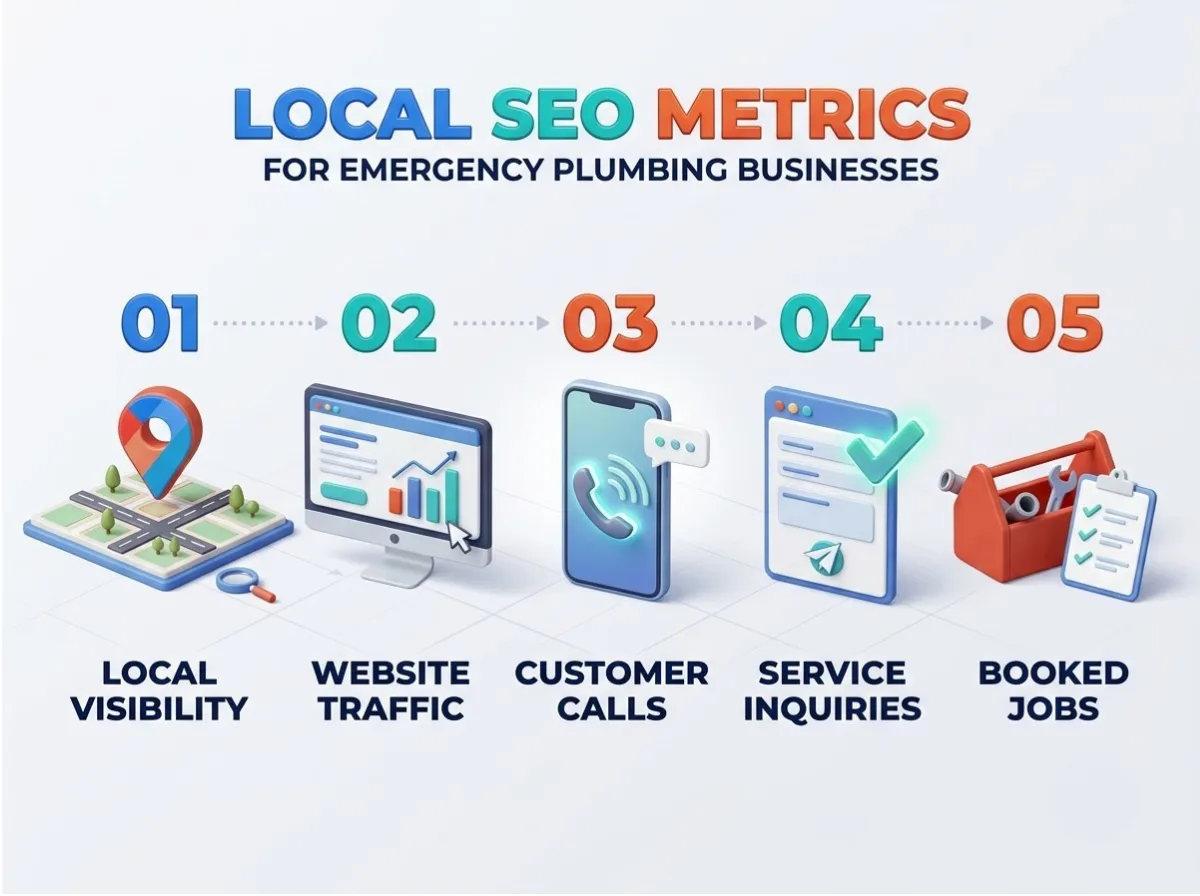
Rankings matter, but I also recommend measuring whether your SEO efforts generate meaningful customer actions. Focus on metrics that connect online visibility with potential business opportunities. To understand whether your local SEO efforts are delivering meaningful results, I recommend tracking a combination of visibility, engagement, and conversion metrics. Rankings alone do not tell the whole story. You also need to know whether people are visiting your service pages, contacting your business, and booking plumbing jobs. The following metrics can help you evaluate performance and identify areas that need improvement.
Local SEO metrics
Use tools such as Google Analytics and Google Search Console to understand website traffic and search performance. Where appropriate, use call tracking to measure inquiries generated through different marketing channels.
Analyze Competitors and Identify Opportunities
Review competing plumbing businesses to understand which services they highlight, how they present customer reviews, and which local searches they appear for. Use these observations to identify gaps in your own website or business profile. For example, if competitors provide detailed emergency drain cleaning pages and yours lacks one, creating a useful, service-specific page may be worth prioritizing. I recommend reviewing your results monthly, identifying the biggest visibility gaps, and making improvements based on evidence rather than assumptions. Consistent local SEO performance tracking helps you refine your strategy and build stronger visibility in the areas your plumbing business serves.
Build a Repeatable Local SEO Improvement Process
I believe the most effective local SEO strategy for emergency plumbers is one that can be maintained consistently. Search visibility can change as competitors improve their websites, customer reviews accumulate, and local search results evolve. Instead of making random updates whenever rankings drop, create a repeatable process that helps you identify problems, prioritize improvements, and measure progress.
Audit Your Local SEO Performance Regularly
Start by reviewing your Google Business Profile, website, local listings, and keyword rankings. Look for outdated business information, missing service pages, inconsistent contact details, and keywords where your visibility could improve. I recommend organizing your findings into a simple action plan:
- Audit: Identify listing errors, ranking gaps, and website issues.
- Optimize: Improve service pages, business information, and relevant local keywords.
- Publish: Add useful plumbing advice and update important website content.
- Measure: Review local rankings, website traffic, and customer inquiries.
- Improve: Use the results to decide which changes deserve attention next.
This process makes local search optimization easier to manage, even when your team is busy handling emergency calls.
Prioritize Improvements That Support Business Goals
Not every SEO task deserves immediate attention. I suggest focusing first on issues that prevent customers from finding or contacting your business. For example, correcting an incorrect phone number should take priority over publishing another blog post. Similarly, improving a poorly optimized emergency plumbing page may be more valuable than creating several new pages targeting nearly identical keywords. Use your performance data to identify practical opportunities. If your website attracts visitors but generates few inquiries, review your contact options, page clarity, mobile experience, and service information.
Use Local SEO Tools to Monitor Progress
Managing multiple locations, keywords, and competitors manually can become time-consuming. Tools such as Happy Rank can help businesses monitor local rankings, assess visibility across geographical areas, and identify opportunities for improvement. I recommend reviewing these insights alongside website analytics and customer inquiry data rather than relying on rankings alone. A strong position in search results is useful, but the broader objective is to help relevant customers discover your services and contact your team. By following a consistent cycle of auditing, optimizing, publishing, measuring, and improving, emergency plumbing businesses can make more informed SEO decisions and work toward sustainable local search visibility.
Conclusion
When a plumbing emergency strikes, customers want a reliable professional who can help without delay. I believe that a strong local SEO strategy for emergency plumbers starts with an accurate Google Business Profile, relevant service pages, genuine customer reviews, and a mobile-friendly website. By targeting local keywords and tracking search performance, you can make it easier for nearby customers to discover your business when they need urgent plumbing assistance. Consistency is what brings these efforts together. Regularly reviewing your listings, improving underperforming pages, and measuring customer inquiries helps you make smarter decisions about your online presence. Tools like Happy Rank can support this process by helping you monitor local search rankings and identify opportunities to improve visibility across your target service areas. You do not need to change everything at once. Start with the improvements that matter most, measure the results, and refine your approach over time. With the right priorities and ongoing effort, you can strengthen your local presence and create more opportunities to connect with customers who need your plumbing expertise.
Frequently asked questions
How do emergency plumbers rank higher on Google Maps?
Start with an accurate, complete Google Business Profile: the most specific primary category, relevant services like burst pipe repair and emergency drain cleaning, correct hours and phone number, real photos and only the areas you can actually reach.
Should I advertise 24/7 service on my Google Business Profile?
Only if customers can genuinely reach a plumber around the clock. Showing 24/7 availability you can't deliver costs trust and leads to bad reviews.
Do emergency plumbers need separate service pages?
Yes. Create dedicated pages for emergency plumbing, burst pipe repair, emergency drain cleaning and water heater repair, each with practical advice, a prominent phone number and a mobile click-to-call button.
What keywords should emergency plumbers target?
Searches that match urgent needs, such as 'emergency plumber near me', '24-hour plumber in [city]' and problem-specific terms like 'burst pipe repair'. Use natural variations in titles, headings and service descriptions rather than repeating one phrase.
Why does website speed matter for emergency plumbers?
People with a plumbing emergency act fast, usually on a phone. If your number is hard to find or the page loads slowly, they go back to the results and call someone else.
How should emergency plumbers measure SEO?
Track rankings for urgent keywords across your service areas, plus calls, website visits and inquiries, using Google Analytics, Search Console and call tracking. Review the data monthly and fix the biggest gaps first.