
How Reviews Can Improve Local SEO for HVAC Businesses
Reviews improve local SEO for HVAC businesses because review quantity and positive ratings contribute to prominence, one of Google's three local ranking factors, and help homeowners trust a contractor before calling. Ask every customer for an honest review right after the job with a direct link, reply to each review professionally, follow Google's review policies and track rankings alongside calls.
When homeowners need emergency AC repairs or a new heating system, they often check online reviews before choosing an HVAC contractor. A few positive reviews can build confidence, while unanswered complaints or outdated feedback may cause potential customers to look elsewhere. That is why customer reviews for HVAC businesses play an important role in building trust and supporting local SEO for HVAC companies. Reviews help homeowners understand the quality of your service, professionalism, and reliability. They can also contribute to your business's prominence in local search results, helping potential customers discover your services through Google Search and Google Maps. However, reviews work best alongside an optimized Google Business Profile and accurate business information. With Happy Rank, HVAC businesses can monitor local search rankings and identify opportunities to improve their online visibility. By combining a consistent review strategy with effective local SEO optimization, you can strengthen your reputation, reach more local customers, and generate more service inquiries.
Why Customer Reviews Matter for HVAC Local SEO
When someone searches for an HVAC company, they usually want a contractor who can fix the problem quickly and do the job right. Whether they need emergency AC repair, furnace installation, or routine maintenance, customer reviews often help them decide which business deserves their trust. For HVAC contractors, reviews are more than feedback. They are an important part of building an online reputation and improving local SEO visibility.
How Reviews Influence Local Search Visibility
Think about what happens when a homeowner searches for "AC repair near me" or "HVAC contractors in Austin." Google may display a map with nearby businesses, their ratings, and customer reviews. This Google Maps visibility gives homeowners a quick way to compare local service providers before visiting a website or making a call. Google considers relevance, distance, and prominence when determining local search results. Review quantity and positive ratings can contribute to prominence, meaning a consistent collection of genuine reviews can support your HVAC local SEO strategy. However, reviews alone cannot guarantee higher rankings. Your business information, service relevance, website quality, and location also matter.
Why Homeowners Trust HVAC Businesses With Strong Reviews
HVAC services often involve significant expenses and urgent decisions. Homeowners want to know whether technicians arrive on time, explain repairs clearly, and charge fairly. Reviews from previous customers help answer these questions before a homeowner commits to a service. For example, imagine two HVAC companies offering furnace repairs in the same city. One has a few outdated reviews, while the other has detailed feedback praising its technicians' professionalism and clear communication. A homeowner may feel more comfortable contacting the second company because its reviews provide evidence of positive customer experiences. A strong online reputation for HVAC companies can reduce uncertainty, build credibility, and encourage potential customers to request estimates or schedule appointments.
The Connection Between Reviews and Local SEO Performance
Customer reviews complement other local SEO ranking factors by strengthening your business's reputation and helping potential customers evaluate your services. They can support your Google Business Profile, create a stronger first impression in search results, and help homeowners feel confident enough to contact your team. Reviews can also reveal what customers appreciate most about your business, such as quick emergency responses, knowledgeable technicians, or reliable installations. These insights can guide improvements to your service and marketing. Ultimately, genuine customer feedback works best as part of a broader strategy that includes an optimized business profile, accurate service information, and a website that makes it easy for local homeowners to get in touch.
How Google Reviews Strengthen Your HVAC Company's Online Presence
Getting customers to leave reviews is only one part of building a strong online reputation. HVAC businesses also need to understand how reviews work alongside their Google Business Profile and other local SEO efforts. When homeowners search for heating or cooling services, they want quick answers about a contractor's reputation, service quality, and reliability. A well-maintained online presence helps them find the information they need and decide whether to get in touch.
Building a Strong Google Business Profile
Your Google Business Profile for HVAC companies is often one of the first places potential customers encounter your business online. It displays important information, including your business name, phone number, operating hours, service categories, and customer reviews. Keeping this information accurate makes it easier for homeowners to understand what you offer and how to contact you. For example, if you provide emergency AC repair but your profile does not clearly communicate your services, potential customers may overlook your business when comparing local contractors. Reviews strengthen your profile by giving homeowners insight into real customer experiences. When someone sees positive feedback about your technicians' punctuality or the quality of your furnace installation work, they have more information to consider before calling. I recommend treating your Google Business Profile as an ongoing responsibility rather than a one-time setup. Update your services when your offerings change, verify your contact information, add relevant business photos, and respond to customer reviews regularly. These activities help maintain a complete and trustworthy online presence.
Why Review Volume, Ratings, and Recency Matter
Homeowners may consider how many reviews an HVAC company has, its overall star rating, and whether customers have shared feedback recently. Together, these details help people assess whether a business appears established, dependable, and active. Consider an HVAC company with 150 reviews but no new feedback in two years. Another contractor has 85 reviews, including several detailed comments from customers who recently used its AC repair and heating maintenance services. Some homeowners may find the second profile more reassuring because the feedback reflects more recent experiences. This does not mean every HVAC business needs to reach a particular review count or maintain a perfect rating. Google considers multiple factors when displaying local results, including relevance, distance, and prominence. Review quantity and positive ratings can contribute to prominence, but they do not guarantee a specific ranking. A practical approach is to request honest feedback consistently after completed jobs. Encourage customers to describe their experiences in their own words, and avoid buying reviews or offering incentives in exchange for positive ratings.
How Customer Reviews Add Context About HVAC Services
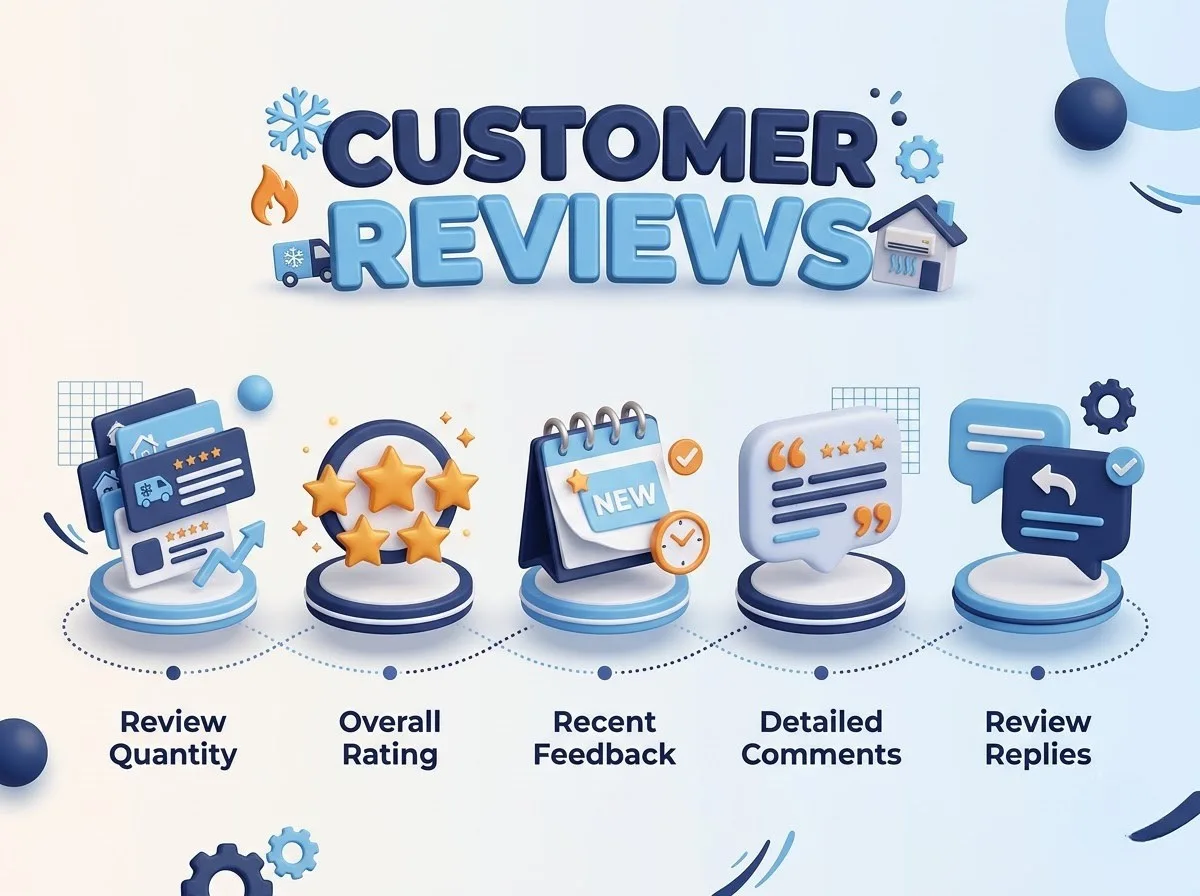
Customer reviews can provide useful context about the services your HVAC company performs. Homeowners may mention AC repair, furnace replacement, heat pump installation, seasonal maintenance, or emergency heating services when describing their experiences. These details can help prospective customers understand your company's capabilities. For example, a review explaining how a technician diagnosed an air conditioning problem and completed the repair gives readers a clearer picture of the service experience than a simple five-star rating without a comment. Reviews may also help you identify the services customers value most. If several customers praise your maintenance appointments or quick responses during summer heat waves, you can use those insights to improve your website content and communicate your strengths more clearly. Customer reviews contain more than star ratings. The number of reviews, how recently customers shared their experiences, the details they include, and how your business responds can all shape a homeowner’s impression of your HVAC company. Understanding these review elements helps you build trust, identify opportunities to improve service, and maintain a stronger online presence. Here’s how each element matters and what your business can do to manage it effectively. The following image shows how different review elements can support your HVAC company's online presence.
HVAC Customer Review Elements That Build Trust
Remember that reviews should reflect genuine customer experiences. Avoid asking customers to include specific keywords just to influence rankings, and do not selectively request reviews only from customers you expect to be satisfied. Ultimately, the goal is not simply to collect more stars. It is to build a credible online presence that helps homeowners find your business, understand your services, and feel confident about contacting your team.
How to Get More Genuine Reviews for Your HVAC Business
Getting consistent customer reviews does not have to be complicated. HVAC businesses can make feedback requests a natural part of their customer service process. A well-planned HVAC review management strategy helps you collect honest feedback, strengthen your online reputation, and support your local SEO efforts.
Ask Customers for Reviews at the Right Time
Timing matters when requesting customer reviews for HVAC services. Homeowners may be more willing to share feedback shortly after a successful AC repair, furnace installation, or maintenance appointment. Train your technicians and office staff to politely invite customers to share their experiences after completing a job. You can also send a follow-up message thanking customers for choosing your company and providing a link to your Google review page. For example, a simple message could say: "Thank you for choosing us for your HVAC service. We'd appreciate hearing about your experience. If you have a moment, please consider leaving an honest review on Google." Keep requests friendly and pressure-free. Customers should be free to share their genuine opinions without being asked for a particular rating.
Make Leaving a Review Simple and Convenient
Customers may forget to leave feedback if the process takes too much effort. Make Google reviews for HVAC companies easier to submit by sharing a direct review link through channels your customers already use. Consider these practical options:
- Text messages: Send a short review request after a completed service.
- Follow-up emails: Include a review link in your post-service communication.
- Digital invoices: Invite customers to share feedback after payment.
- QR codes: Add a scannable code to printed invoices or service cards.
Choose convenient channels and avoid excessive reminders. A simple, well-timed request can help customers respond without feeling pressured.
Follow Google's Review Policies
Collecting reviews is valuable, but businesses must follow Google's review policies. HVAC contractors should never buy reviews, offer incentives in exchange for reviews, or selectively request positive feedback while discouraging negative opinions. Use these practices to maintain a trustworthy online reputation management strategy.
| Best practice | What to do |
|---|---|
| Request reviews | Invite customers to share honest feedback |
| Handle criticism | Respond professionally and address concerns |
| Follow up | Use a consistent, reasonable process |
| Share review links | Make the process convenient |
| Maintain authenticity | Avoid incentives, fake reviews, and keyword manipulation |
Never ask customers to include specific phrases such as "best HVAC company" in their reviews. Their feedback should reflect their own experiences and words. By making review requests simple, consistent, and policy-compliant, you can build customer trust and strengthen your local SEO strategy over time.
How to Respond to Reviews and Turn Feedback Into Local SEO Opportunities
Collecting customer reviews is only part of HVAC reputation management. How you respond to feedback also influences how potential customers perceive your business. Homeowners want to work with contractors who listen to concerns, communicate clearly, and take responsibility for their service. Responding thoughtfully to reviews helps demonstrate these qualities while giving you valuable insights into your customers' experiences.
Respond to Positive Reviews Professionally
When customers leave positive feedback, take a moment to thank them. A personalized response shows appreciation and demonstrates that your business values customer relationships. For example, if a homeowner praises your technician for repairing an air conditioner quickly, acknowledge the feedback and thank them for choosing your company. Example response: "Thank you for sharing your experience! We're glad our technician could resolve your AC issue and provide timely service. We appreciate your trust in our team." Avoid using identical responses for every review. Mention relevant details naturally, keep your tone friendly, and avoid stuffing replies with keywords such as HVAC services near me. The goal is to communicate with customers, not manipulate search rankings.
Handle Negative Reviews With Care
Negative reviews can be frustrating, particularly when your team has worked hard to deliver good service. However, ignoring criticism or responding defensively can discourage potential customers from contacting your business. Start by acknowledging the customer's concern and expressing a willingness to resolve the issue. If the problem requires further investigation, invite the customer to contact your team privately to discuss the details. For example, if someone complains about a delayed technician, you could respond: "We're sorry your appointment did not go as expected. We understand how frustrating delays can be. Please contact our team so we can learn more about your experience and work toward a resolution." A professional response demonstrates accountability and supports a stronger online reputation for your HVAC company. Avoid sharing personal customer information or arguing publicly.
Use Review Feedback to Improve HVAC Services
Reviews can reveal recurring issues that might otherwise go unnoticed. Customers may repeatedly mention appointment delays, unclear estimates, communication problems, or excellent experiences with particular technicians. I recommend reviewing customer feedback regularly and grouping comments into common themes. This makes it easier to identify improvements that can benefit future customers. For example, if several reviews mention difficulty scheduling maintenance appointments, consider improving your booking process or sending clearer appointment confirmations. You can use review insights to improve service pages, answer common customer questions, and explain your service process more clearly on your website. These improvements can support local SEO for HVAC businesses by making your online information more useful to potential customers. Ultimately, responding to reviews is not just about protecting your reputation. It is an opportunity to build trust, improve customer experiences, and strengthen your long-term local search strategy.
How to Measure Review Performance and Improve Local SEO Results
Collecting reviews and responding to customers are important steps, but HVAC businesses also need to measure whether their efforts are making a difference. Tracking review performance alongside local search visibility helps you understand what is working and where improvements are needed. Instead of focusing only on star ratings, look at how your online reputation supports customer engagement and business growth.
Track Review Growth and Customer Engagement
Start by monitoring your review count, average rating, recent feedback, and response activity. These metrics help you understand how customers perceive your business and whether your review collection process is consistent. You should also monitor customer actions through available tools, including Google Business Profile performance reports and website analytics. Pay attention to phone calls, website visits, and other available engagement metrics to understand how people interact with your business online. For example, if your HVAC company receives more calls during the summer, compare that activity with seasonal demand, local search visibility, and changes to your marketing efforts. This provides better context than assuming every increase in inquiries resulted from new reviews.
Monitor Local Rankings and Competitor Reviews
Tracking local SEO rankings for HVAC companies helps you understand how visible your business is for relevant searches. Monitor phrases such as "AC repair near me," "furnace repair in Dallas," and "HVAC maintenance services." Remember that local rankings can vary depending on the searcher's location. Check visibility across relevant neighborhoods and service areas instead of relying on a single ranking position. You can also review competitors' public profiles to understand how they present their services, respond to feedback, and maintain their online reputations. Look for opportunities to improve your own customer experience rather than copying competitors or chasing their review counts.
Use Data to Improve Your Review Strategy
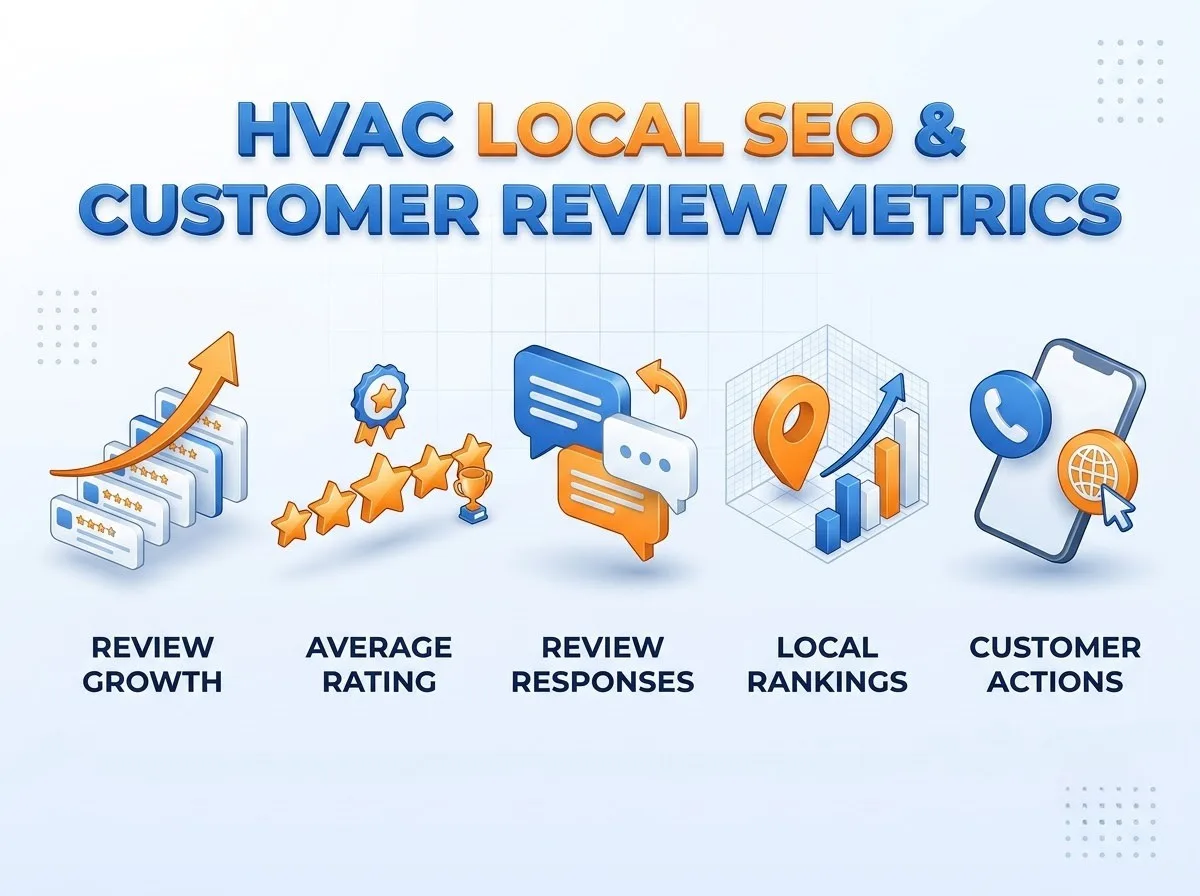
Once you have collected enough information, use your findings to adjust your approach. The following table highlights useful metrics and the actions they can guide. Tracking review performance helps HVAC businesses understand whether their efforts are improving customer trust and local search visibility. By monitoring review growth, average ratings, response activity, local rankings, and customer actions, you can identify what is working and where improvements are needed. Use the following metrics to evaluate your progress and refine your local SEO strategy over time.
HVAC customer reviews infographic
Tools such as Happy Rank can help HVAC businesses monitor local search rankings and identify visibility gaps across their target areas. Combine ranking insights with review monitoring to develop a more complete picture of your local SEO performance. Ultimately, successful HVAC local SEO requires ongoing measurement and improvement. Review your results regularly, address customer concerns, maintain accurate business information, and refine your strategy as your service area and customer needs change. This consistent approach can help your business build trust and become easier for local homeowners to discover.
Conclusion
Customer reviews can do more than build your HVAC company's reputation. They can strengthen customer trust, support local SEO visibility, and help homeowners feel confident choosing your services. By requesting genuine feedback, responding professionally, and monitoring review performance, you can build a stronger online presence and identify opportunities to improve your customer experience. However, reviews work best alongside an optimized Google Business Profile, accurate business information, and consistent local SEO efforts. Happy Rank can help you monitor local search rankings and identify opportunities to improve your visibility in your target service areas. Ready to attract more local customers? Make customer feedback part of your ongoing SEO strategy and give homeowners more reasons to choose your HVAC business.
Frequently asked questions
Do Google reviews help HVAC companies rank higher?
They can. Google considers relevance, distance and prominence, and review quantity and positive ratings contribute to prominence. Reviews alone can't guarantee a ranking, though; your business information, services, website and location matter too.
When should an HVAC company ask for a review?
Shortly after a successful repair, installation or maintenance visit. Have technicians or office staff invite feedback, then send a thank-you message with a direct link to your Google review page.
What's the easiest way for HVAC customers to leave a review?
Share a direct review link by text message, follow-up email or digital invoice, or add a QR code to printed invoices and service cards. Avoid excessive reminders.
Can I ask customers to mention keywords in their reviews?
No. Don't ask customers to include phrases like 'best HVAC company'. Reviews should reflect their own experiences and words, and you shouldn't stuff your replies with keywords either.
Are recent reviews more important than total review count?
Homeowners look at count, rating and recency together. A profile with fewer but recent, detailed reviews can be more reassuring than one with many reviews and no new feedback in two years.
How should an HVAC company respond to a negative review?
Acknowledge the concern, stay calm, and invite the customer to contact your team privately to resolve it. Don't argue publicly or share personal customer information.