
The Future of Local Search Marketing and Local SEO Software
Local search is shifting toward AI-powered answers, conversational and voice queries, review-driven choices, and hyperlocal results. Businesses that keep listings accurate, publish helpful intent-matched content, earn genuine reviews, and monitor visibility with local SEO software will adapt best, turning changing search behavior into stronger discovery by nearby customers.
Think about the last time you searched for a business nearby. Maybe you wanted a reliable plumber, a cozy restaurant, or an HVAC technician who could fix a problem quickly. You probably checked a few listings, compared reviews, and chose a business that looked trustworthy. That simple search reflects how much local search marketing influences everyday buying decisions. But here is the interesting part: the way people discover local businesses is continuing to change.
With AI-powered search, conversational queries, Google Maps, and increasingly personalized search experiences shaping online discovery, businesses need to rethink how they approach local SEO. Simply appearing in search results is no longer the whole story. Businesses must understand customer intent, maintain accurate information, build a credible online reputation, and track their local search visibility across the areas they serve.
So, what will local search look like in the coming years, and how can businesses prepare without getting lost in every new trend? In this article, we will explore emerging local search marketing trends, the growing role of local SEO software, the essential features businesses should look for, and practical ways to stay competitive. We will also look at how tools like Happy Rank can help businesses monitor local rankings, uncover optimization opportunities, and make more informed decisions about their local SEO strategy.
How Local Search Marketing Is Evolving
Have you noticed how quickly people make decisions after searching for a nearby business? A few years ago, finding a local service often meant browsing several websites or asking friends for recommendations. Today, customers can discover businesses, compare ratings, check opening hours, and request directions within minutes. From my perspective, this shift makes local search marketing more than a visibility strategy. It is about helping customers find the right information when they are ready to take action.
Search Intent Is Becoming More Important
People are becoming more specific about what they want from a local search. Instead of searching for a broad term like “plumber,” someone might type “emergency plumber near me” or “affordable plumbing repair in Austin.”
These searches reveal a clear need, and businesses should create content that matches it. Effective local SEO starts with understanding the questions customers ask and the services they actually need.
Here are a few ways businesses can respond:
- Target relevant local keywords that reflect specific services and customer needs.
- Create useful service pages that explain what the business offers, where it operates, and how customers can get in touch.
- Answer common questions about pricing, availability, service areas, and appointment scheduling.
- Optimize content for search intent rather than repeating location keywords unnecessarily.
I believe this customer-first approach is more sustainable than chasing rankings without considering whether the content helps people make decisions.
Google Maps and Local Search Results Influence Customer Decisions
When customers search for nearby businesses, they often compare local listings before visiting a website. Information such as reviews, operating hours, business categories, photos, and proximity can influence which businesses they consider.
Maintaining an accurate Google Business Profile is therefore an important part of local optimization. Businesses should regularly review their details, update special hours, describe their services clearly, and respond professionally to customer feedback.
Customers Expect Consistent Information Across Platforms
Imagine a customer finds one phone number on Google Maps and another on a business directory. Even if the business provides excellent service, that inconsistency can create unnecessary doubt.
Consistent local business listings help customers verify essential details across relevant online platforms.
Maintaining consistent business information is a simple but important part of an effective local SEO strategy. When customers find the same business name, address, phone number, operating hours, services, and website across relevant online platforms, they can verify details more easily and contact the business with confidence. I recommend reviewing your local business listings regularly to identify outdated information and correct inconsistencies. As your business grows or changes its services, updating these details helps create a reliable customer experience and supports your efforts to build a stronger local search presence.
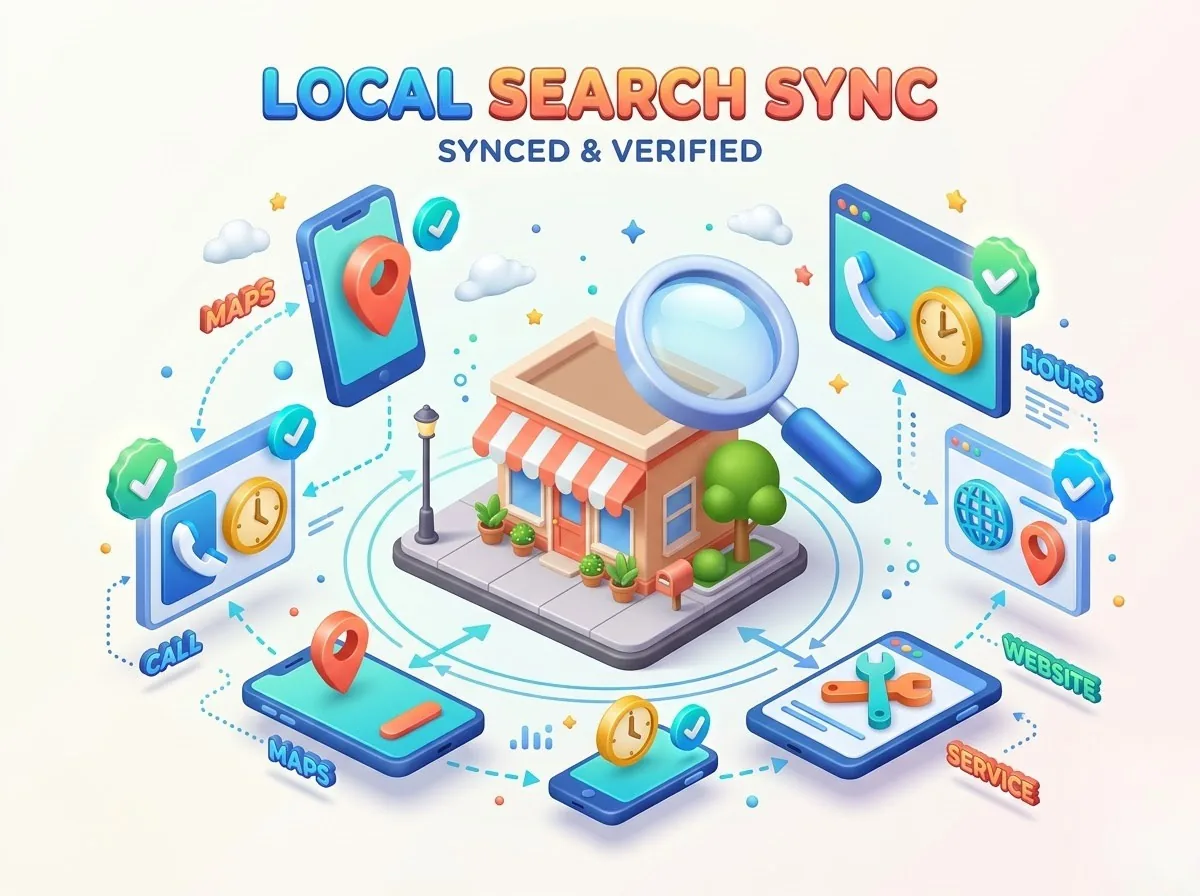
Businesses should review important listings periodically and correct outdated information wherever possible.
Ultimately, the future of local search marketing will reward businesses that make discovery easier and information more useful. By understanding customer intent, maintaining trustworthy listings, and monitoring local search visibility, businesses can build a stronger foundation for long-term growth.
Emerging Trends Shaping the Future of Local Search
Local search is evolving alongside the way people discover information online. Customers are no longer relying only on traditional search results to find nearby businesses. They may use conversational questions, AI-powered search experiences, customer reviews, or location-specific recommendations before deciding whom to contact. From my perspective, businesses do not need to chase every new technology. They need to understand which local search marketing trends affect their customers and adapt their strategies accordingly.
AI-Powered Search and Conversational Queries
AI-powered search is changing how people explore services, compare options, and find answers to specific questions. Instead of entering a short keyword, someone might ask, “Which HVAC company offers emergency repairs in my area?”
This shift makes clear, useful, and accurate business information increasingly important. Businesses should focus on creating helpful content that explains their services and answers genuine customer questions.
Here are a few practical steps to consider:
- Write informative service pages that explain what customers can expect.
- Include relevant local keywords naturally in website content.
- Keep business details accurate across important online platforms.
- Publish helpful answers to common questions about services, pricing, and availability.
Although these practices can improve the quality of information available online, they cannot guarantee that a business will appear in AI-generated recommendations.
Voice Search and Natural Language Queries
Voice assistants and conversational search tools allow people to look for businesses using everyday language. A customer might ask, “Where can I find a reliable auto repair shop nearby?” rather than typing a short phrase.
I recommend reviewing the questions customers frequently ask before contacting a business. These questions can inspire website FAQs, service descriptions, and useful local content.
Businesses can prepare by:
- Using straightforward language instead of awkward keyword combinations.
- Providing clear answers about location, services, and operating hours.
- Maintaining an updated Google Business Profile.
- Making contact information easy to find on mobile devices.
These steps support a better user experience, regardless of whether customers search by voice or text.
Reviews, Reputation, and Hyperlocal Discovery
Customer feedback continues to influence how people evaluate local businesses. Genuine reviews, thoughtful responses, and consistent service information can help potential customers assess whether a business meets their needs.
Meanwhile, hyperlocal search places greater emphasis on finding relevant services within specific neighborhoods or nearby areas. Businesses serving multiple locations should develop useful, location-specific pages rather than publishing repetitive content with different city names.
For example, a cleaning company could create separate pages explaining its services and coverage for different neighborhoods, provided each page offers genuinely useful information.
The following trends highlight where businesses should focus their efforts:
These emerging local search marketing trends show why businesses should focus on helpful content, natural-language queries, genuine customer reviews, and location-specific information to improve their local search visibility.
| Emerging trend | Practical business response |
|---|---|
| AI-powered search | Publish clear, helpful information |
| Voice search | Answer conversational questions |
| Review-driven discovery | Encourage honest feedback and respond professionally |
| Hyperlocal search | Create useful content for relevant service areas |
Ultimately, understanding these future local SEO trends can help businesses make smarter decisions. By combining accurate information, customer-focused content, and consistent reputation management, they can prepare for changing search experiences without losing sight of what matters most: helping local customers find the right service.
Why Local SEO Software Will Become More Important
As local search becomes more complex, managing every optimization task manually can quickly become overwhelming. Imagine monitoring rankings for several services across multiple neighborhoods, checking business listings, reviewing customer feedback, and preparing performance reports every week. That is a lot to handle, especially for a small team. This is where local SEO software becomes valuable. I see its biggest benefit in helping businesses organize their efforts, identify opportunities, and make decisions based on useful data rather than guesswork.
Managing Multiple Local SEO Tasks in One Place
Local SEO involves several connected activities, and overlooking one can make optimization harder to manage. Businesses need to maintain accurate listings, monitor rankings, respond to reviews, evaluate competitors, and measure results.
Local SEO tools bring many of these activities into a more organized workflow. Depending on the platform and its features, businesses may be able to:
- Monitor local keyword rankings across target locations.
- Track changes in Google Business Profile information and performance.
- Organize customer reviews and reputation-management activities.
- Research local competitors and identify visibility gaps.
- Generate reports to evaluate optimization progress.
For example, a plumbing company serving several towns could use a centralized dashboard to review its visibility for emergency repairs, drain cleaning, and water heater installation. This makes it easier to prioritize the services and locations that need attention.
Tracking Local Rankings Across Different Locations
One challenge with local rank tracking is that search visibility can vary by location. A business might perform well near its main office but appear less frequently in search results across distant neighborhoods.
This is why checking a single ranking position does not always provide a complete picture.
Some platforms offer geo-grid rank tracking, which shows how rankings vary across a geographic area for a particular search term. Businesses can use these insights to investigate weaker areas and decide where to improve their local SEO strategy.
For instance, an HVAC contractor might discover that it has stronger visibility for air conditioning repair near its office than in a neighboring service area. That insight could prompt a review of its service pages, business information, and local relevance.
Finding Competitor Gaps and Turning Data Into Action
Local competitor analysis helps businesses understand how their search presence compares with other relevant providers. Rather than copying competitors, businesses can identify opportunities to improve their own content, listings, and customer experience.
Useful questions to investigate include:
- Which relevant search terms offer opportunities for better visibility?
- Are competitors providing clearer information about particular services?
- Do customer reviews reveal common expectations or service concerns?
- Which locations need more focused optimization?
The following table summarizes how local SEO software can support these activities.
These local SEO software capabilities help businesses monitor rankings, maintain accurate listings, manage reviews, analyze competitors, and measure SEO performance. Together, they make it easier to identify opportunities and prioritize improvements.
| Software capability | Business benefit |
|---|---|
| Local rank tracking | Reveals visibility changes across target areas |
| Listing management | Helps maintain consistent business information |
| Review monitoring | Keeps customer feedback organized |
| Competitor analysis | Highlights potential optimization opportunities |
| SEO reporting | Helps measure progress and prioritize tasks |
Ultimately, the future of local search optimization will require businesses to combine accurate information with consistent measurement. Platforms such as Happy Rank can support this process by helping businesses understand their local rankings and identify areas for improvement. The real advantage comes from turning those insights into practical actions that improve how customers discover and choose a business.
Essential Features to Look for in Future-Ready Local SEO Software
Choosing the right local SEO software is about more than finding a tool with an impressive list of features. Businesses need practical insights that help them improve search visibility, manage their online presence, and understand what is working. I always recommend starting with the challenges a business wants to solve, whether that means monitoring rankings across several service areas or keeping customer feedback organized. The best solution is one that supports these priorities without making everyday SEO management unnecessarily complicated.
Local Rank Tracking and Geo-Grid Analysis
Reliable local rank tracking helps businesses understand where they appear for relevant search terms. However, rankings can differ across neighborhoods, making location-specific monitoring particularly useful.
Look for software that supports:
- Tracking important local keywords over time.
- Monitoring rankings across selected locations.
- Using geo-grid analysis to identify geographic visibility gaps.
- Comparing performance across different search terms and service areas.
For example, a landscaping company might rank well for lawn care near its office but struggle to appear in surrounding neighborhoods. Location-based insights can help the team investigate where additional optimization may be worthwhile.
Google Business Profile Management
A well-maintained Google Business Profile helps customers find essential information about a business. Local SEO software may simplify profile monitoring and management, depending on its available integrations.
Useful capabilities include monitoring business information, managing supported profile updates, and identifying incomplete or outdated details. Businesses should also verify that categories, services, contact information, and operating hours accurately reflect their operations.
Review and Reputation Management
Customer feedback influences how people evaluate local businesses. Effective review management software can help teams monitor incoming reviews, organize responses, and identify recurring customer concerns.
I recommend looking for features that make it easier to:
- Track reviews across supported platforms.
- Respond to feedback promptly and professionally.
- Identify recurring complaints or positive themes.
- Maintain a consistent reputation-management process.
Software should support genuine customer engagement rather than encourage fake reviews or manipulative review practices.
Competitor Tracking and Local SEO Analytics
Local competitor analysis helps businesses identify opportunities to strengthen their online presence. Meanwhile, local SEO analytics helps them evaluate whether optimization efforts are producing meaningful improvements.
Consider these essential reporting capabilities:
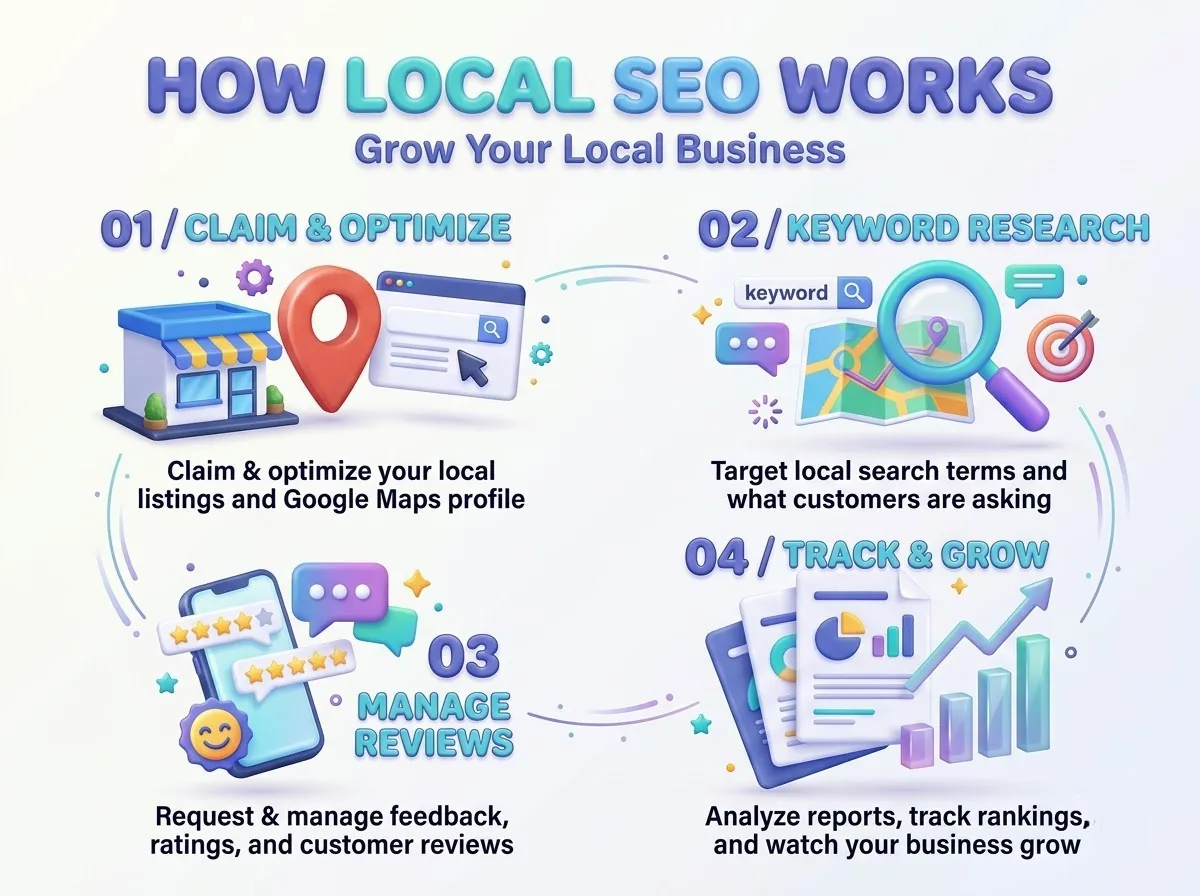
These features help businesses understand whether their local SEO strategy is delivering meaningful results. Competitor tracking reveals how local visibility compares with other businesses, while performance dashboards make important SEO metrics easier to review. Regular reporting helps teams identify trends, prioritize improvements, and measure progress over time. Meanwhile, customer action insights can show how people interact with a business through calls, website visits, and direction requests, when this data is available. By reviewing these insights together, businesses can make informed decisions and focus their optimization efforts on areas with the greatest potential for improvement.
Automation and Workflow Efficiency
Finally, SEO workflow automation can reduce repetitive tasks, organize recurring checks, and make reporting more efficient. Before choosing a platform, confirm which tasks it actually automates and whether it integrates with your existing workflow.
Ultimately, future-ready software should combine useful data, manageable workflows, and actionable insights. With a solution such as Happy Rank, businesses can explore ways to monitor local visibility and organize ongoing optimization, helping them adapt as local search continues to evolve.
How Businesses Can Prepare for the Future of Local Search
Understanding emerging trends is useful, but knowing how to respond to them is what makes a real difference. Businesses do not need to overhaul their entire marketing strategy every time search technology changes. I recommend building a strong foundation first, then making improvements based on customer needs and performance data. A practical local SEO strategy should focus on accurate business information, helpful content, customer trust, and consistent measurement.
Build Accurate and Helpful Local Business Profiles
Your online business information often creates a customer's first impression. If operating hours are incorrect or contact details are outdated, potential customers may choose another provider before they even visit your website.
Start by reviewing your Google Business Profile and other important business listings. Make sure your business name, address, phone number, hours, categories, and services are accurate.
I also suggest paying attention to these details:
- Choose relevant business categories that accurately describe your services.
- Add clear, current photos that represent your business.
- Update holiday hours and service information when changes occur.
- Keep contact details consistent across relevant directories.
- Respond professionally to customer reviews and questions.
Maintaining these details helps customers find reliable information and supports a more consistent local search presence.
Create Location-Specific Content That Answers Customer Questions
Generic website content rarely addresses every customer's needs. A business serving several neighborhoods should explain where it operates and which services are available in each area.
Effective local content marketing starts with understanding what people want to know. For example, an HVAC company could publish helpful pages about seasonal maintenance, emergency repairs, and services available in specific communities.
When creating location-focused content, I recommend:
- Developing useful local landing pages for genuine service areas.
- Answering common questions about pricing, scheduling, and service availability.
- Including relevant local keywords naturally in headings and page copy.
- Adding original information that reflects local customer needs.
- Avoiding duplicate pages that change only the city name.
The goal is to make every page useful enough to help a potential customer take the next step.
Develop a Consistent Review Management Process
Customer feedback will remain important as people continue comparing local businesses online. A consistent online reputation management process helps businesses understand customer experiences and respond to concerns.
Encourage customers to leave honest reviews without offering prohibited incentives or pressuring them to provide positive feedback. Respond to reviews thoughtfully, acknowledge legitimate concerns, and use recurring feedback to improve service quality.
Monitor Visibility and Use Local SEO Software
Regular measurement helps businesses distinguish meaningful progress from temporary ranking fluctuations. Track relevant local search rankings, review website performance, and monitor available customer actions, such as phone calls and direction requests.
This is where local SEO software can help organize reporting and identify areas that deserve attention. Tools such as Happy Rank can support local visibility monitoring and help businesses identify potential optimization opportunities.
Ultimately, preparing for the future of local search means treating SEO as an ongoing process. By combining useful content, accurate listings, customer-focused service, and consistent performance monitoring, businesses can adapt to changing search behavior while keeping their customers at the center of every decision.
Conclusion
The future of local search marketing is about more than keeping up with algorithm updates or new technologies. It is about helping customers find accurate information, discover relevant services, and feel confident choosing a local business. As AI-powered search, conversational queries, customer reviews, and hyperlocal discovery continue to evolve, businesses that focus on useful content, trustworthy listings, and consistent optimization will be better prepared for change.
The good news? You do not have to manage everything manually. The right local SEO software can simplify ranking monitoring, highlight visibility gaps, and help you make smarter decisions. With Happy Rank, you can explore opportunities to improve your local search presence and build a more organized SEO strategy. Start by understanding where your business stands today, identify what needs improvement, and keep refining your approach as customer expectations change. Your next local customer could be searching for you right now.
Frequently asked questions
How is AI-powered search changing local discovery?
Customers now ask conversational questions such as which HVAC company offers emergency repairs nearby. Clear service pages, accurate listings, and helpful Q&A content matter more than ever, although good content cannot guarantee placement in AI-generated recommendations.
Why are reviews and hyperlocal results more important?
Shoppers compare ratings, hours, and proximity within minutes. Genuine reviews with thoughtful responses build trust, and hyperlocal search rewards businesses with useful location-specific pages for each area they genuinely serve rather than city-name-swapped duplicates.
How should businesses prepare content for voice and conversational search?
Use natural language, answer real questions about pricing, availability, hours, and service areas, keep your Google Business Profile current, and make contact details easy to find on mobile devices.
Which software capabilities keep businesses future-ready?
Geo-grid rank tracking across locations, Google Business Profile monitoring, review and reputation management, competitor tracking with analytics on rankings, calls, and direction requests, plus workflow automation that fits your existing processes.
What is the first step to prepare for the future of local search?
Get the foundation right with accurate business profiles and listings covering categories, photos, hours, and contact details. Then add helpful location content, run a consistent review process, and measure visibility regularly with local SEO software.