
Why Local SEO Software Is Becoming Essential for Small Businesses
Local SEO software helps small businesses compete by bringing rank tracking, geo-grid visibility insights, Google Business Profile management, review monitoring, and performance reporting into one workflow. Instead of juggling manual checks, owners can spot neighborhood ranking gaps, keep listings accurate, respond to reviews, and focus limited time and budget on improvements that attract nearby customers.
Imagine a potential customer searching Google for a service your business offers. Several competitors appear in the results, but your business is nowhere to be found. How many opportunities could you be losing simply because local customers cannot discover you online? For small businesses, local search visibility can influence whether nearby customers choose to visit, call, or explore a competitor instead.
Improving that visibility takes more than occasional website updates. You need to monitor rankings, maintain accurate business listings, manage customer reviews, and understand which marketing efforts are delivering results. Handling everything manually can quickly become time-consuming, especially when you already have a business to run. That is where local SEO software for small businesses becomes valuable.
So, what does it take to compete more effectively in local search? We'll break down the everyday challenges small businesses face, the benefits of specialized SEO tools, and the essential features to consider when choosing a solution. We'll also explore howHappy Rank can support your local SEO efforts. Ready to make your business easier for nearby customers to find?
How Local Search Is Changing the Way Small Businesses Compete
Think about the last time you searched for a nearby service. You probably checked Google, looked at a few businesses, compared reviews, and decided which one seemed trustworthy. Your potential customers follow a similar process. For small businesses, this makes local search visibility an important part of attracting new customers. Let’s look at how customer behavior is changing and why local SEO software is becoming increasingly valuable.
How Customers Discover Local Businesses Online
Customers often turn to Google Search and Google Maps when they need a product or service nearby. Searches such as "plumber near me," "best coffee shop nearby," or "electrician in Austin" help people discover relevant businesses.
From my perspective, the important thing to understand is that appearing online is only the first step. Businesses also need to give potential customers a reason to choose them.
Several factors can influence a customer's decision:
- Google Business Profile optimization: Accurate hours, contact details, services, and photos help customers understand what a business offers.
- Customer reviews: Genuine feedback helps people evaluate a business before contacting it.
- Local keywords: Relevant service and location terms help search engines understand which searches match a business.
- Website quality: Useful information, clear service pages, and easy navigation help customers take the next step.
When these elements work together, a business has a better foundation for attracting relevant local traffic.
Why Local Search Competition Is Getting Harder
Small businesses often compete against established companies with stronger online reputations, more reviews, and well-developed websites. Even when your service quality is excellent, potential customers may discover competitors first.
Another challenge is that local rankings can vary by location. A business might appear prominently near its storefront but have weaker visibility in neighborhoods farther away.
This is where local rank tracking software and geographic ranking insights become useful. Instead of checking one keyword manually and assuming it represents the entire service area, businesses can monitor performance across multiple locations.
For example, a plumbing company might discover that it ranks well near its office but struggles to appear in searches from a neighboring community. That insight can help the company decide where to improve its service-area pages, business information, or local content.
Why Small Businesses Need a More Organized SEO Approach
Managing local SEO manually can become difficult when business owners already handle sales, customer service, and daily operations. Checking rankings, monitoring reviews, updating listings, and preparing reports separately takes time.
Local SEO tools for small businesses help organize these recurring activities and make performance easier to understand.
With the right software, businesses can:
- Monitor keyword rankings and local search visibility.
- Identify areas where competitors are more visible.
- Keep track of reviews and important business listing information.
- Review performance trends and prioritize improvements.
Ultimately, local search success requires consistent effort, not occasional checks. By combining a clear strategy with local SEO software, small businesses can make better-informed decisions and work toward stronger visibility in the areas they serve.
The Local SEO Challenges Small Businesses Face
Local SEO can help small businesses attract nearby customers, but managing it consistently takes time and effort. From maintaining business listings to tracking rankings and responding to reviews, several tasks compete for attention. In my experience, understanding these challenges is the first step toward choosing the right local SEO software and building a more manageable strategy.
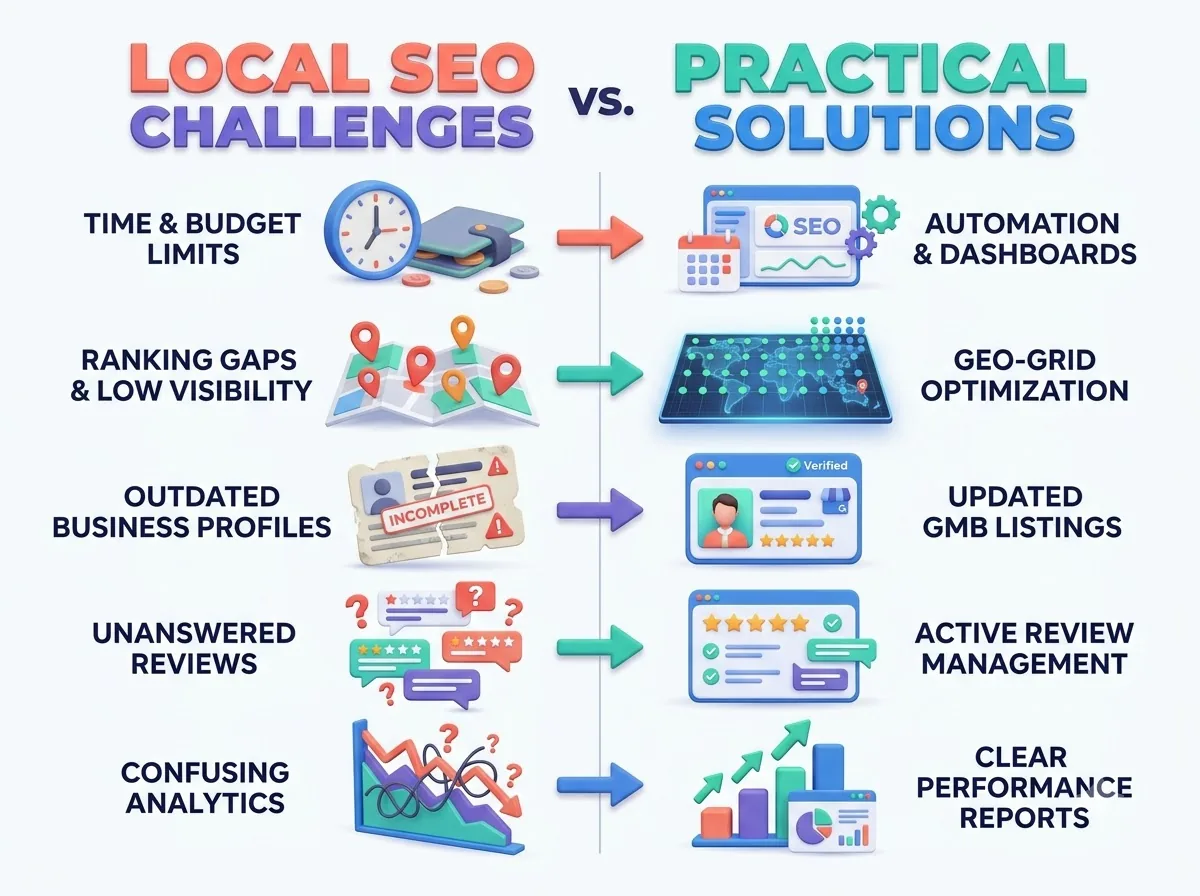
Small businesses often face several local SEO challenges that make it harder to attract nearby customers. Limited time and budgets can push optimization tasks aside, while inconsistent rankings make it difficult to understand visibility across different neighborhoods. Outdated business listings and unanswered reviews can also affect customer trust. The table below highlights these common challenges and shows how local SEO tools, geo-grid rank tracking, Google Business Profile management, review management software, and local SEO analytics can help businesses manage their local search efforts more efficiently.
Limited Time, Budgets, and Marketing Resources
Small business owners often manage marketing alongside customer service, sales, and daily operations. Hiring dedicated SEO professionals may not fit their budgets, while manual keyword research and reporting can take valuable time.
Local SEO software for small businesses can simplify recurring tasks by bringing ranking data, reviews, and reporting into a more organized workflow. The goal is to reduce repetitive work, not remove the need for informed decisions.
Difficulty Tracking Rankings Across Neighborhoods
Have you ever searched for your business and wondered why it appeared differently from another location? Local search results can vary geographically, making a single ranking check an incomplete measure of visibility.
Local rank tracking software with geo-grid capabilities can reveal where a business performs well and where improvements may be needed. For example, a plumber might rank strongly near the office but struggle to appear in searches from neighboring suburbs.
Managing Business Listings and Customer Reviews
An incomplete Google Business Profile or outdated contact information can create confusion for potential customers. Meanwhile, monitoring reviews and responding thoughtfully requires consistent attention.
Suitable local SEO tools can help businesses organize listing updates, monitor customer feedback, and prepare review responses. I recommend checking automated suggestions before publishing them to ensure every response remains accurate and personal.
Measuring Local SEO Performance
Rankings matter, but they do not tell the whole story. Businesses should also monitor website clicks, calls, direction requests, and review activity where these metrics are available.
Local SEO analytics help owners evaluate trends and identify which areas deserve attention. By reviewing these indicators together, businesses can make more informed marketing decisions.
Ultimately, recognizing these challenges helps small businesses choose software that fits their needs, saves time, and supports a more consistent approach to improving local search visibility.
Why Local SEO Software Is Becoming Essential for Small Businesses
For small businesses, improving local visibility is not just about ranking higher on Google. It is about helping nearby customers discover the business, trust its services, and take action. Managing every SEO task manually can become overwhelming, which is why local SEO software for small businesses is becoming increasingly valuable. Let's look at the practical benefits and how they support everyday marketing decisions.
| Key benefit | How it helps small businesses |
|---|---|
| Better ranking insights | Identifies local search visibility gaps. |
| Time savings | Simplifies recurring SEO tasks. |
| Review management | Helps businesses monitor customer feedback. |
| Performance tracking | Measures important local search metrics. |
| Smarter decisions | Highlights opportunities for improvement. |
Improve Local Search Visibility
Wouldn't it be helpful to know which neighborhoods generate strong visibility and which need more attention? Local rank tracking software helps businesses monitor target keywords and understand ranking changes across different locations.
For example, a local electrician might rank well near the business address but struggle in nearby communities. Using geo-grid rank tracking, the business can identify those gaps and review its location pages, service information, and Google Business Profile.
Save Time With Centralized SEO Management
Small business owners already have plenty to manage. Switching between separate tools to check rankings, reviews, and reports can make SEO unnecessarily complicated.
Local SEO tools can bring several activities into one dashboard, depending on the platform. This may help businesses:
- Monitor keyword rankings more consistently.
- Organize review monitoring and responses.
- Manage supported business listing tasks.
- Review performance without compiling every report manually.
I see this as one of the biggest advantages: less time spent gathering information means more time available for acting on it.
Build Trust Through Review Management
Customer reviews influence how people evaluate local businesses. Monitoring feedback and responding professionally can show customers that their experiences matter.
Local SEO software with review management features can help businesses track new feedback and prepare timely responses. Some platforms also offer AI-assisted reply suggestions. I recommend reviewing these drafts before publishing to ensure they accurately reflect the customer's experience.
Measure Results and Make Better Decisions
How do you know whether your local SEO strategy is working? Rankings provide useful information, but they should not be your only measurement.
Local SEO analytics can help businesses review metrics such as:
- Keyword rankings and search visibility.
- Website clicks and calls, where available.
- Direction requests and profile interactions.
- Review trends and changes over time.
Make Local SEO More Manageable With Happy Rank
Platforms offer tools for monitoring local rankings, managing Google Business Profile activities, and tracking performance. These capabilities can help small businesses organize their SEO workflow and identify opportunities for improvement.
Essential Features to Look for in Local SEO Software
Choosing the right local SEO software for small businesses is easier when you know which features solve your biggest challenges. I recommend focusing on tools that simplify daily tasks, provide useful insights, and fit your budget rather than choosing a platform simply because it offers dozens of features.
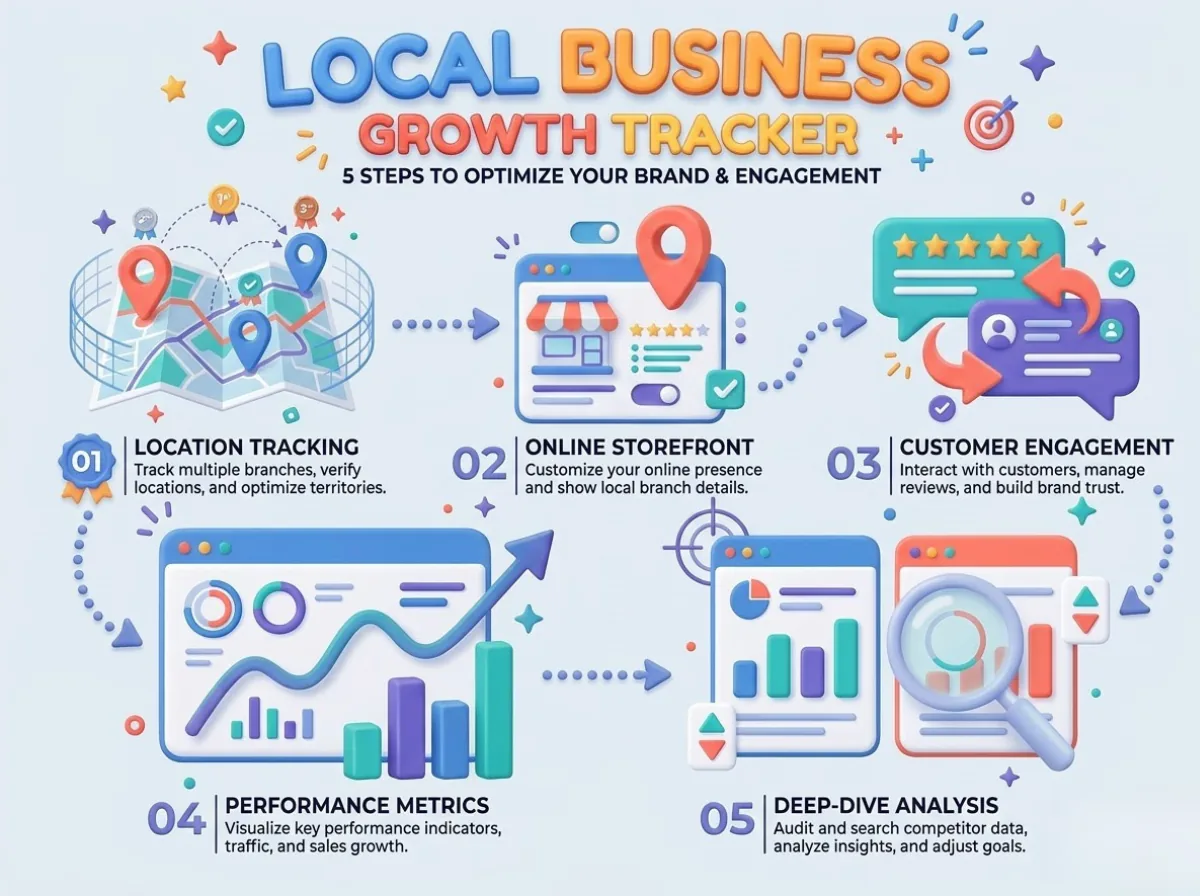
Choosing local SEO software becomes easier when you know which features support your business goals. From tracking keyword rankings across target locations to keeping your Google Business Profile information accurate, each feature plays a role in improving local search management. Review management helps you organize customer feedback, while local SEO analytics shows how your visibility and customer actions change over time. Meanwhile, competitor tracking can reveal areas where your business may have opportunities to improve. The table below outlines five essential local SEO software features and explains why each one matters for small businesses.
Local Keyword and Rank Tracking
Look for local rank tracking software that monitors important service-related and location-specific keywords. Geo-grid tracking is particularly useful for businesses serving multiple neighborhoods because it helps visualize geographic ranking differences.
Google Business Profile Management
Your Google Business Profile provides essential information to potential customers. Choose software that supports relevant listing management tasks, including monitoring profile details and organizing updates where available. Accurate business information helps customers understand your services and contact you confidently.
Review Monitoring and Response Assistance
Local SEO tools with review management can help you monitor new feedback and respond more consistently. Some platforms provide AI-assisted response suggestions, which can save time. I always recommend checking suggested replies before publishing to keep communication accurate and personal.
Analytics and Competitor Insights
Useful local SEO analytics should help you understand performance rather than overwhelm you with numbers. Look for reporting on rankings, website clicks, calls, and direction requests where supported. Competitor tracking can also reveal areas where other businesses have stronger visibility.
Ease of Use and Budget
Before committing to a platform, consider these practical questions:
- Is the dashboard easy for your team to understand?
- Does the pricing match your business size and usage?
- Can the software support additional locations as you grow?
- Are integrations and customer support suitable for your needs?
For example, HappyRank.io is worth exploring if you need local ranking insights and tools for managing key local SEO activities.
Ultimately, the best local SEO software is the one that addresses your actual needs, fits your budget, and helps you maintain a consistent optimization routine.
How Small Businesses Can Get Started With Local SEO Software
Choosing local SEO software is only the beginning. To get meaningful results, small businesses need a clear strategy, realistic goals, and a consistent process for monitoring progress. My recommendation is to start with the basics, identify your biggest visibility gaps, and use the data to decide what deserves attention first.
Identify Your Local SEO Goals and Target Areas
Before choosing a tool, ask yourself what you want to achieve. Are you trying to attract more phone calls, increase store visits, or generate inquiries from nearby customers?
Start by identifying your priorities:
- Select your most important products or services.
- Research relevant local keywords, including service and location combinations.
- Identify the neighborhoods or service areas you want to reach.
- Record your current rankings and available customer engagement metrics.
For example, a cleaning company might prioritize searches for house cleaning services in three nearby neighborhoods instead of targeting an entire city immediately. This makes the initial strategy more focused and manageable.
Optimize Your Business Listings and Track Performance
Your Google Business Profile optimization should be part of your starting process. Check that your business name, address, phone number, operating hours, categories, and service information are accurate.
Next, use local rank tracking software to monitor important keywords. If your chosen platform supports geo-grid rank tracking, examine how visibility varies across your service area.
I recommend reviewing these results before making major changes. A ranking gap can suggest an opportunity, but you should investigate the cause rather than assuming that one specific change will fix it.
Build a Consistent Review and Reporting Routine
Local SEO works best when you monitor progress regularly instead of checking results only when business slows down.
Create a simple routine that includes:
- Checking new customer reviews and responding appropriately.
- Reviewing keyword rankings and local visibility.
- Updating business information when details change.
- Tracking available calls, website clicks, and direction requests.
- Comparing performance over time to identify useful trends.
These habits make local SEO analytics more actionable and help you decide which tasks should come next.
Choose a Tool That Fits Your Workflow
The right local SEO tools for small businesses should simplify your work, not create another complicated process. Compare available features, pricing, integrations, and reporting options before making a decision.
For example, HappyRank.io is worth exploring if you want tools for monitoring local rankings, reviewing geographic visibility, and managing important local SEO activities.
Ultimately, you do not need to change everything at once. Start with clear goals, maintain accurate listings, and review performance consistently. With the right process and suitable local SEO software, your business can make more informed decisions and work toward stronger visibility in the local markets that matter most.
Conclusion
For small businesses, building a strong local presence takes more than simply having a website. Customers need to find accurate business information, discover relevant services, and feel confident choosing your business over nearby competitors. A consistent approach to local SEO can help you work toward these goals.
As we have discussed, managing local rankings, business listings, customer reviews, and performance data can become challenging when every task is handled manually. Local SEO software for small businesses helps organize these activities, identify opportunities for improvement, and make ongoing optimization easier to manage.
Choosing the right solution means looking for features that match your business needs, goals, and available resources. Platforms likeHappy Rank can support your efforts to monitor local visibility and manage important SEO activities more efficiently.
Now, take a moment to consider your own business. Are nearby customers finding you online, or are competitors gaining their attention? The right tools and a consistent strategy can help you move toward better local search visibility and stronger connections with local customers.
Frequently asked questions
Why do small businesses struggle to manage local SEO manually?
Most owners juggle marketing with sales, service, and daily operations. Checking rankings, updating listings, monitoring reviews, and building reports in separate tools takes time, while single-location rank checks hide neighborhood gaps. Software that centralizes these recurring tasks saves hours and makes performance easier to understand.
How does geo-grid rank tracking help a small business?
Local results change with the searcher’s location, so one check from your storefront hides weak spots. Geo-grid tracking scans multiple points across your service area to reveal which neighborhoods need attention, such as a plumber ranking well near the office but invisible in a neighboring suburb.
What features should small businesses look for in local SEO software?
Prioritize local keyword and geo-grid rank tracking, Google Business Profile management, review monitoring with response assistance, analytics plus competitor insights, and a dashboard and price that fit your team. The best tool matches your real needs and supports more locations as you grow.
How can a small business get started with local SEO software?
Set goals such as calls, visits, or inquiries, pick priority services and neighborhoods, verify your listings, and record baseline rankings. Then build a routine: check reviews, review rankings, update business info, and track calls, clicks, and direction requests over time.
Can local SEO software replace SEO expertise?
No. It simplifies recurring work by organizing ranking data, reviews, and reporting, but owners still make the decisions. Investigate ranking gaps before acting, and always review AI-assisted review replies before publishing to keep responses accurate and personal.