
How Landscapers Can Win More Local Projects
Landscapers win more local projects by making their business easy to find, trust and contact: a mobile-friendly website with service and area pages, local landscaping keywords, a complete Google Business Profile, a portfolio of before-and-after photos, genuine reviews, a simple estimate form, prompt follow-up, clear proposals and monthly tracking of inquiries and completed jobs.
Winning more landscaping projects takes more than doing great work. You also need to make sure local customers can find your business when they search for landscaping services near me, compare contractors, or look for ideas to improve their outdoor spaces. Think about it: a homeowner who wants a new garden, a beautiful patio, or regular lawn maintenance will likely check Google before contacting a landscaper. If your business does not appear in those local searches, you could miss out on valuable opportunities. The good news is that a few smart changes can help you attract more local landscaping leads, build trust, and turn online searches into real projects. From improving your Google Business Profile to showcasing completed work and collecting customer reviews, every step can strengthen your local SEO for landscapers. Tools like Happy Rank can also help you monitor local search visibility and identify opportunities to improve your online presence.
Build a Strong Local Online Presence
When homeowners need a new garden, lawn renovation, or outdoor living space, they often start by searching online for a reliable contractor nearby. If your business is difficult to find or your website does not clearly explain your services, potential customers may contact a competitor instead. Building a strong online presence helps landscapers reach the right audience, showcase their expertise, and generate more local project inquiries.
Create a Professional Landscaping Website
Your website is often the first place potential customers visit to learn about your landscaping business. It should answer their main questions quickly: What services do you offer? Which areas do you serve? Can they trust your work? And how can they request an estimate? A well-organized landscaping website should include:
- Homepage: Introduce your business, highlight your main services, and explain what makes your team different.
- Service pages: Describe individual offerings, such as lawn installation, garden design, hardscaping, irrigation, and landscape maintenance.
- Service area pages: Explain which cities and neighborhoods you serve, using useful local information rather than repetitive location-based content.
- Project gallery: Showcase genuine before-and-after photos of completed landscaping projects.
- Contact page: Provide your phone number, email address, service area, and a simple estimate request form.
Make sure your website works smoothly on mobile devices. Many homeowners search for landscaping services near me using their phones, so clear navigation, readable text, fast-loading pages, and visible contact buttons can make a real difference. For example, a landscaping company in Austin could feature a page about drought-tolerant garden design, with examples of local projects and a clear option to request an estimate.
Target Local Landscaping Keywords
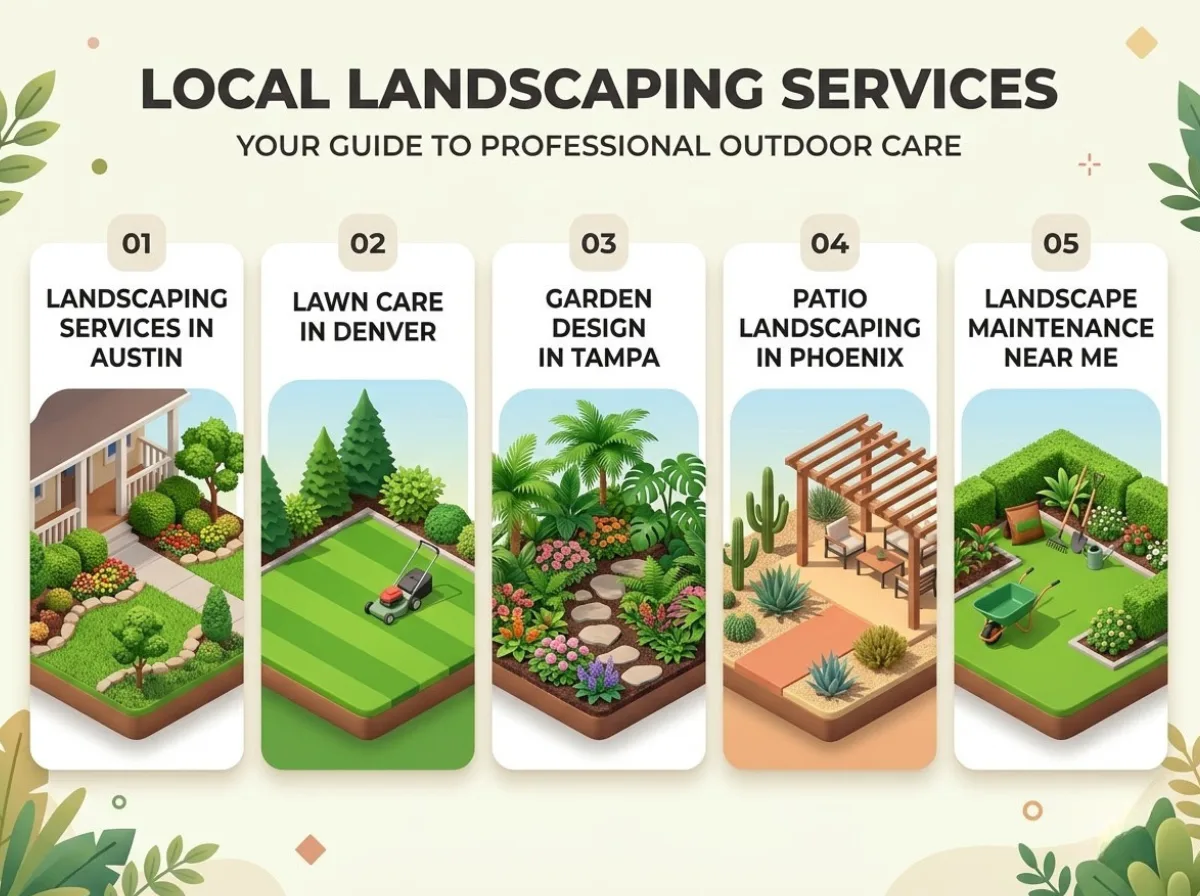
A beautiful website is helpful, but customers must be able to find it through relevant searches. This is where local SEO for landscapers becomes important. Start by identifying the phrases potential customers use when looking for landscaping services. Focus on terms that describe both the service and the location. Examples include: Landscaping needs can vary from one location to another, and understanding what local customers are searching for can help you attract the right projects. Whether homeowners need lawn care, garden design, patio landscaping, or ongoing maintenance, targeting relevant local landscaping keywords helps your business connect with people looking for these services. Here are some examples of location-based searches landscapers can target to improve their local visibility.
Local landscaping services
Use these phrases naturally in relevant page titles, headings, service descriptions, and website copy. Avoid repeating the same keyword unnecessarily, as this can make content difficult to read. It is also worth targeting searches that reflect different customer needs. Someone searching for garden design may want a complete outdoor transformation, while someone looking for lawn maintenance may need recurring service. Dedicated pages for your main offerings help address these different needs more effectively.
Create Location-Specific Service Pages
If your business serves several neighborhoods or nearby cities, location-specific pages can help customers understand whether you work in their area. However, simply replacing a city name on several identical pages will not provide much value. Each page should contain useful information that reflects the area's needs. Consider including:
- Landscaping services available in that location.
- Relevant examples of projects completed nearby.
- Local climate or soil considerations that affect landscaping choices.
- Customer testimonials from genuine local clients.
- Clear information about requesting an estimate.
For example, a landscaper serving Phoenix could discuss drought-tolerant plants and water-efficient landscape design, while a business serving a colder climate might focus on seasonal planting and winter preparation. These details make your content more useful while supporting local search visibility. The goal is to create an online presence that answers customer questions, demonstrates your experience, and makes it easy for local homeowners to take the next step. A helpful website gives every other marketing effort a stronger foundation.
Improve Google Maps and Local Search Visibility
Your website is only one part of the picture. When someone searches for a landscaper nearby, Google Maps and local search results can influence which businesses they consider first. Improving your local presence helps potential customers discover your services and evaluate whether your company fits their needs.
Optimize Your Google Business Profile
A complete and accurate Google Business Profile helps Google understand your business and gives potential customers essential information before they contact you. Start by checking that your business name, phone number, website, operating hours, and service areas are accurate. Choose the most appropriate primary business category and add relevant secondary categories where they genuinely describe your services. You should also:
- List the landscaping services you actually provide.
- Upload genuine photographs of completed projects.
- Keep seasonal hours and business information updated.
- Add a clear business description that explains your expertise.
- Respond professionally to customer reviews.
- Publish useful updates when you have relevant projects, seasonal advice, or business news to share.
For service-area businesses, make sure your profile follows Google's guidelines. If customers do not visit your business address, you generally should hide that address and specify the service areas you cover. Remember that completing your profile does not guarantee a top ranking. Local search visibility depends on several factors, including relevance, distance, and prominence.
Strengthen Local Search Relevance
Your website and business profile should communicate a consistent picture of the services you offer and the customers you serve. Use relevant landscaping keywords in your service pages, business descriptions, and other appropriate content. Keep your business details consistent across important directories and local listings. Where possible, build relationships with reputable local organizations and businesses that may naturally reference your work. For example, a landscaping company specializing in outdoor kitchens and patios should explain those services clearly instead of relying on a broad description such as "general outdoor services." You can also publish useful content that answers common local questions, including:
- Which plants are suitable for the local climate?
- When should homeowners schedule lawn renovation?
- How can homeowners improve drainage in their yards?
- What should customers consider before installing a patio?
These topics help potential customers find relevant information while demonstrating your practical expertise.
Monitor Rankings Across Different Neighborhoods
A landscaper may appear prominently in local results near their office but have weaker visibility in other parts of the service area. That is why monitoring rankings across different locations can be more informative than checking one search result. Local rank tracking and Google Maps ranking tracking help you understand where your business is visible and where there may be room for improvement. For example, imagine your landscaping company performs well in the neighborhoods closest to your base but receives few inquiries from a nearby suburb. Reviewing your local search visibility may reveal that your business has limited reach in that area. Happy Rank can help businesses monitor Google Maps rankings through geographic grid scans, making it easier to review how visibility changes across locations. These insights can inform decisions about service pages, profile optimization, and local content. Use ranking information as a starting point rather than the only measure of success. Compare visibility with calls, estimate requests, and completed projects to understand whether your local marketing is attracting valuable opportunities.
Publish Useful Local Updates
Your local presence should remain active and helpful. Share seasonal landscaping tips, photographs of completed work, and updates that answer questions your customers commonly ask. For instance, you could publish spring planting advice, fall cleanup reminders, or tips for maintaining drought-tolerant gardens when these topics are relevant to your service area. Avoid posting just to appear active. Each update should provide useful information, demonstrate your expertise, or help customers understand your services. Consistent profile maintenance, relevant content, and location-level performance monitoring give landscapers a clearer picture of their local visibility. Over time, these efforts can help you identify opportunities to reach more of the customers you want to serve.
Showcase Projects and Build Customer Trust
Landscaping is a visual service. Homeowners want to see what you can do before trusting you with their property, their budget, and their outdoor plans. A strong portfolio, genuine customer reviews, and helpful project information make it easier for prospects to evaluate your business and feel confident about getting in touch.
Build a Compelling Landscaping Portfolio
Your project portfolio should demonstrate the quality and variety of your work. Instead of displaying a random collection of photographs, organize your landscaping project portfolio around the services customers are most likely to need. You could create separate categories for:
- Lawn installation and renovation.
- Garden design and planting.
- Patio construction and hardscaping.
- Irrigation and drainage improvements.
- Outdoor living spaces.
- Seasonal landscaping and maintenance.
Whenever possible, include before-and-after photos. These show the original challenge and the result more clearly than finished photographs alone. Add a short description to explain the project. Mention the customer's goals, the work completed, and any practical considerations that influenced the design. Obtain permission before publishing photographs or identifying details about a customer's property. For example, a case study about replacing a patchy lawn with a low-maintenance garden could explain how the new design addressed the homeowner's concerns about upkeep and water consumption. This type of content demonstrates your experience while helping prospective customers imagine what you could accomplish for them.
Collect Genuine Customer Reviews
Online reviews can strongly influence how potential customers evaluate a landscaping company. Before requesting an estimate, homeowners may compare feedback about communication, workmanship, reliability, and project completion. Develop a simple process for requesting customer reviews for landscapers after a project is completed.
- Ask customers for honest feedback once they have had an opportunity to assess the work.
- Share a direct review link to make leaving feedback convenient.
- Respond to positive reviews with a brief, personalized thank-you.
- Address negative feedback professionally and offer to resolve legitimate concerns.
- Never purchase reviews or pressure customers to provide only positive feedback.
You can also make review requests part of your project closeout process. For example, after confirming that the customer is satisfied with a garden renovation, send a polite message thanking them for their business and inviting them to share their experience. Reviews do not guarantee better rankings, but they can help potential customers assess your reputation and decide whether to contact you.
Use Project Content to Demonstrate Expertise
Your portfolio shows what you have completed, while educational content explains how you approach landscaping challenges. Create short articles, project stories, or social posts that answer questions your customers commonly ask. Topics might include choosing plants for a particular climate, planning a low-maintenance garden, improving yard drainage, or preparing a lawn for seasonal changes. A useful project story could follow this structure:
- The challenge: Explain the problem the customer wanted to solve.
- The approach: Describe the design choices, materials, or services used.
- The outcome: Show the finished project and explain how it addresses the original needs.
Use original photos and specific details wherever possible. Avoid making unsupported claims about savings, durability, or results. Helpful content supports landscaping business marketing by giving potential customers practical information before they request a quote. It also creates opportunities to direct readers to relevant service pages.
Maintain a Credible Online Reputation
Trust is built through consistent interactions, not just an attractive website. Keep your business details accurate, explain your services honestly, and respond to customer concerns in a respectful manner. Review your public listings regularly to identify outdated information or customer feedback that needs attention. If your business receives a complaint, acknowledge the concern and explain how the customer can contact you to discuss a resolution. Tools such as Happy Rank can help businesses monitor reviews and organize their responses. Review any AI-assisted reply carefully before publishing it to ensure that it accurately reflects the customer's experience and your intended response. A credible reputation makes it easier for homeowners to evaluate your business. Combined with a strong portfolio and helpful content, it gives potential customers more reasons to consider your company for their next landscaping project.
Turn Local Inquiries Into Landscaping Projects
Getting found online is an important first step, but visibility alone does not pay the bills. You also need a reliable process for turning interested homeowners into estimate requests, approved proposals, and completed jobs. Small improvements in communication and follow-up can help you make better use of the leads your marketing generates.
Make It Easy to Request an Estimate
When someone visits your website, the next step should be obvious. If a potential customer has to search for your phone number or complete a lengthy form, they may abandon the process. Create clear calls to action such as "Request a Landscaping Estimate" or "Schedule a Site Visit." Place them on relevant service pages and make sure they are easy to use on mobile devices. Your estimate request form should collect enough information to help you understand the project without overwhelming the customer. Useful fields may include:
- Customer name and preferred contact method.
- Project address or service location.
- Type of landscaping service required.
- Approximate property or project size, if relevant.
- Desired project timeline.
- Optional photographs and additional details.
You do not need to collect every detail upfront. The purpose is to understand the customer's needs and decide on the next step. A simple, accessible inquiry process supports landscaping lead generation by making it easier for interested prospects to contact your business.
Respond to Leads Promptly and Professionally
A homeowner requesting an estimate may contact several landscaping companies. A clear and timely response helps you establish expectations and keep the conversation moving. Create a consistent process for handling phone calls, emails, website forms, and other inquiries. If you cannot provide an estimate immediately, acknowledge the request and explain when the customer can expect to hear from you. During the initial conversation, ask relevant questions about the customer's goals, budget expectations, site conditions, and preferred schedule. These details help you determine whether a site visit or a more detailed discussion is necessary. Avoid promising prices or completion dates before you understand the scope of the work. Honest communication builds trust and reduces the risk of misunderstandings later.
Create Clear Landscaping Proposals
A professional proposal helps customers understand what they are paying for and what they can expect from the project. Your landscaping proposal should clearly explain:
- The scope of work and services included.
- Materials, plants, equipment, and labor where applicable.
- Estimated costs and payment terms.
- Expected project milestones and scheduling assumptions.
- Any exclusions, site requirements, or potential additional charges.
- The approval process and next steps.
For a garden redesign, for example, separate the proposed planting work from optional irrigation improvements or additional hardscaping. This helps the customer compare options without confusion. Once you send the proposal, follow up politely after a reasonable interval. Ask whether the customer has questions or needs clarification rather than pressuring them to make a quick decision.
Build Repeat Business and Referral Opportunities
Not every landscaping project needs to end with a one-time transaction. Satisfied customers may need seasonal maintenance, additional planting, drainage improvements, or future outdoor upgrades. After completing a project, check that the customer is satisfied and address any outstanding concerns. Where appropriate, explain related services that could help them maintain or improve their property. You can also encourage referrals by providing a positive customer experience and making it easy for satisfied clients to recommend your business. Building relationships with property managers, real estate professionals, and other relevant local businesses may create additional opportunities. A reliable sales process helps you get more value from existing marketing efforts. By responding clearly, presenting professional estimates, and maintaining customer relationships, you can improve your chances of turning qualified inquiries into long-term business.
Track Results and Strengthen Your Local Strategy
Once your website, business profile, and lead handling process are in place, the next step is to measure what is working. Tracking the right metrics helps you make decisions based on actual performance rather than assumptions. It also helps you identify where small improvements could lead to more valuable landscaping opportunities.
Measure the Metrics That Matter
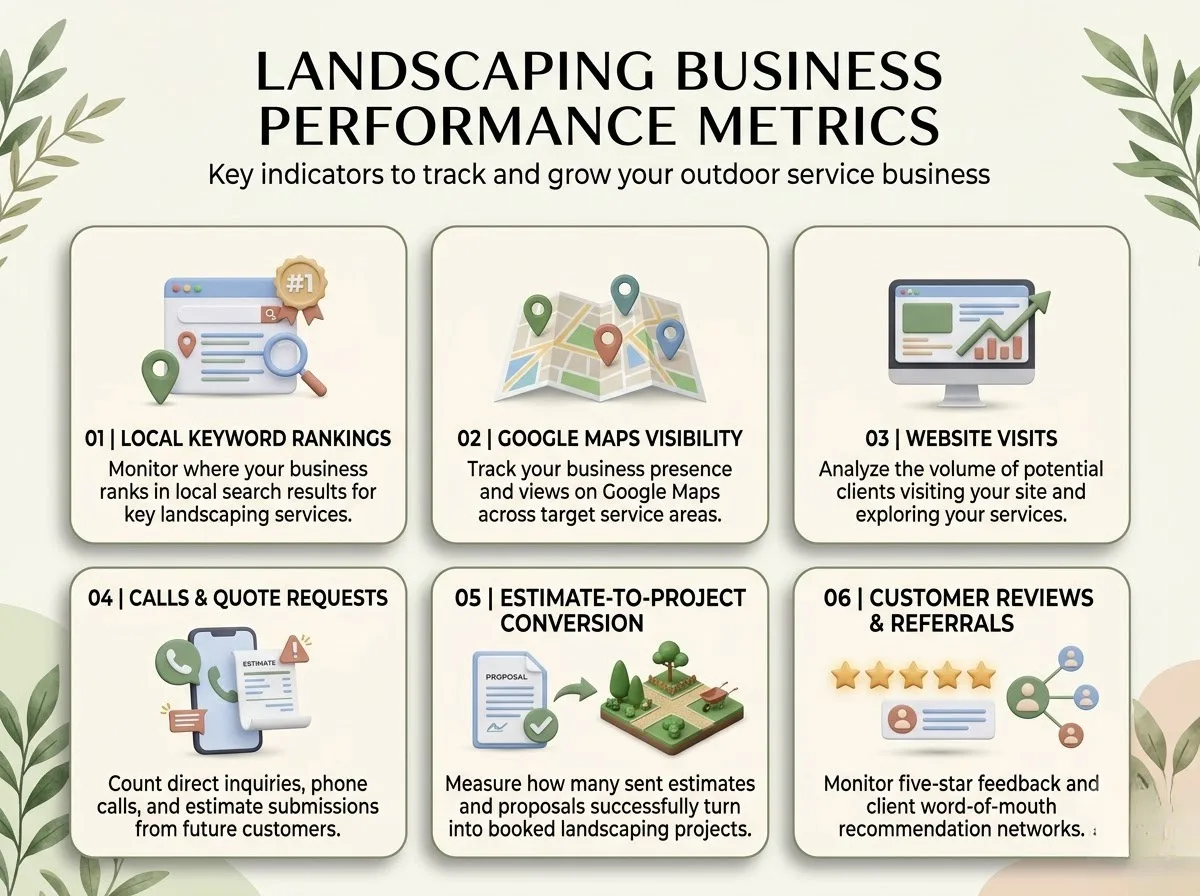
Do not judge your marketing solely by website traffic or search rankings. Those numbers are useful, but they do not tell you whether your business is winning projects. Monitor a combination of visibility, engagement, and sales metrics. Tracking the right metrics helps you understand whether your local SEO for landscapers is attracting potential customers and generating new projects. Rankings alone do not tell the whole story. You also need to know whether people are visiting your website, requesting estimates, calling your business, and choosing your services. Monitoring these six key metrics can help you measure your local search visibility, identify areas for improvement, and turn more local searches into landscaping opportunities.
Landscaping business performance metrics
Review these metrics regularly and compare them over time. For example, an increase in quote requests may be encouraging, but you should also examine whether those inquiries match your services, service area, and project requirements.
Use Local SEO Data to Identify Opportunities
Local SEO tracking helps you identify areas where your business may need additional attention. If your landscaping company performs well in one neighborhood but has limited visibility in another, investigate the reasons before deciding what to change. You might need to improve a relevant service page, add genuine project examples, update your business profile, or publish more useful information about the services you offer. Happy Rank can support this process with local ranking monitoring and Google Business Profile performance insights. Depending on the available data, you can review visibility patterns alongside customer actions such as calls, website clicks, and direction requests. Use these insights to prioritize meaningful improvements rather than chasing every ranking fluctuation. Search performance can change for several reasons, and not every change requires an immediate response.
Improve Your Strategy Consistently
Set aside time each month to review results and decide which actions deserve attention next. For example, you could:
- Update service pages that no longer reflect your offerings.
- Add recent project photographs and useful case studies.
- Improve the estimate request process if customers struggle to contact you.
- Respond to outstanding reviews and update inaccurate business information.
- Review which services generate the most suitable inquiries and completed projects.
Keep your priorities realistic. Improving a few important pages or refining your follow-up process may be more valuable than making dozens of changes without measuring their impact. The goal is to create a repeatable process: monitor your visibility, understand customer behavior, improve weak areas, and measure the results. With consistent effort, your landscaping business can build a stronger local presence and make better-informed marketing decisions.
Conclusion
Winning more local landscaping projects starts with making your business easier to find, easier to trust, and easier to contact. A professional website, an optimized Google Business Profile, genuine project photos, and honest customer reviews all help potential clients evaluate your services. A clear estimate process and consistent follow-up then help turn those opportunities into paying customers. You do not have to improve everything at once. Start with the areas that need the most attention, track your progress, and make adjustments as you learn what works. With a consistent local SEO strategy for landscapers, you can strengthen your online presence and build a more reliable pipeline of projects. Explore Happy Rank to see how local visibility monitoring can support your next steps.
Frequently asked questions
What should a landscaping website include?
A homepage, a page for each service such as lawn installation, garden design, hardscaping and irrigation, service area pages with useful local information, a gallery of real before-and-after photos, and a contact page with a simple estimate request form.
Should landscapers create pages for each city they serve?
Only with genuinely useful local content, like projects completed nearby, local climate or soil considerations and testimonials from local clients. Pages that only swap the city name add little value.
Should a landscaper hide their address on Google Business Profile?
If customers don't visit your business address, you generally should hide it and list the service areas you cover, following Google's guidelines for service-area businesses.
How should landscapers organize their portfolio?
Group projects by the services customers need, such as lawns, garden design, patios, irrigation and outdoor living, and use before-and-after photos with a short note on the customer's goals and the work completed. Get permission before publishing.
What should a landscaping estimate form ask for?
The customer's name and preferred contact method, project location, type of service, approximate size, desired timeline and optional photos. Keep it short and easy to complete on a phone.
What should a landscaping proposal include?
The scope of work, materials and labor, estimated costs and payment terms, milestones and scheduling assumptions, exclusions or possible extra charges, and the approval steps.