
Why Local Search Matters for Landscaping Leads
Local search connects landscaping companies with ready-to-hire homeowners by targeting intent-driven queries, optimizing Google Business Profiles with verified project photos, and maintaining geo-grid visibility across service neighborhoods. Appearing in the Google Maps local 3-pack drives high-intent phone calls, direct quote requests, and recurring maintenance contracts.
When homeowners need lawn maintenance, garden design, or outdoor improvements, they often turn to Google to find reliable landscaping companies nearby. For landscaping businesses, appearing in these searches can make the difference between gaining a new customer and losing an opportunity to a competitor.Local search for landscaping leadshelps businesses connect with homeowners who are actively looking for specific services within their area.
However, visibility alone is not enough. Customers also consider reviews, project photos, service availability, and business information before requesting an estimate. A stronglocal search visibilitystrategy helps landscapers reach relevant homeowners, attract qualified landscaping leads, and build trust with potential customers who are ready to hire.
Understanding local search intent also helps businesses identify valuable service areas and improve customer acquisition. Tools like[Happy Rank](/)help landscaping businesses monitor local rankings and Google Maps visibility, making it easier to understand how potential customers discover their services and where more visibility is needed.
How Local Search Connects Landscapers With Ready-to-Hire Customers
When homeowners need landscaping services, they often search online for professionals who can serve their location and meet their specific requirements. Someone looking for routine lawn maintenance has different needs from a homeowner planning a complete backyard renovation. Understanding these differences helps landscaping businesses connect with people who are more likely to become customers.Local search for landscaping leads makes it easier for businesses to reach homeowners who are actively exploring services, comparing providers, or preparing to request estimates.
Understanding What Homeowners Search Before Hiring a Landscaper
Homeowners use different search terms depending on the type of outdoor improvement they need. Some look for inspiration, while others are ready to hire a professional. These searches reveal customer requirements and help landscapers understand their potential audience.
Common local landscaping searches include:
- "Landscaper near me":Homeowners looking for nearby landscaping professionals.
- "Lawn maintenance services near me":Customers interested in mowing, trimming, lawn care, and recurring maintenance.
- "Landscape design company in [area]":Homeowners searching for professional garden planning and outdoor design.
- "Affordable landscaping services":Customers comparing service providers and evaluating project costs.
- "Patio and hardscaping contractors near me":Homeowners looking for specific outdoor construction and improvement services.
These searches generally fall into two categories:
- Informational searches:Homeowners researching landscaping ideas, plant selection, lawn care advice, or outdoor design options.
- Service-focused searches:Homeowners looking for professional landscapers, comparing local providers, checking availability, or requesting estimates.
Understanding landscaping search intent helps businesses recognize which searches indicate an immediate service requirement and which represent an earlier stage of customer research.
Why Location-Based Searches Often Bring Stronger Leads
Landscaping is a location-dependent service. Homeowners usually prefer professionals who can visit their properties, understand local conditions, and provide services within their area. Someone searching for a landscaping company in their neighborhood is generally looking for a practical service provider rather than browsing businesses across an entire state.
Location-based searches help landscapers connect with homeowners who are more relevant to their service areas. They also help attract customers who value convenience, accessibility, and local experience.
For example, someone searching for "backyard landscaping services in Austin" has a more specific requirement than someone researching general backyard design ideas. Appearing in relevant searches creates an opportunity to attract qualified inquiries and schedule consultations.
Reaching Customers at Different Stages of the Buying Journey
Not every homeowner searching for landscaping services is ready to hire immediately. Some are exploring ideas, while others are comparing companies or requesting estimates.
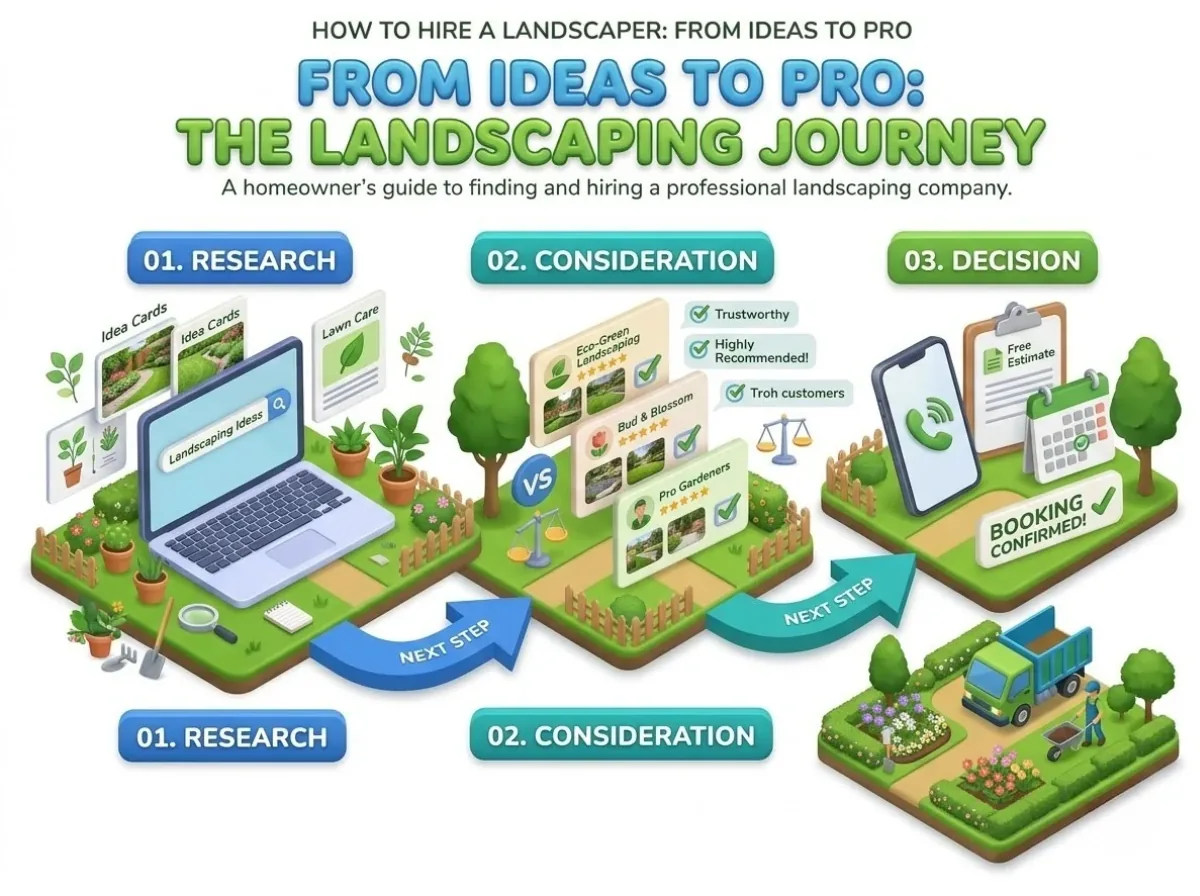
Appearing across these stages gives businesses more opportunities to connect with potential customers. The goal is not simply to attract more website visitors but to reach homeowners whose requirements match the company's services and availability. This makes local search visibility an important source of qualified landscaping leads and long-term customer acquisition.
How Local Visibility Influences a Homeowner's Choice of Landscaping Company
Finding a landscaping company online is only the first step in a homeowner's decision-making process. Once potential customers discover local businesses, they usually compare several options before deciding whom to contact. They may examine customer reviews, browse completed projects, check service areas, and evaluate how professionally a business presents itself online. This is where local search visibility becomes valuable. Appearing in relevant search results gives landscaping businesses an opportunity to make a strong first impression and establish credibility before a homeowner makes an inquiry.
Why Appearing in Local Search Results Builds Initial Trust
Homeowners are more likely to consider businesses that are easy to find and provide clear information about their services. Appearing in relevant Google search results and Google Maps helps landscaping companies introduce themselves to potential customers who may not have discovered them through referrals.
However, visibility needs to be supported by accurate and consistent business information. Homeowners often look for details such as:
- Business name, address, and contact information.
- Landscaping services and specialties.
- Operating hours and service availability.
- Areas and neighborhoods covered.
- Website links and project information.
When these details are readily available, customers can understand what a company offers and whether it meets their requirements. A complete Google Business Profile also makes it easier for homeowners to contact a landscaping business without unnecessary effort.
How Reviews and Ratings Influence Landscaping Decisions
Landscaping projects often involve property improvements, ongoing maintenance, and significant customer investment. Before hiring a professional, homeowners want reassurance that the company can deliver reliable work and communicate effectively.
Online reviews for landscaping businesses provide insight into previous customer experiences. Homeowners may look for feedback about project quality, punctuality, professionalism, pricing, and overall satisfaction.
Landscaping companies should pay attention to the following review factors:
- Review quantity:A consistent collection of genuine customer reviews helps demonstrate business activity and experience.
- Review quality:Detailed feedback about completed landscaping projects gives potential customers useful information.
- Review recency:Recent reviews help homeowners understand the company's current service quality.
- Business responses:Professional responses show that the company values customer feedback and takes concerns seriously.
Positive customer experiences can strengthen trust, while thoughtful responses to negative feedback demonstrate accountability.
Why Photos and Business Information Matter Before the First Call
Landscaping is a visual service, so homeowners often want to see examples of previous work before contacting a provider. Photos of completed gardens, lawn installations, patios, and outdoor transformations help customers evaluate a company's capabilities.
Clear landscaping project photos, accurate service descriptions, and updated contact information reduce uncertainty during the hiring process. When homeowners can easily understand a company's experience and offerings, they have more confidence in taking the next step.
Ultimately, a strong local presence helps landscaping businesses become more recognizable, build customer trust, and earn consideration when homeowners are ready to request an estimate.
Why Local Search Can Bring More Valuable Landscaping Opportunities
Generating a high number of inquiries does not always mean a landscaping business is attracting the right customers. Some homeowners may be outside its service area, while others may be looking for services the company does not provide.Local search for landscaping leads helps businesses connect with potential customers whose locations, project requirements, and expectations better match their offerings. By reaching relevant homeowners, landscapers can focus their marketing efforts on opportunities that are more practical and likely to generate business.
Attracting Customers Who Need Specific Landscaping Services
Homeowners search for landscaping companies with different project requirements. Some need regular lawn maintenance, while others want professional assistance with garden design, irrigation installation, or outdoor renovations.Service-specific local searches help connect these customers with businesses that offer the services they need.
For example, a homeowner searching for "irrigation system installation near me" is looking for a particular service rather than general landscaping information. Similarly, searches for lawn installation, garden maintenance, patio construction, and hardscaping indicate different customer requirements.
Landscaping businesses can benefit from understanding these searches because they help identify:
- Which landscaping services generate customer interest.
- What specific solutions homeowners are looking for.
- Which services attract more relevant inquiries.
- Whether the business is visible for its most important offerings.
This allows companies to attract qualified landscaping leads instead of focusing entirely on increasing website traffic.
Generating Leads From the Right Neighborhoods and Service Areas
The location of a potential customer can directly influence whether an inquiry becomes a practical business opportunity. A landscaping company may receive interest from homeowners several miles outside its regular operating area, but travel distance, scheduling, and project costs can make those inquiries difficult to convert.
Local search visibility helps businesses understand how easily homeowners can discover their services in different neighborhoods. Reaching customers within established service areas can make property visits, consultations, and project scheduling more manageable.
For example, a landscaping company serving three nearby communities may want to attract homeowners from all three rather than concentrate its marketing efforts on only one location. Understanding geographic search behavior helps businesses identify areas where additional visibility could create valuable opportunities.
Turning Search Visibility Into Calls, Estimates, and Booked Projects
Appearing in search results is useful, but the real business value comes from the actions customers take after discovering a company. A homeowner may visit the website, call to discuss a project, request a quote, or check directions to the business.
Landscaping companies should monitor important customer actions, including:
- Phone calls from potential customers.
- Website visits from local searches.
- Direction requests and business profile interactions.
- Quote forms and estimate inquiries.
- Consultations and confirmed project bookings.
Tracking these local search performance metrics helps businesses understand whether their online visibility is generating meaningful opportunities. Ultimately, the objective is to turn relevant local searches into customer inquiries, profitable projects, and sustainable business growth.
What Happens When Landscaping Businesses Are Invisible in Local Search?
A landscaping company may provide excellent services, deliver quality projects, and have experienced professionals, but these strengths may not generate enough inquiries if potential customers cannot find the business online. Today, many homeowners use Google to discover nearby service providers and compare their options before making a hiring decision. When a landscaping business has limited local search visibility, it risks missing opportunities to connect with homeowners who are actively looking for professional assistance. This can affect lead generation, customer acquisition, and long-term business growth.
| **Local search challenge** | **Potential impact on landscaping businesses** |
|---|---|
| Low Google Maps visibility | Fewer homeowners discover the business in nearby searches. |
| Limited customer reviews | Potential customers may choose competitors with stronger review profiles. |
| Incomplete business information | Homeowners may struggle to find service details or contact the company. |
| Poor neighborhood-level visibility | The business misses inquiries from surrounding service areas. |
| Heavy reliance on referrals | Lead generation becomes less predictable when recommendations slow down. |
| Limited seasonal search visibility | Businesses may miss opportunities when homeowners search for seasonal landscaping services. |
Losing Potential Customers to More Visible Competitors
Homeowners often compare multiple landscaping companies before choosing one. They may examine Google Maps listings, customer reviews, service descriptions, and project photographs to decide which provider best matches their needs.
If a landscaping business does not appear in relevant local results, competitors with stronger online visibility have a better opportunity to attract those inquiries. This can result in:
- Fewer calls and estimate requests from nearby homeowners.
- Reduced website traffic from location-based searches.
- Missed opportunities for residential landscaping projects.
- Lower brand recognition within important service areas.
For example, if a homeowner searches for "lawn care services near me" and finds several competing businesses but not a particular landscaping company, that business may lose an opportunity before the homeowner even considers its services.
Depending Too Much on Referrals and Seasonal Demand
Word-of-mouth recommendations and repeat customers are valuable sources of business for landscaping companies. However, relying entirely on referrals can make lead generation unpredictable. A business may receive several inquiries during busy periods but struggle to attract new customers when referrals slow down.
Landscaping demand also changes throughout the year. Homeowners may look for lawn preparation and garden improvements during spring, regular maintenance during summer, and property cleanup during fall.
A limited online presence for landscaping businesses makes it harder to reach homeowners who discover service providers through search engines rather than personal recommendations. Maintaining local visibility creates another customer acquisition channel that can support business opportunities across different seasons.
Missing Opportunities in Nearby Neighborhoods
A landscaping company may be well-known in its primary service area but remain difficult to find in surrounding communities. This limits its ability to reach homeowners who could benefit from its services.
For example, a company serving multiple neighborhoods may appear prominently in Google Maps searches in one area but have limited visibility in others. Without understanding these geographic differences, the business may overlook potential customers in nearby locations.
Limited neighborhood-level search visibility can restrict business expansion, reduce access to new residential projects, and allow competitors to establish stronger local recognition.
Ultimately, being difficult to find online does not necessarily reflect poor service quality. However, it can prevent landscaping businesses from reaching homeowners who are actively searching for the services they provide.
How Landscaping Businesses Can Measure the Real Impact of Local Search
Improving local search visibility is valuable, but landscaping businesses also need to understand whether their online presence is generating meaningful customer opportunities. Higher rankings and increased website traffic do not always translate into more projects or revenue. Measuring the right performance indicators helps businesses understand how homeowners discover their services, which locations generate interest, and whether local searches lead to actual inquiries. By monitoring local search performance, landscapers can make better marketing decisions and identify opportunities to improve customer acquisition.
Track Visibility Across Different Landscaping Service Areas
A landscaping business may appear prominently in search results in one neighborhood but have limited visibility in another. This happens because local search results can vary depending on the searcher's location, competition, and service relevance.
Monitoring local rankings across different geographic areas helps businesses understand where they are visible and where they may be missing potential customers. geo-grid tracking can provide a location-based view of Google Maps rankings for searches related to lawn care, garden design, landscaping, and other services.
Businesses should regularly monitor:
- Google Maps visibility:How frequently the company appears in relevant local map results.
- Local keyword rankings:How the business performs for important landscaping-related searches.
- Service-area coverage:Which neighborhoods generate stronger visibility and where improvements may be needed.
Measure the Customer Actions That Generate Business
Search visibility becomes more valuable when it encourages homeowners to take action. Instead of focusing only on rankings, landscaping companies should monitor customer interactions that indicate genuine interest in their services.
Important local SEO metrics include:
| **Performance metric** | **What it helps measure** |
|---|---|
| Phone calls | How many potential customers contact the business. |
| Website visits | How much traffic comes from local search discovery. |
| Direction requests | How often users seek directions to the business. |
| Quote inquiries | How many homeowners request project estimates. |
| Customer conversions | How many inquiries turn into paying customers. |
These measurements help businesses understand whether their local search visibility is contributing to meaningful lead generation.
Use Local SEO Reporting to Identify Better Lead Opportunities
Regular reporting helps landscaping businesses evaluate their progress and identify areas that need attention. For example, if a company receives strong visibility for lawn maintenance searches but fewer inquiries for landscape design, it can investigate whether its service information, search presence, or customer journey needs improvement.
Comparing local keyword rankings, Google Maps visibility, website traffic, and customer actions over time provides a clearer picture of marketing performance. Businesses can use these insights to identify valuable service areas, understand changing customer interest, and make more informed decisions about their local marketing efforts.
Ultimately, measuring the impact of local search allows landscapers to move beyond rankings and focus on what matters most: attracting relevant homeowners, generating qualified inquiries, and converting more local opportunities into landscaping projects.
How Landscaping Businesses Can Measure the Real Impact of Local Search
Improving local search visibility is valuable, but landscaping businesses also need to understand whether their online presence is generating meaningful customer opportunities. Higher rankings and increased website traffic do not always translate into more projects or revenue. Measuring the right performance indicators helps businesses understand how homeowners discover their services, which locations generate interest, and whether local searches lead to actual inquiries. By monitoring local search performance, landscapers can make better marketing decisions and identify opportunities to improve customer acquisition.
Track Visibility Across Different Landscaping Service Areas
A landscaping business may appear prominently in search results in one neighborhood but have limited visibility in another. This happens because local search results can vary depending on the searcher's location, competition, and service relevance.
Monitoring local keyword rankings across different geographic areas helps businesses understand where they are visible and where they may be missing potential customers. Geo-grid tracking provides a location-based view of Google Maps rankings for searches related to lawn care, garden design, landscaping, and other services.
Businesses should regularly monitor:
- Google Maps visibility:How frequently the company appears in relevant local map results.
- Local keyword rankings:How the business performs for important landscaping-related searches.
- Service-area coverage:Which neighborhoods generate stronger visibility and where improvements may be needed.
Measure the Customer Actions That Generate Business
Search visibility becomes more valuable when it encourages homeowners to take action. Instead of focusing only on rankings, landscaping companies should monitor customer interactions that indicate genuine interest in their services.
Important local SEO metrics include:
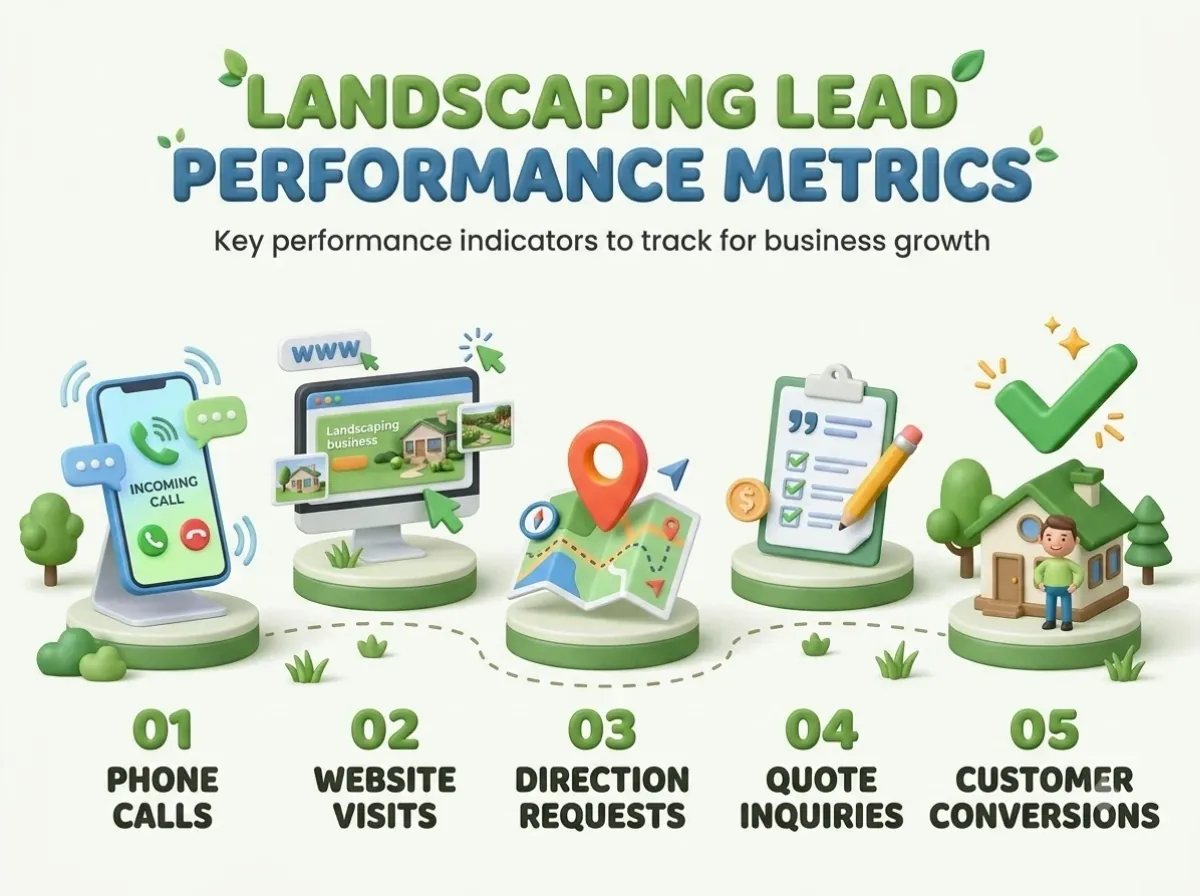
These measurements help businesses understand whether their local search visibility is contributing to meaningful lead generation.
Use Local SEO Reporting to Identify Better Lead Opportunities
Regular reporting helps landscaping businesses evaluate their progress and identify areas that need attention. For example, if a company receives strong visibility for lawn maintenance searches but fewer inquiries for landscape design, it can investigate whether its service information, search presence, or customer journey needs improvement.
Comparing local keyword rankings, Google Maps visibility, website traffic, and customer actions over time provides a clearer picture of marketing performance. Businesses can use these insights to identify valuable service areas, understand changing customer interest, and make more informed decisions about their local marketing efforts.
Ultimately, measuring the impact of local search allows landscapers to move beyond rankings and focus on what matters most: attracting relevant homeowners, generating qualified landscaping leads, and converting more local opportunities into landscaping projects.
Conclusion: Turn Local Search Visibility Into More Landscaping Leads
Local search plays an important role in helping landscaping businesses connect with homeowners who are actively looking for professional services. From discovering nearby providers to comparing reviews and requesting estimates, customers rely on search results to make informed hiring decisions. Strong local search visibility helps businesses reach relevant audiences, attract qualified landscaping leads, and create more opportunities to win residential projects.
However, attracting customers requires more than simply appearing in search results. Businesses need to build trust, maintain accurate information, monitor neighborhood-level rankings, and measure meaningful customer actions. Tools like Happy Rank make it easier to track local SEO performance, monitor Google Maps visibility, and identify opportunities to improve rankings across service areas. By making local search a consistent part of their marketing strategy, landscapers can strengthen their online presence, reach more homeowners, and build a reliable source of new business opportunities.
When people search for a plumber nearby, they rarely look beyond the first few results on Google. They want quick access to trusted professionals who can handle everything from leaking faucets to major pipe repairs. For plumbing businesses, appearing in these searches can make a significant difference in attracting new customers. However, maintaining strong Google Maps visibility across multiple service areas requires more than basic profile optimization. Businesses need to understand their local search rankings, keep their Google Business Profile updated, build customer trust through reviews, and create relevant connections with the communities they serve.
Tracking these efforts is equally important. With local SEO software like[Happy Rank](/), plumbing companies can monitor geo-grid rankings, evaluate competitor performance, and identify locations where their visibility needs improvement. This gives business owners a clearer picture of their local search performance and helps them make informed decisions to attract more plumbing leads.
Understand How Customers Find Plumbers on Google Maps
When homeowners need plumbing assistance, they often use Google to find professionals who can serve their location. Searches such as "emergency plumber near me," "drain cleaning services nearby," and "water heater repair" help customers discover businesses that match their immediate needs. For plumbing companies, understanding how customers use Google Maps is essential to improving local search visibility and reaching people who are actively looking for plumbing services.
What Customers Look for When Searching for Plumbing Services
Most customers prioritize convenience, reliability, and service availability when choosing a plumber. Their search behavior often depends on the type of plumbing problem they are experiencing and how quickly they need assistance.
Common searches include:
- Emergency plumbing services:Customers look for plumbers who can respond quickly to urgent issues such as burst pipes, major leaks, and overflowing toilets.
- Drain cleaning:Homeowners search for nearby professionals who can remove blockages and restore proper drainage.
- Water heater repair:Customers look for experienced technicians who can diagnose and repair water heater problems.
- Leak detection and pipe repair:People often search for local specialists who can identify hidden leaks and prevent property damage.
These searches demonstrate why plumbing businesses need to maintain accurate service information and establish a strong presence in relevant local results. When customers can easily find business details, available services, and contact information, they can make more confident decisions.
How Google Maps Results Influence Plumbing Business Decisions
Google Maps helps customers compare nearby plumbing companies without visiting multiple websites. The local results typically display important business information, including names, ratings, reviews, locations, operating hours, and contact details.
Several factors can influence how customers evaluate these listings:
- Business relevance:Whether the listed company provides the specific plumbing service the customer needs.
- Proximity:How close the business is to the customer's location.
- Business credibility:Customer reviews, ratings, and accurate profile information help establish trust.
- Service availability:Updated operating hours and contact details help customers determine whether they can reach the business.
Google's local search systems consider relevance, distance, and prominence when determining local results. Therefore, plumbing companies should focus on providing accurate information and building a credible online presence rather than relying on one optimization tactic.
Why Being Visible in One Location Is Not Enough
A plumbing company might appear prominently in Google Maps near its physical address but receive less visibility in surrounding neighborhoods. This happens because local search rankings can vary depending on where someone searches.
For example, a plumbing business based in Oakville may appear in prominent results for customers searching nearby but have lower visibility in Burlington or Mississauga.
This makes location-based rank tracking important for businesses serving multiple communities. Monitoring rankings across different areas helps plumbers identify visibility gaps, understand local competition, and determine where further optimization is needed. Instead of focusing on a single ranking position, businesses can develop a clearer picture of their overall Google Maps visibility.
Build a Strong Google Business Profile That Reflects Your Plumbing Services
A well-maintained Google Business Profile(GBP)helps plumbing companies present their services, contact information, and business details to potential customers. When homeowners search for plumbing professionals, they want to quickly understand what a company offers, where it operates, and how to get in touch. An incomplete or outdated profile can make it harder for customers to find relevant information and evaluate the business.
For plumbing companies,Google Business Profile optimization should focus on accuracy, service relevance, and customer trust. Keeping profile information updated also helps Google understand the business and determine whether it is relevant to local searches.
Choose the Right Business Categories and Service Details
Selecting appropriate business categories helps Google understand the primary services a plumbing company provides. Businesses should choose the most relevant primary category and add secondary categories only when they accurately represent their services.
For example, a plumbing company that primarily handles residential plumbing repairs should select a category that reflects its main business activity. It can then provide additional service details to explain its other offerings.
Consider including services such as:
- Emergency plumbing:Burst pipe repairs, urgent leak repairs, and emergency plumbing assistance.
- Drain cleaning:Clogged drain removal, sewer line cleaning, and blockage prevention.
- Water heater services:Water heater installation, maintenance, and repair.
- Pipe repair:Pipe replacement, leak detection, and plumbing system repairs.
- Fixture installation:Faucet replacement, toilet installation, and sink repairs.
Businesses should also review their listed services regularly to ensure they reflect their actual capabilities. Accurate service descriptions help potential customers understand whether the company can address their plumbing problems.
Keep Business Information Accurate and Consistent
Accurate business information makes it easier for customers to contact a plumbing company and understand its service availability. Companies should regularly review their Google Business Profile and ensure that important details match the information displayed on their website and other business listings.
Plumbing companies that operate as service-area businesses should configure their profiles to reflect the areas they actually serve. They should not use virtual offices or add locations where they do not have eligible business operations.
Regularly checking these details helps maintain local business information consistency and prevents customers from encountering incorrect contact details or outdated operating hours.
Use Photos, Updates, and Business Descriptions to Build Trust
Visual content and useful business information give potential customers a better understanding of a plumbing company's work. A profile with relevant photos and a clear description can help customers evaluate the business before making contact.
Plumbing companies can strengthen their profiles by adding:
- Project photos:Show completed pipe repairs, water heater installations, drain cleaning work, and other plumbing projects.
- Team photographs:Introduce technicians and help customers become familiar with the professionals providing the services.
- Business updates:Share relevant announcements, seasonal plumbing advice, and important service information through available Google Business Profile features.
- Detailed descriptions:Explain the company's main services, experience, and areas of operation in straightforward language.
Businesses should use genuine images from their own projects rather than generic stock photographs that do not represent their work.
They should also keep descriptions informative and customer-focused instead of filling them with repeated keywords. A well-organized Google Business Profile gives customers the information they need while supporting a stronger local search presence.
Ultimately, profile optimization is an ongoing responsibility. Plumbing companies should review their information, update service details, and maintain accurate business content as their operations change.
Strengthen Your Local Presence Across Different Plumbing Service Areas
Plumbing companies often serve customers across multiple neighborhoods, towns, and surrounding communities. However, having a business address in one location does not automatically make a company visible in every area it serves. To reach more potential customers, businesses need to establish a relevant online presence across their actual service locations.
A focused local SEO strategy for plumbing businesses helps companies identify valuable service areas, create useful location-specific content, and build credibility through relevant online business listings. These efforts can help plumbing companies reach customers beyond their immediate surroundings.
Identify the Neighborhoods and Locations You Want to Reach
The first step is understanding where your plumbing company can consistently provide services. Rather than targeting every nearby city, prioritize locations based on customer demand, service availability, travel distance, and local competition.
Consider these factors when selecting target locations:
- Existing service coverage:Identify neighborhoods where your technicians regularly complete plumbing jobs.
- Customer demand:Review which locations generate the most calls, inquiries, and service bookings.
- Travel distance:Focus on areas your technicians can reach without affecting service response times.
- Local competition:Identify locations where competing plumbing companies have stronger visibility.
- Service opportunities:Consider areas where particular services, such as drain cleaning or water heater repair, generate demand.
For example, a plumbing company based in Oakville might serve customers in Burlington, Milton, and Mississauga. It can evaluate each location separately to understand where its services are in demand and where additional marketing efforts may be useful.
Create Location-Relevant Website Content for Plumbing Services
Location-specific website pages help customers understand which plumbing services are available in their communities. They also provide an opportunity to address location-related search intent with useful information.
For example, a plumbing company serving multiple communities could create pages targeting:
- Emergency plumbing services in Oakville
- Drain cleaning services in Burlington
- Water heater repair in Mississauga
- Pipe repair services in Milton
Each page should provide information relevant to the location rather than simply changing the city name in an existing paragraph.
Include the following elements:
- A clear heading featuring the plumbing service and location.
- Details about the plumbing services available in that area.
- Common plumbing problems customers may experience.
- Relevant project examples or customer testimonials.
- Accurate contact information and a clear service inquiry option.
Avoid creating multiple pages with nearly identical content. Every location page should offer useful information and serve a distinct customer need.
A well-developed local landing page can improve the website experience while supporting relevant local plumbing keywords and location-based searches.
Build Local Citations and Relevant Community Connections
Local citations are online mentions of a business's name, address, and phone number (NAP). They commonly appear in business directories, industry platforms, and local community websites.
Maintaining accurate business information across relevant platforms helps customers discover and verify a plumbing company. Businesses can strengthen their local presence through:
- Business directories:Maintain accurate listings on reputable platforms such as Yelp and relevant local directories.
- Industry directories:Explore plumbing associations and professional directories that list service providers.
- Community partnerships:Build relationships with property managers, contractors, suppliers, and other local businesses.
- Local sponsorships:Participate in community events and activities that offer legitimate opportunities for local recognition.
- Consistent business information:Ensure contact details match across the company website and relevant online listings.
| **Local SEO activity** | **How it supports plumbing businesses** |
|---|---|
| Business directory listings | Makes company information easier to discover. |
| Industry directory profiles | Establishes relevant business presence within the plumbing industry. |
| Local partnerships | Creates opportunities for referrals and relevant business mentions. |
| Location-specific pages | Helps customers find services available in their communities. |
| Community involvement | Builds local awareness and business relationships. |
Building a stronger local search presence requires consistent effort across your website and relevant online platforms. By focusing on realistic service areas, useful location-specific content, and accurate business listings, plumbing companies can create more opportunities to reach potential customers across the communities they serve.
Improve Your Competitive Position in Local Plumbing Searches
Improving Google Maps visibility requires more than maintaining a complete business profile. Plumbing companies also need to understand how they compare with other service providers competing for customers in the same locations. Analyzing competitors, building a strong online reputation, and monitoring geographic rankings can help businesses identify where they are performing well and where improvements are needed.
A consistent local SEO competitor analysis process gives plumbing companies useful insights into their market. Instead of making optimization decisions based on assumptions, businesses can use competitor and ranking data to identify opportunities and prioritize their marketing efforts.
Analyze Which Plumbing Businesses Appear Above You
Start by identifying the plumbing companies that frequently appear in Google Maps results for your important service-related searches. Search for terms such as "emergency plumber," "drain cleaning services," and "water heater repair" in your target locations.
Pay attention to the businesses that consistently appear in prominent positions and examine how they present their services online.
Consider comparing competitors based on these factors:
- Google Business Profile optimization:Review their business categories, service descriptions, operating hours, photographs, and contact information.
- Customer reviews:Compare their ratings, review frequency, and responses to customer feedback.
- Website content:Examine how they organize plumbing service pages and provide information about their offerings.
- Service coverage:Identify the locations and communities they target.
- Local search visibility:Observe how their rankings change across different neighborhoods.
You can organize your findings using a simple comparison table.
| **Comparison factor** | **What to analyze** | **Improvement opportunity** |
|---|---|---|
| Business profile | Categories, services, and profile completeness | Update missing or outdated information. |
| Customer reviews | Ratings, review volume, and responses | Improve the review collection process. |
| Website content | Service pages and location relevance | Create more useful, customer-focused content. |
| Service coverage | Locations served by competitors | Identify realistic opportunities in your market. |
| Google Maps rankings | Competitor positions across locations | Monitor ranking gaps and local visibility changes. |
Competitor analysis should help businesses understand market expectations rather than encourage them to copy another company's strategy. Focus on identifying areas where your plumbing company can provide better information, stronger customer service, and a more relevant online experience.
Understand How Customer Reviews Influence Local Competition
Customer reviews influence how homeowners evaluate plumbing companies before choosing a service provider. When several businesses appear in Google Maps results, potential customers often compare ratings, recent feedback, and the way companies respond to complaints.
A consistent online reputation management strategy helps plumbing businesses establish credibility and build customer confidence.
Here are some practical ways to manage customer reviews:
- Request feedback after completed jobs:Encourage satisfied customers to share honest experiences after receiving plumbing services.
- Make reviewing convenient:Share a direct Google review link through follow-up emails or text messages.
- Respond to positive feedback:Thank customers and acknowledge specific aspects of their experience.
- Address negative reviews professionally:Understand the customer's concern, respond respectfully, and offer an appropriate resolution.
- Monitor review activity:Regularly evaluate new feedback to identify recurring service issues and opportunities for improvement.
For example, if multiple customers mention delayed appointments or unclear estimates, a plumbing company can review its scheduling and communication processes. Addressing these concerns can improve the customer experience and encourage more positive feedback over time.
Businesses should always request genuine reviews and avoid purchasing feedback or offering incentives in exchange for positive ratings.
Identify Local Ranking Gaps With Geo-Grid Tracking
Checking Google Maps rankings from one location does not provide a complete picture of a plumbing company's local search performance. A business might appear prominently near its office but have lower visibility in surrounding neighborhoods.
Geo-grid rank tracking helps businesses understand these geographic differences.
A geo-grid divides a target service area into multiple geographic points and displays how a business ranks for a selected keyword at each location. This provides a broader view of local keyword rankings instead of relying on a single search result.
For example, a plumbing company based in Oakville might track its visibility for "plumber near me" across Oakville, Burlington, and nearby communities. The results could show strong rankings in some neighborhoods but weaker visibility in others.
Plumbing businesses can use geo-grid insights to:
- Identify neighborhoods whereGoogle Maps rankingsare weaker.
- Compare local visibility with competing plumbing companies.
- Monitor ranking changes across multiple geographic points.
- Discover locations that may need additional optimization.
- Evaluate whether ongoing local SEO activities are improving visibility.
By combining competitor research, review management, and geographic ranking analysis, plumbing companies can develop a clearer understanding of their local market. These insights help businesses make informed optimization decisions and strengthen their position in relevant local plumbing searches.
Measure Google Maps Performance and Turn Visibility Into More Plumbing Leads
Improving Google Maps visibility is an important step toward attracting local customers, but plumbing businesses also need to understand whether their optimization efforts are producing meaningful results. Higher rankings can increase opportunities for discovery, but businesses should also evaluate website visits, phone calls, service inquiries, and customer actions.
Regular performance monitoring helps plumbing companies identify which services attract attention, which locations generate inquiries, and where their local SEO strategy needs improvement. Instead of focusing only on ranking positions, businesses should measure how local search visibility contributes to their overall growth.
Track the Local SEO Metrics That Matter to Plumbing Businesses
Monitoring relevant performance indicators helps plumbing companies understand how customers discover and interact with their business online. Rather than tracking every available metric, focus on measurements that provide useful insights into visibility, customer interest, and business performance.
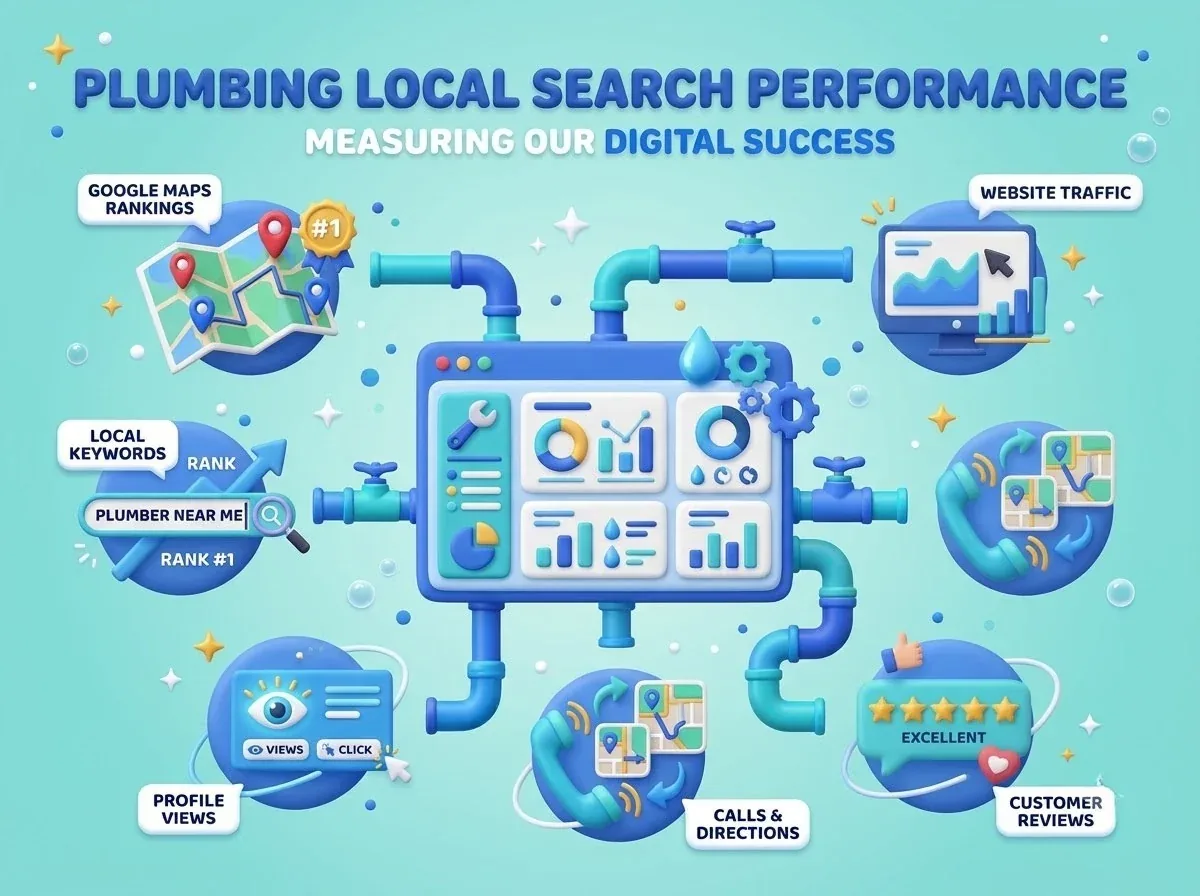
Some important local SEO metrics include:
For example, if a plumbing company receives more profile views but very few phone calls, it may need to review its business information, service descriptions, contact options, or customer reviews.
Businesses can use Google Business Profile performance data, website analytics, call tracking, and local SEO reporting tools to evaluate these indicators. Looking at multiple metrics together provides a more complete understanding of local marketing performance.
Monitor Performance Across Different Locations and Services
A plumbing company may perform well for drain cleaning searches in one neighborhood but struggle to appear for water heater repair searches in another. This is why monitoring rankings across different services and geographic locations is important.
Businesses should organize their tracking around the services they offer and the communities they serve.
For example, a plumbing company could monitor:
- Emergency plumbing:Track visibility for urgent plumbing searches in its primary service areas.
- Drain cleaning:Monitor rankings for drain cleaning and clogged drain searches.
- Water heater repair:Evaluate visibility for installation and repair-related searches.
- Pipe repair:Check performance for leak detection and pipe replacement searches.
- Location-based keywords:Compare rankings across important neighborhoods and surrounding communities.
Reviewing this information regularly helps businesses identify ranking improvements, declining visibility, and locations that need additional attention.
It is also important to understand that local rankings can fluctuate based on search location, competition, and other factors. Businesses should evaluate performance trends over time instead of making decisions based on a single ranking check.
Use Local SEO Software to Simplify Performance Tracking
Manually checking Google Maps rankings across multiple keywords and locations can become time-consuming, particularly for plumbing companies serving large geographic areas. Businesses may struggle to maintain consistent records, compare competitors, and identify changes in their local visibility.
Local SEO software simplifies this process by bringing important performance insights together in one place. Depending on the platform, businesses can use these tools to:
- Monitorlocal keyword rankingsacross multiple locations.
- TrackGoogle Maps visibilitythrough geo-grid reports.
- Analyze competitor performance in target service areas.
- Identify neighborhoods where ranking improvements are needed.
- Review local search performance through organized reports.
Rather than relying entirely on manual searches, businesses can use local SEO tracking tools to make performance monitoring more consistent and manageable.
Connect Search Visibility With Actual Business Results
Improved rankings are valuable when they create opportunities to attract relevant customers. However, plumbing companies should look beyond search positions to understand whether their marketing activities are contributing to business growth.
For example, a company might notice that its Google Maps visibility has improved in a particular neighborhood. The next step is to evaluate whether that improvement is accompanied by more website visits, phone calls, estimate requests, or service bookings.
Businesses can strengthen this evaluation process by:
- Comparing customer inquiries across different service areas.
- Identifying which plumbing services generate the most qualified leads.
- Monitoring phone calls and website inquiries over time.
- Reviewing customer feedback to understand service expectations.
- Evaluating which local marketing activities produce meaningful results.
Plumbing companies should also consider the quality of incoming inquiries. An increase in calls does not necessarily mean an increase in profitable jobs if those inquiries involve services or locations outside the company's capabilities.
By connecting local search rankings, customer actions, and lead generation data, businesses can make more informed marketing decisions. Consistent measurement helps them understand what is working, identify areas for improvement, and build a stronger local search presence that supports long-term business growth.
Conclusion
Improving Google Maps visibility requires consistent effort across business profile optimization, service-area targeting, customer reviews, and local ranking analysis. Plumbing companies that understand how customers search and evaluate nearby service providers can identify better opportunities to reach potential customers. However, maintaining visibility across multiple neighborhoods requires regular monitoring and informed optimization decisions. Tracking local search rankings, analyzing competitors, and measuring customer actions help businesses understand where their marketing efforts are producing results. This is where
Happy Rank can make a difference. Its local SEO tools, including geo-grid rank tracking, competitor analysis, and performance reporting, help plumbing businesses monitor their visibility and identify opportunities for improvement. By combining a well-maintained online presence with consistent performance tracking, plumbing companies can strengthen their local search positions, attract more relevant inquiries, and build lasting relationships with customers in the communities they serve.
When homeowners experience a broken air conditioner or a heating system failure, they often turn to Google to find a reliable contractor nearby. For HVAC businesses, appearing in these local search results can make the difference between gaining a new customer and losing a potential lead to a competitor.Local SEO for HVAC contractors helps businesses improve their visibility in location-based searches, attract nearby homeowners, and generate more service inquiries. By optimizing their Google Business Profile, targeting local HVAC keywords, building customer reviews, and creating location-specific website content, contractors can strengthen their presence in Google Search and Google Maps. However, maintaining strong visibility requires consistent effort and performance tracking. Tools like
Happy Rank can help HVAC businesses monitor local search rankings, track Google Maps visibility, and identify opportunities to improve their online presence. A well-planned local SEO strategy helps contractors turn local searches into valuable business opportunities.
Build a Strong Local SEO Foundation for Your HVAC Business
Before investing in advanced marketing strategies, HVAC contractors need to establish a strong local search presence. Homeowners searching for heating and cooling services usually prefer businesses that operate nearby and can respond quickly to their needs. A well-optimized online presence helps your business appear in relevant local search results, attract potential customers, and compete with other contractors in your service area. Start by understanding customer search behavior, optimizing your Google Business Profile, and maintaining consistent business information across online directories.
Understand How Customers Search for HVAC Services
Understanding local search intent helps HVAC contractors target the phrases potential customers use when looking for heating and cooling solutions. Most homeowners include a service, location, or immediate problem in their searches.
For example, common HVAC local keywords include:
- HVAC contractor near me
- AC repair in Austin
- Furnace installation near me
- Emergency heating repair in Houston
- Air conditioning maintenance services
- HVAC companies in Washington
These searches often indicate that customers are actively looking for professional assistance. Focus on high-intent local keywords related to your most profitable services and the specific locations you serve.
Seasonal demand also influences HVAC searches. Air conditioning repair searches typically increase during warmer months, while furnace maintenance and heating repair searches become more common during colder periods. Understanding these patterns helps you prioritize relevant services and content throughout the year.
Optimize Your Google Business Profile
Your Google Business Profile (GBP)is an important part of your local SEO strategy. It helps your HVAC company appear in Google Maps and local search results when nearby customers look for heating and cooling services.
To improve your profile:
- Business information:Add your accurate business name, address, phone number, and website.
- Business categories:Choose the most relevant primary category and appropriate secondary categories.
- Service areas:Specify the cities and neighborhoods where you provide HVAC services.
- Services:List AC repair, furnace installation, heating maintenance, and other available services.
- Business hours:Keep operating hours updated, including holiday schedules.
- Photos:Upload genuine photos of your team, service vehicles, equipment, and completed projects.
Keep your profile active by sharing relevant updates and responding to customer questions and reviews.
Maintain Consistent Business Information Across Directories
Consistent NAP information (Name, Address, and Phone Number)helps customers and search engines identify your business correctly. Incorrect or conflicting details across online platforms can create confusion and weaken your local presence.
List your HVAC business on trusted platforms such as local business directories, industry-specific websites, and relevant service directories. Regularly check these listings to correct outdated phone numbers, addresses, business names, or website links.
Maintaining accurate local citations strengthens your business information across the web and supports a more reliable local search presence.
Optimize Your HVAC Website for Local Search
Your website plays an important role in helping potential customers find and choose your HVAC business. While your Google Business Profile improves visibility in local search results, your website provides detailed information about your services, experience, and service locations. A well-optimized website helps search engines understand what your business offers and which geographic areas you serve. Focus on targeting relevant local HVAC keywords, creating dedicated service and location pages, and improving the overall website user experience to attract more qualified leads.
Target Local and Service-Specific Keywords
Keyword research helps HVAC contractors understand what potential customers search for when they need heating and cooling services. Instead of targeting broad terms such as "HVAC services," focus on specific phrases that reflect customer needs and search intent.
The following table highlights different keyword types HVAC contractors can target:
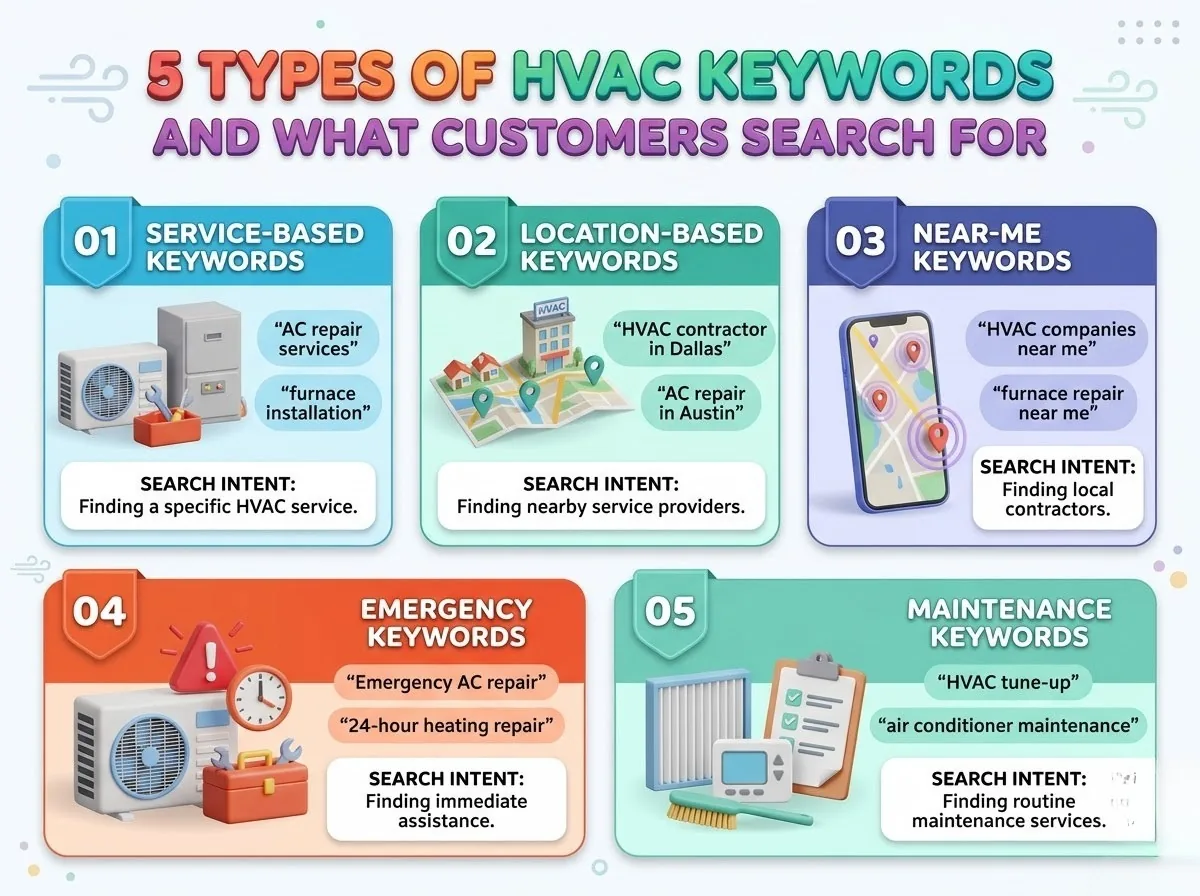
Include these location-based keywords naturally in your website content, page titles, meta descriptions, headings, and service descriptions. Prioritize transactional keywords that indicate customers are actively looking to hire a contractor.
Avoid keyword stuffing or repeating city names unnecessarily. Your content should answer customer questions and explain your services clearly while maintaining a natural reading experience.
Create Dedicated HVAC Service and Location Pages
Creating separate pages for different services and locations makes it easier for search engines and visitors to understand your business offerings. Instead of describing every service on one general page, develop dedicated pages around your main HVAC solutions.
For example, your website can include individual pages for:
- Air conditioning repair and installation
- Furnace repair and replacement
- Heating system installation
- HVAC maintenance and inspections
- Emergency HVAC services
You can also create location-specific landing pages for the cities and neighborhoods your business serves. Each page should include relevant local information, available services, customer testimonials, and clear contact details.
For example, an HVAC contractor serving multiple cities could create separate pages for AC repair in each service location. Make sure every page provides useful, unique information instead of simply replacing one city name with another.
Improve Website Experience and Technical SEO
A website should be easy to navigate, load quickly, and work smoothly across different devices. Many homeowners search for HVAC services using smartphones, particularly when dealing with urgent heating or cooling problems.
Improve your technical SEO and website performance by focusing on these areas:
- Mobile-friendly design:Ensure visitors can easily browse services and contact your business from smartphones.
- Page speed:Optimize images, reduce unnecessary scripts, and improve loading times.
- Title tags and meta descriptions:Write unique metadata that includes relevant service and location keywords.
- Heading structure:Organize content using descriptive H1, H2, and H3 headings.
- Image optimization:Use descriptive file names and relevant alt text for HVAC service photos.
- Internal linking:Connect related service pages, location pages, and blog articles to help visitors discover relevant information.
You can also add clear calls to action (CTAs), such as "Schedule an HVAC Service" or "Request a Free Estimate," to encourage visitors to contact your business.
A technically sound and informative website creates a better experience for potential customers while supporting your broader local SEO strategy for HVAC contractors.
Strengthen Local Visibility Through Reviews and Local Authority
Building a strong local search presence requires more than optimizing your website and Google Business Profile. HVAC contractors also need to establish credibility and demonstrate trustworthiness to potential customers. Homeowners often compare multiple service providers before choosing someone to repair or install their heating and cooling systems. Positive customer reviews, accurate business listings, and relevant backlinks can help your company build a stronger online reputation. By focusing on online reputation management,local citations, and link building for HVAC businesses, you can improve your local authority and create more opportunities to attract nearby customers.
Generate More Genuine Customer Reviews
Customer reviews influence how homeowners evaluate HVAC contractors when searching for local services. Positive feedback can help potential customers feel more confident about choosing your business. Reviews also contribute to your online reputation and provide useful information about customer experiences.
Encourage satisfied customers to share honest feedback after completing services such as AC repairs, furnace installations, or routine HVAC maintenance.
Consider these practices to generate more customer reviews:
- Ask at the right time:Request feedback after completing a service appointment.
- Share direct review links:Make it easier for customers to find your Google review page.
- Respond to feedback:Thank customers for positive reviews and address negative comments professionally.
- Avoid incentives:Never offer discounts, gifts, or other rewards in exchange for Google reviews.
- Monitor review activity:Regularly check new reviews to understand customer experiences and identify areas for improvement.
Consistent Google Business Profile reviews can strengthen customer trust and help your HVAC company stand out in local search results.
Build Local Citations and Relevant Backlinks
Local citations are online mentions of your business name, address, and phone number. They help establish consistent business information across different platforms. Meanwhile,local backlinks from relevant and trustworthy websites can strengthen your website's authority and help search engines discover your business.
HVAC contractors can build local authority through several activities:
- Submit accurate business information to trusted local directories.
- Get listed on relevant home improvement and HVAC industry websites.
- Build relationships with local suppliers, builders, and property management companies.
- Participate in community events and local sponsorship opportunities.
- Contribute useful HVAC maintenance advice to relevant local publications.
The following table highlights some opportunities for building local authority:
| **Platform or opportunity** | **How HVAC contractors can use it** |
|---|---|
| Local business directories | Maintain consistent business information and contact details. |
| HVAC industry directories | Improve visibility among customers searching for heating and cooling professionals. |
| Local news websites | Share useful seasonal HVAC advice or business updates. |
| Community organizations | Participate in events and earn relevant local mentions. |
| Business partnerships | Collaborate with local builders, suppliers, and related service providers. |
Focus on earning links and citations from relevant, reputable sources rather than pursuing a large number of low-quality listings.
Build Trust Through Local Content and Customer Experiences
Publishing useful local content helps HVAC contractors demonstrate their experience and connect with homeowners in their service areas. Instead of relying entirely on promotional content, share information that addresses common heating and cooling concerns.
For example, you can:
- Publish customer success stories featuring completed HVAC projects.
- Share genuine photos of installations, repairs, and maintenance work.
- Create seasonal heating and cooling maintenance recommendations.
- Highlight customer testimonials on relevant service pages.
- Explain common HVAC problems and the solutions your technicians provide.
Including customer testimonials, real project examples, and locally relevant information helps visitors understand your service quality before contacting your business.
Over time, these efforts can strengthen your local online reputation, improve customer confidence, and support your overall local SEO strategy for HVAC contractors.
Create Content That Attracts Local HVAC Customers
Creating useful website content helps HVAC contractors reach homeowners who are searching for heating and cooling solutions. A well-planned local content marketing strategy allows your business to target relevant search queries, answer customer questions, and demonstrate industry expertise. Instead of publishing general articles, focus on topics that address the needs of homeowners in your service areas. By combining location-based content, informational blog posts, and seasonal HVAC topics, you can attract relevant organic traffic and encourage potential customers to explore your services.
Publish Location-Based HVAC Blog Content
Publishing locally relevant blog posts helps your website connect with homeowners in specific geographic areas. Focus on common HVAC concerns, regional weather conditions, and services that customers frequently need.
For example, consider writing about:
- Common air conditioning problems homeowners experience during summer.
- How to prepare heating systems for colder weather.
- Signs that an HVAC system needs professional repair.
- Benefits of regular air conditioner maintenance.
- How local weather conditions affect heating and cooling efficiency.
Include relevant local SEO keywords naturally in blog titles, headings, and content. You can also reference the cities and neighborhoods you serve when discussing local service requirements. This approach helps search engines understand the geographic relevance of your content while providing useful information to readers.
Answer Common Customer Questions
Homeowners often search online for answers before contacting an HVAC professional. Creating informative content around these questions helps your business reach customers during the research and decision-making stages.
Consider developing articles that answer questions such as:
- How much does AC installation cost?
- How often should an HVAC system be serviced?
- When should you repair or replace a furnace?
- How long does an air conditioner typically last?
- What are the signs of an inefficient heating system?
Organize these topics into dedicated blog posts or website sections. Use clear headings, concise explanations, and relevant long-tail keywords to make your content easier to understand.
You can also add frequently asked questions to relevant service pages to address customer concerns and support their decision-making process.
Use Seasonal Content to Capture HVAC Demand
HVAC service requirements often change with the seasons. Creating timely content around these changes helps contractors reach homeowners when they are more likely to need heating or cooling assistance.
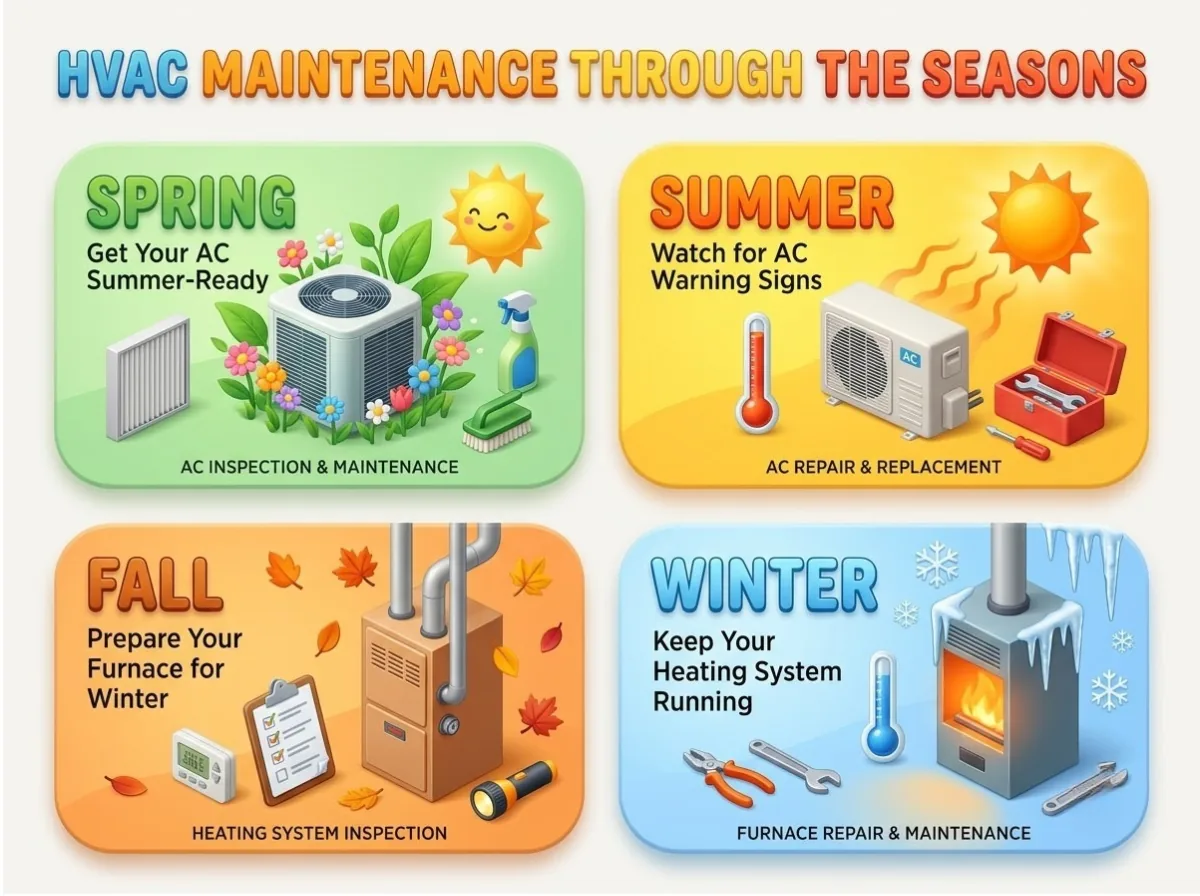
Update older articles with accurate service information, relevant keywords, and current recommendations. Share useful posts through your Google Business Profile and social media channels to increase their reach.
A consistent HVAC content marketing strategy helps your business answer customer questions, attract relevant local traffic, and generate more opportunities for service inquiries.
Track Local SEO Performance and Improve Your HVAC Rankings
Implementing local SEO strategies is only part of building a strong online presence. HVAC contractors also need to monitor performance to understand which activities generate results and where improvements are necessary. Regular tracking helps you identify changes in local search rankings, evaluate website traffic, and measure the leads generated through organic search. By using reliable local SEO tracking tools and reviewing important performance metrics, you can make informed decisions and continuously improve your HVAC marketing strategy.
Monitor Local Keyword Rankings and Google Maps Visibility
Tracking keyword performance helps you understand how easily potential customers can find your HVAC business through Google Search. Focus on important location-based keywords related to your services, such as "AC repair near me," "HVAC contractor in [city]," and "furnace installation in [city]."
Pay attention to the following metrics:
- Local keyword rankings:Monitor your website's positions for important HVAC service and location-based searches.
- Google Maps visibility:Check how frequently your business appears in local search results across different service areas.
- Local competitor rankings:Compare your visibility with other HVAC contractors targeting similar locations.
- Search impressions:Track how often your website appears in relevant Google Search results.
Tools such as Google Search Console and local SEO software like Happy Rank can help you monitor local search performance, identify ranking opportunities, and evaluate your visibility across multiple locations.
Measure Website Traffic and Lead Generation
Higher search rankings are valuable, but they should also contribute to meaningful business outcomes. Track how visitors interact with your website and whether they take actions that can turn into service inquiries.
UseGoogle Analytics 4(GA4) and other tracking tools to measure:
- Organic website traffic:Monitor the number of visitors arriving through unpaid search results.
- Phone calls:Track calls generated through your website and Google Business Profile.
- Contact form submissions:Measure how many visitors request estimates or HVAC appointments.
- Service page performance:Identify which pages attract the most visitors and generate inquiries.
- Conversion rate:Calculate the percentage of website visitors who complete a desired action.
Reviewing these metrics helps you understand which HVAC SEO strategies are attracting qualified prospects and which pages need improvement.
Analyze Competitors and Refine Your Local SEO Strategy
Local search rankings can change as competitors update their websites, improve their Google Business Profiles, and collect new customer reviews. Regular competitor analysis helps you identify opportunities to strengthen your own online presence.
Review competing HVAC businesses to understand:
- Whichlocal HVAC keywordsthey target.
- How they organize their service and location pages.
- What customers mention in their online reviews.
- Which services and content topics they highlight.
- Where they earn relevant local backlinks.
Use these insights to identify content gaps, improve underperforming pages, and update outdated business information. Review your results monthly and adjust your strategy based on measurable performance.
Consistent local SEO monitoring helps HVAC contractors maintain search visibility, attract qualified local leads, and build a stronger competitive position over time.
Conclusion: Turn Local Search Visibility Into More HVAC Leads
Building a strong online presence requires a consistent approach to local SEO for HVAC contractors. From optimizing your Google Business Profile and targeting relevant local keywords to creating useful website content and earning genuine customer reviews, every step contributes to improving your visibility in local search results. However, achieving lasting results requires regular monitoring, competitor analysis, and ongoing website improvements. HVAC businesses can also use tools like Happy Rank to track Google Maps rankings, monitor local search visibility, evaluate competitor performance, and identify opportunities to improve their online presence.
By combining these insights with effective local SEO strategies, contractors can reach more homeowners, generate qualified service inquiries, and build long-term customer relationships. Treat local SEO as an ongoing investment rather than a one-time task to maintain a competitive position and turn nearby searches into valuable business opportunities.
Frequently asked questions
Why is local search more effective than general marketing for landscapers?
Local search captures homeowners at the exact moment they need lawn care or patio installation, delivering higher conversion rates than passive advertising.
How does proximity affect Google Maps rankings for landscaping businesses?
Google prioritizes proximity to the searcher, meaning rankings change neighborhood by neighborhood. Geo-grid tracking helps identify where your service area coverage drops off.
What role do project photos play in landscaping local SEO?
High-quality before-and-after photos uploaded to your Google Business Profile build immediate trust, increase click-through rates, and trigger engagement signals that aid local rankings.
How should landscapers handle service area business (SAB) settings?
If you don't serve clients at your physical shop, configure your profile as a Service Area Business, hiding your home address and specifying exact towns served.
Which metrics should a landscaping contractor track?
Track calls, direction requests, and website clicks from GBP Insights, alongside geo-grid keyword ranks across all target postal codes using Happy Rank.