
Local SEO Tactics for Restaurants in Competitive Markets
Restaurants in competitive markets win local diners by fully optimizing their Google Business Profile with structured digital menus, accurate cuisine categories, direct booking links, and vibrant food photos. Actively managing reviews and targeting high-intent dining searches ensures visibility when nearby customers search for places to eat.
Restaurants in competitive markets need more than great food and service to attract nearby customers. When people search for dining options, they often compare local restaurants, menus, ratings, opening hours, and directions through Google Search and Google Maps before making a decision. This makes local SEO for restaurants essential for improving online visibility and reaching potential diners. However, standing out among competing businesses requires more than maintaining a basic online listing. Restaurants need to optimize their Google Business Profile, target relevant location-based keywords, manage online customer reviews, and maintain a user-friendly website.
Tools like[Happy Rank](/)can help restaurant owners monitor local rankings, evaluate Google Maps visibility, and identify opportunities to improve their search presence. With a consistent restaurant local SEO strategy, businesses can attract more nearby customers, increase reservations, and build a stronger presence in competitive dining markets.
Optimize Your Google Business Profile to Stand Out in Local Searches
A well-optimized Google Business Profile helps restaurants appear in relevant local searches and makes it easier for potential customers to evaluate their dining options. When people search for restaurants nearby, they often compare business information, photos, menus, ratings, and operating hours before choosing where to eat. Keeping your profile complete and updated can improve your chances of appearing in relevant Google Maps results and local search listings.
Complete Every Important Business Profile Detail
Start by providing accurate and consistent information across yourGoogle Business Profile. Search engines use business details to understand your restaurant and connect it with relevant customer searches. Make sure your profile includes:
- Restaurant name and address:Use your actual business name and correct physical location.
- Contact information:Add an active phone number and website URL so customers can reach you easily.
- Business hours:Keep regular hours, holiday schedules, and temporary closures updated.
- Business categories:Select the most relevant primary category, such as Italian restaurant, Indian restaurant, or seafood restaurant.
- Restaurant attributes:Highlight available features such as outdoor seating, dine-in, takeout, delivery, and wheelchair accessibility.
Accurate information helps customers find your restaurant and reduces confusion when they plan a visit.
Use Restaurant Photos, Menus, and Updates to Attract Customers
Visual content gives potential customers a better understanding of your restaurant before they visit. Upload high-quality images that showcase your food, dining environment, and overall experience.
Consider adding:
- Food photography featuring popular dishes and menu specialties.
- Interior and exterior photos that help customers recognize your location.
- Images of dining areas, outdoor seating, and special events.
- An updatedrestaurant menuwith current dishes and pricing.
You can also use Google Business Profile posts to share seasonal menus, special dining events, holiday offers, and new additions. Regular updates give customers useful information and keep your profile relevant.
Improve Google Maps Visibility Through Profile Activity
Appearing in Google Maps searches is particularly important for restaurants competing for nearby customers. Google's local search results are primarily influenced by relevance, distance, and prominence. Although you cannot control every ranking factor, you can strengthen your profile by maintaining accurate information and building a credible online presence.
Focus on these activities:
- Respond to customer questions and reviews professionally.
- Encourage customers to share honest feedback about their dining experiences.
- Update business details whenever your menu, hours, or services change.
- Monitor profile interactions, including phone calls, website clicks, direction requests, and reservations.
Consistent profile management helps improve your local search visibility and makes it easier for potential customers to discover and choose your restaurant.
Target Local Keywords That Match Restaurant Search Intent
Choosing the right keywords helps restaurants connect with customers who are actively searching for dining options in their area. Instead of targeting broad terms such as restaurants or best food, focus on local SEO keywords that reflect your cuisine, location, and dining services. A well-planned restaurant keyword strategy helps search engines understand your offerings and improves the chances of appearing in relevant local searches.
Find Location-Based Keywords for Your Restaurant
Start by identifying the search terms potential customers use when looking for restaurants nearby. Combine your cuisine, restaurant type, and geographic location to find relevant keyword opportunities. Consider targeting:
- Cuisine-based keywords:Italian restaurants, Mexican food, seafood restaurants, and Indian cuisine.
- Location-based keywords:Restaurants in downtown Austin, cafes in Brooklyn, and dining spots in Miami.
- Service-based keywords:Restaurants offering takeout, food delivery, outdoor dining, and private dining.
- Experience-based keywords:Romantic dinner restaurants, family-friendly dining, and affordable lunch spots.
You can use tools such as Google Keyword Planner and Google Search Console to identify relevant search terms and understand how people discover your restaurant.
Understand Different Restaurant Search Intents
Not every customer searches for a restaurant for the same reason. Understanding search intent helps you create website content that matches what potential diners need at different stages of their decision-making process.
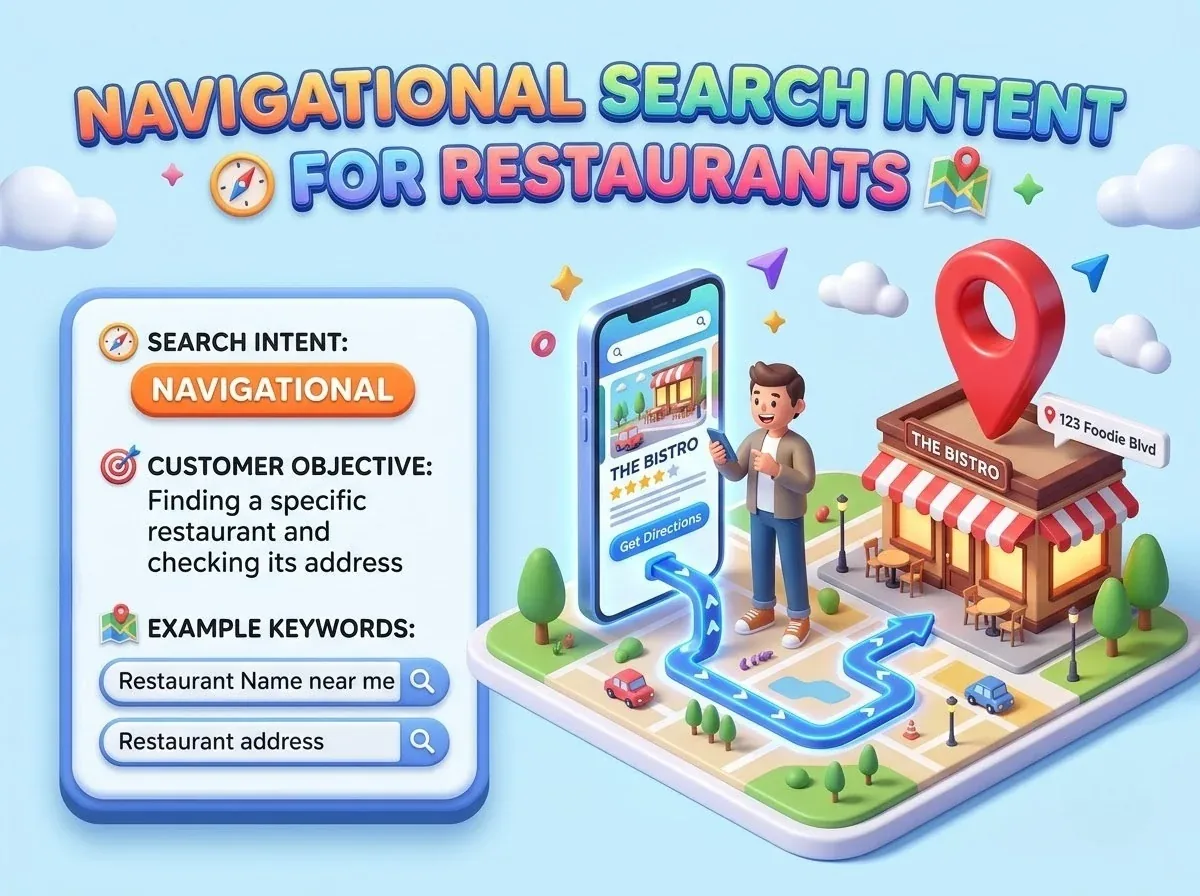
Targeting these different search intents allows restaurants to reach customers who are exploring dining options as well as those ready to visit.
Place Local Keywords Naturally Across Website Pages
Once you identify relevant keywords, incorporate them into important website elements. Avoid repeating the same phrase excessively, as keyword stuffing can make content difficult to read.
Focus on these areas:
- Page titles and meta descriptions:Include relevant cuisine and location terms to communicate page relevance.
- Headings and website content:Use local keywords naturally in homepage copy, service descriptions, and location pages.
- Menu descriptions:Include specific dish names, cuisine types, and dietary options where relevant.
- Image alt text:Describe food and restaurant images accurately using contextual keywords.
- Reservation pages:Optimize booking pages with phrases related to dining experiences and local reservations.
For restaurants with multiple branches, create dedicated location pages with unique addresses, contact details, and location-specific information. This strengthens local search optimization and helps each branch reach customers in its service area.
Build a Strong Restaurant Website That Converts Local Visitors
A restaurant website plays an important role in turning online searches into actual visits, reservations, and food orders. Even when customers discover a restaurant through Google Maps, they often visit its website to explore the menu, check prices, view photos, and understand available services. A well-structured website improves restaurant online visibility while giving potential customers the information they need to make a decision. Focusing on website optimization for local SEO can also help search engines understand your restaurant's offerings and geographic relevance.
Create Location-Specific and Service-Focused Website Pages
Restaurants should organize their websites around the services and locations they want to promote. If your business operates multiple branches, create separate landing pages for each location instead of listing all addresses on one general page.
Each location page should include:
- Restaurant address, phone number, and operating hours.
- Directions, nearby landmarks, and parking information.
- Location-specific menus, food photos, and available services.
- Reservation details and links to online ordering platforms.
You can also create dedicated pages for services such as catering, private dining, takeout, and special events. Including relevant location-based keywords in these pages helps search engines connect your restaurant with appropriate local searches.
Improve Mobile Experience and Website Performance
Many customers search for restaurants using smartphones, especially when looking for nearby dining options while traveling or making last-minute plans. A slow or difficult-to-navigate website can discourage visitors from exploring your menu or completing a reservation.
Prioritize the following improvements:
- Mobile-friendly design:Ensure menus, contact details, and booking options display correctly on smaller screens.
- Page loading speed:Compress images, reduce unnecessary scripts, and improve website performance.
- Simple navigation:Organize important pages such as menus, locations, contact information, and reservations.
- Clear calls to action:Add visible buttons for booking tables, placing orders, and contacting the restaurant.
A responsive website creates a smoother customer experience and supports better local search performance.
Add Structured Data to Help Search Engines Understand Your Restaurant
Restaurant schema markup is a type of structured data that helps search engines interpret important information about your business. Adding relevant schema to your website can provide clearer context about your restaurant, its location, menu, and operating details.
Consider including these structured data properties:
| **Schema property** | **Information to include** |
|---|---|
| Name | Official restaurant name |
| Address | Complete physical location |
| Telephone | Business contact number |
| OpeningHoursSpecification | Regular operating hours |
| Menu | Link to the restaurant menu |
| ServesCuisine | Type of cuisine offered |
| PriceRange | General pricing information |
Implementing accurate structured data helps search engines understand your restaurant's details. Although it does not guarantee enhanced search appearances or higher rankings, it supports your broaderrestaurant SEO strategy and improves the clarity of your online business information.
Manage Online Reviews and Build Local Authority
Customer reviews influence how people evaluate restaurants before deciding where to dine. When comparing nearby options, potential customers often consider ratings, feedback about food quality, service experiences, and overall customer satisfaction. A strong review profile can build trust and support local SEO for restaurants by strengthening your online presence. Along with collecting feedback, restaurants should maintain consistent business information and earn relevant mentions from trusted local sources to improve their local search visibility.
Encourage Genuine Customer Reviews Across Relevant Platforms
Positive customer experiences can encourage people to recommend your restaurant online. Make it convenient for satisfied customers to share honest feedback on Google and other relevant review platforms.
Consider these approaches:
- Use QR codes:Place review links on receipts, table cards, or takeaway packaging.
- Send follow-up messages:Request feedback after customers complete a reservation or food order.
- Train restaurant staff:Encourage employees to politely remind customers that feedback is welcome.
- Maintain multiple review channels:Monitor platforms such as Google, Yelp, and relevant local dining directories.
Avoid purchasing reviews, offering incentives for positive feedback, or discouraging customers from leaving negative reviews. Authentic feedback provides more reliable insights into customer expectations and helps build long-term credibility.
Respond to Positive and Negative Reviews Professionally
Responding to reviews shows customers that your restaurant values their experiences. Timely and thoughtful replies can also help potential diners understand how your business handles feedback.
| **Review type** | **Recommended response** | **Business benefit** |
|---|---|---|
| Positive feedback | Thank customers and acknowledge specific compliments. | Strengthens customer relationships. |
| Negative feedback | Apologize when appropriate and offer a constructive solution. | Demonstrates accountability. |
| Service complaints | Address concerns about waiting times or staff interactions. | Highlights opportunities to improve service. |
| Food-related feedback | Acknowledge comments about taste, quality, or presentation. | Helps identify areas for improvement. |
Keep responses professional, personalized, and helpful. Avoid defensive language or sharing private customer information when addressing complaints.
Strengthen Local Authority Through Citations and Community Links
Beyond reviews, restaurants can improve their local online presence by building relationships with relevant websites and community organizations. Consistent business information across online directories helps customers and search engines identify your restaurant correctly.
Focus on the following activities:
- List your restaurant on trusted platforms such as Yelp, TripAdvisor, and local business directories.
- Maintain consistent business names, addresses, and phone numbers across listings.
- Collaborate with local food bloggers, dining publications, and tourism websites.
- Participate in community festivals, food events, and neighborhood initiatives.
- Earn relevant backlinks through local partnerships and restaurant features.
These efforts help establish your restaurant as a recognizable local business. Combined with active review management and accurate citations, they support a stronger online reputation and a more competitive position in local search results.
Track Local SEO Performance and Stay Ahead of Restaurant Competitors
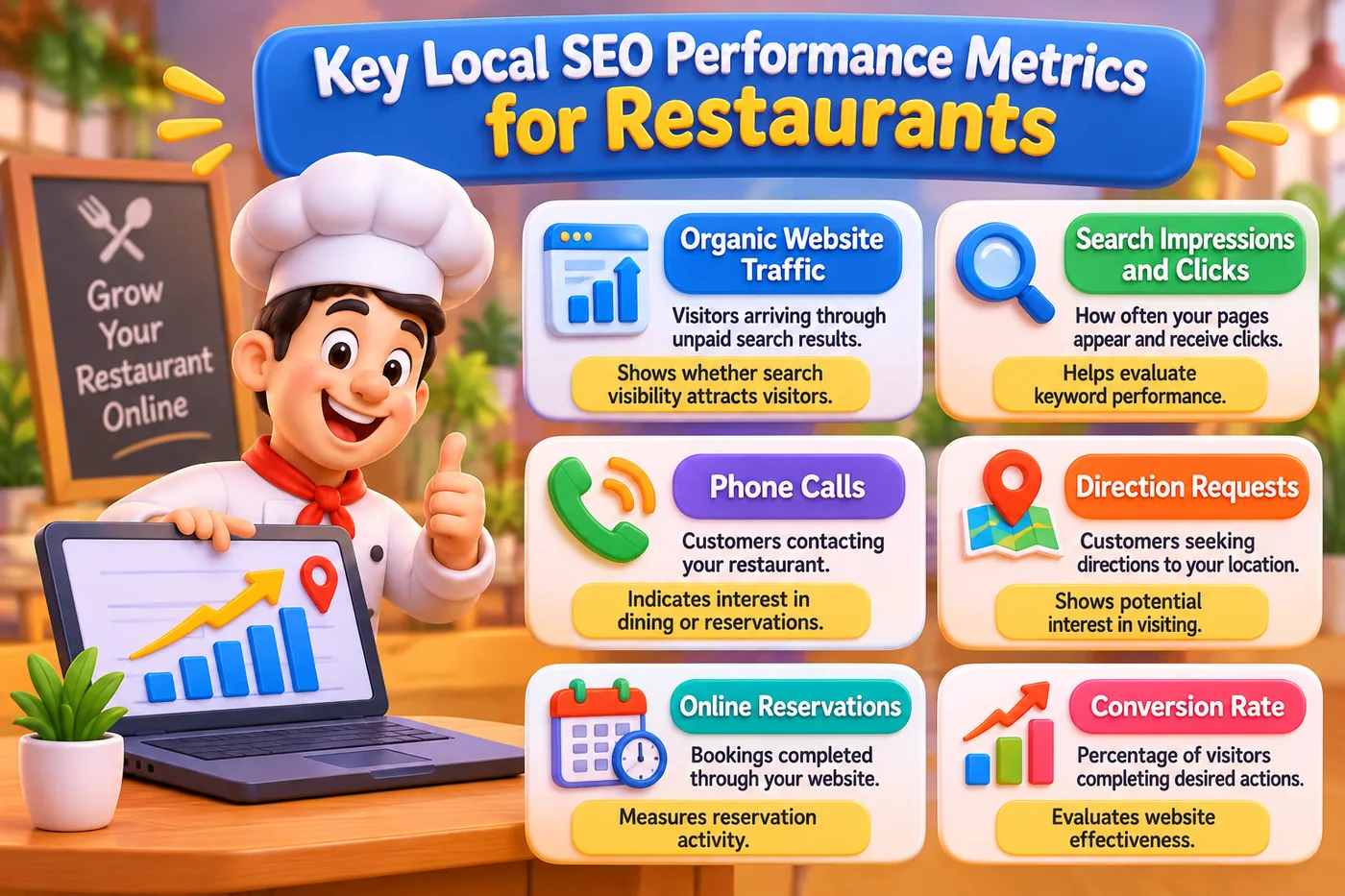
Implementing local SEO strategies for restaurants is only part of building a strong online presence. Restaurant owners also need to measure results, identify weaknesses, and adjust their approach based on customer behavior and search performance. Regular monitoring helps you understand which keywords attract potential diners, how customers discover your business, and where competitors may be gaining visibility. Using performance data allows you to make informed decisions and strengthen your restaurant local SEO strategy over time.
Monitor Restaurant Rankings Across Local Search Results
Track how your restaurant appears for relevant local search keywords across Google Search and Google Maps. Rankings can vary depending on the searcher's location, so monitoring visibility across different neighborhoods can reveal opportunities to reach more customers.
Focus on tracking:
- Rankings for cuisine-specific and location-based keywords.
- Google Maps visibility across important neighborhoods.
- Search terms that generate impressions and website visits.
- Competitor rankings for similar restaurant-related searches.
Tools such as Google Search Console and local SEO platforms like Happy Rank can help restaurant owners monitor search performance, evaluate local visibility, and identify areas that need improvement.
Measure Website Traffic and Customer Actions
Search rankings alone do not show whether your SEO efforts are generating meaningful business results. Track website activity and customer interactions to understand how effectively your online presence attracts potential diners.
Use Google Analytics 4 to understand website behavior and Google Search Console to evaluate search impressions, clicks, and keyword performance. You can also monitor Google Business Profile interactions to understand how customers engage with your listing.
Analyze Competitors and Update Your Local SEO Strategy
In competitive restaurant markets, monitoring nearby businesses helps identify gaps and opportunities. Review competing restaurants' Google Business Profiles, menus, customer reviews, website content, and local keyword targeting.
Use these insights to:
- Identify relevant keywords competitors are ranking for.
- Compare menu presentation, website usability, and location pages.
- Find opportunities to improve your restaurant's photos and business information.
- Identify customer expectations through competitor reviews.
- Update website content and promotional information regularly.
Consistent competitor analysis and performance tracking help restaurants refine their local search optimization efforts, respond to changing customer preferences, and maintain a stronger presence in competitive local markets.
Conclusion
Building a strong online presence in a competitive restaurant market requires consistent attention to local search optimization. From improving your Google Business Profile and targeting location-based keywords to creating a mobile-friendly website and managing customer reviews, every effort contributes to better visibility and customer engagement. Tracking local search rankings, website traffic, and customer interactions also helps restaurant owners identify opportunities and refine their strategies.
Tools like Happy Rank can simplify local SEO management by helping businesses monitor Google Maps visibility, track local rankings, and evaluate their online presence. Rather than treating SEO as a one-time task, restaurants should regularly update their business information, review performance data, and adapt to changing customer search behavior. A well-maintained restaurant local SEO strategy can help attract nearby diners, increase reservations, strengthen customer trust, and build a recognizable presence in an increasingly competitive dining market.
Frequently asked questions
How do restaurants rank higher on Google Maps?
Complete all profile attributes, choose specific cuisine categories, keep operating and holiday hours accurate, upload professional dish photos, and earn steady positive reviews.
Why is structured menu data essential for restaurant SEO?
Directly listing your menu items and prices in Google Business Profile allows search engines to match queries like 'best wood-fired pizza near me' directly to your dishes.
How do online reviews impact restaurant foot traffic?
Diners heavily rely on star ratings and recent reviews when choosing where to eat; responding promptly to both compliments and complaints signals reliable hospitality.
Should restaurants link to third-party delivery or their own ordering page?
Prioritize direct online ordering links on your profile to maximize margins, while still supporting popular delivery apps for diner convenience.
How can a restaurant track local search performance?
Monitor direction requests, phone calls, website clicks, and food order actions in Google Business Profile Insights, combined with geo-grid tracking around your dining district.