
How Businesses Can Use Local SEO Software to Improve Google Rankings
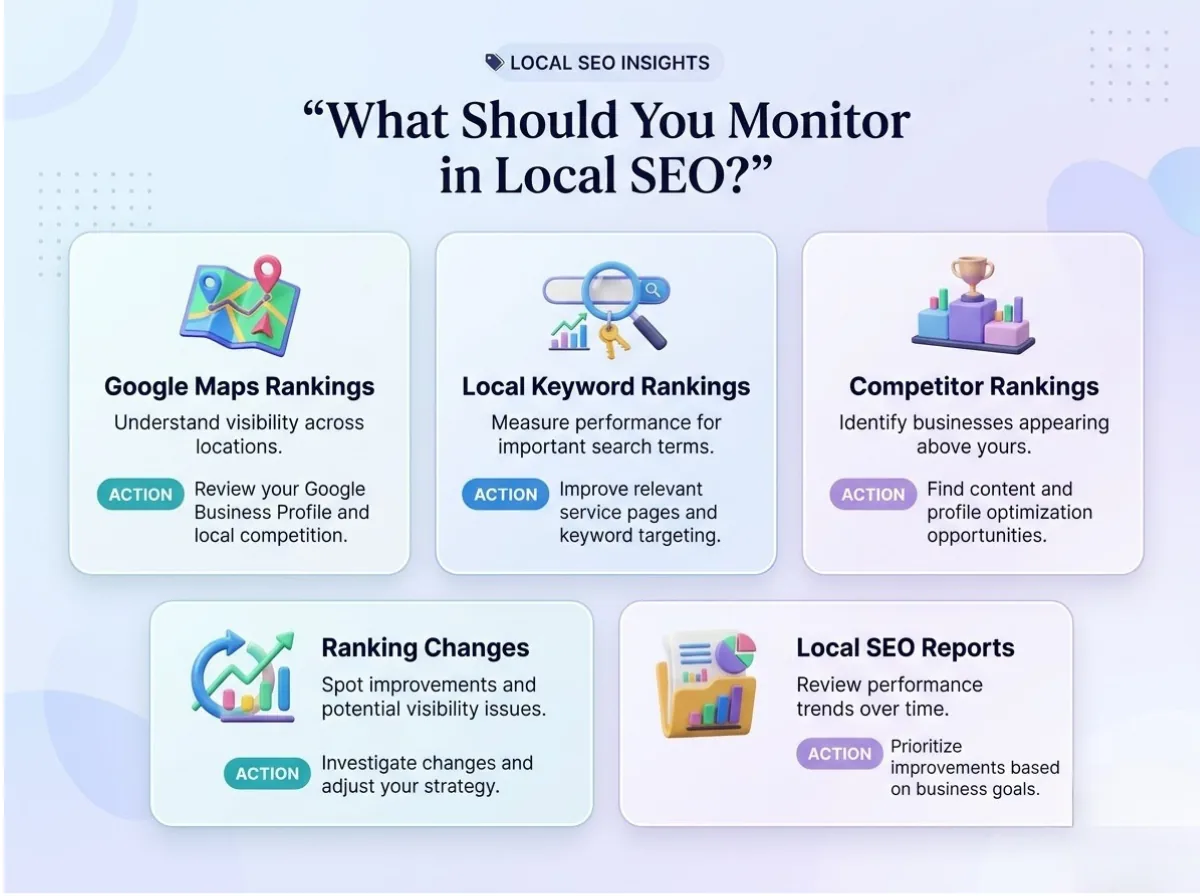
Businesses use local SEO software to improve Google rankings by tracking keyword positions across their service area, spotting neighborhoods and keywords where competitors appear first, and comparing competitors' profiles and pages. They then fix the gaps in their Google Business Profile, citations, reviews and website, and use regular reports to measure what actually moved.
Getting your business to appear prominently in Google Search and Google Maps can make a real difference in attracting local customers. However, improving your visibility takes more than adding a few keywords to your website or updating your business listing. You need to understand where your business ranks, what your competitors are doing, and which areas need improvement. That is where local SEO software becomes valuable.
I find that tracking performance consistently makes it easier to identify opportunities and make informed optimization decisions. With the right local SEO tools, businesses can monitor Google rankings, analyze local search visibility, discover relevant keywords, and evaluate their progress over time. Tools like [Happy Rank](/) help businesses monitor their local search performance and identify opportunities to strengthen their presence in local results.
In this article, I’ll explain how businesses can use local SEO software to improve their Google rankings, optimize their online presence, and turn local search insights into practical actions that support long-term growth.
Understand What Local SEO Software Does for Your Business
Before using any tool to improve your Google rankings, it helps to understand what local SEO software actually does and how it fits into your marketing strategy. I see businesses spend time updating their websites and business listings without checking whether those efforts are improving their local visibility. The right tools can help you replace guesswork with actionable insights.
What Is Local SEO Software?
Local SEO software helps businesses monitor, manage, and improve their presence in local search results. Depending on the platform, it can include features for local rank tracking, Google Maps ranking, keyword research, competitor analysis, citation management, and performance reporting.
For example, a plumbing company in Austin might want to appear when someone searches for “emergency plumber near me.” Local SEO tools can help the business monitor its rankings for relevant search terms, identify areas where visibility is weak, and evaluate opportunities to improve its online presence.
Rather than checking everything manually, businesses can use local SEO tools to organize important information in one place and make more informed decisions.
Why Local Businesses Need Local SEO Tools
Local search results can vary depending on the searcher's location, the keywords they use, and the competition in the area. A business might rank well in one neighborhood but struggle to appear in another part of its service area.
This is where local rank tracking software becomes useful. It helps businesses understand how their visibility changes across locations and keywords. Other features can highlight incomplete business listings, competitor activity, and opportunities to improve website content.
Here are some practical benefits:
- Track local rankings: Monitor how your business performs for important search terms.
- Identify visibility gaps: Find locations or keywords where competitors appear more prominently.
- Analyze competitors: Understand how other local businesses present their services online.
- Measure progress: Compare performance over time and identify areas that need attention.
These insights help businesses prioritize improvements instead of making changes without understanding the problem.
Which Businesses Benefit Most From Local SEO Software?
Almost any business that depends on customers from a specific geographic area can benefit from local search optimization tools.
For instance, plumbers, electricians, and HVAC contractors can monitor visibility across their service areas. Restaurants, salons, and auto repair shops can track relevant local searches that help nearby customers discover their services. Businesses with multiple locations can also use local SEO software to compare performance across branches.
The key is to choose tools that match your business needs and use the information to guide practical improvements. Local SEO software will not automatically push a website to the top of Google, but it can help you make better-informed decisions about where to focus your efforts.
Track Local Rankings and Find Opportunities to Improve Google Visibility
You cannot improve what you do not measure. I recommend starting with a clear picture of where your business appears in Google Search and Google Maps before making major changes to your local SEO strategy. Local rank tracking software helps you monitor keyword performance, identify visibility gaps, and understand where your business has room to grow.
Monitor Your Google Search and Google Maps Rankings
Start by tracking the keywords potential customers use when searching for your products or services. For example, an electrician in Dallas might monitor searches such as “licensed electrician in Dallas” or “emergency electrical repair near me.”
Using Google Maps rank tracking and local keyword rankings, you can evaluate how your business performs for relevant searches across different locations. Rankings may vary between neighborhoods, so checking only one location will not always give you an accurate picture of your overall visibility.
Identify High-Value Local Keywords
Not every keyword attracts customers who are ready to take action. I suggest prioritizing search terms that closely match your services, location, and customer intent.
For example, a plumbing business could focus on:
- Service-based keywords: “water heater repair” or “drain cleaning service.”
- Location-based keywords: “plumber in Austin” or “electrician in Dallas.”
- Long-tail keywords: “emergency plumber for a burst pipe.”
Use local keyword research tools to discover relevant search terms and identify opportunities that align with your business goals. Consider relevance, competition, and the likelihood that a search will lead to an inquiry when choosing which keywords to target.
Analyze Competitors in Your Service Area
Local SEO competitor analysis helps you understand why other businesses may be appearing above yours in search results. Compare their Google Business Profile information, service pages, customer reviews, and use of relevant local keywords.
Look for gaps you can address through better content, more complete business information, or a stronger customer experience. Avoid copying competitors blindly. Focus on what your business can genuinely improve or offer differently.
Turn Ranking Reports Into Actionable Improvements
Ranking reports are useful only when they inform your next steps. If your business has weak visibility for an important service keyword, review the relevant website page, business profile, and local competition.
Use local SEO reporting to establish a baseline, record changes, and measure progress over time. The following table shows how to turn ranking insights into practical actions.
Use local SEO reporting to establish a baseline, record changes, and measure progress over time. The goal is not simply to collect ranking data. It is to turn local search visibility insights into a focused strategy that attracts relevant customers and supports long-term growth.
Optimize Your Google Business Profile and Local Online Presence
Tracking rankings helps you identify problems, but the next step is taking action. I recommend starting with your Google Business Profile, business listings, customer reviews, and website content. These elements help Google understand your business and help potential customers decide whether your services meet their needs. Combining these improvements with local SEO software makes it easier to identify gaps and maintain a consistent optimization routine.
Keep Your Google Business Profile Accurate and Complete
Your Google Business Profile optimization should begin with accurate business information. Check your business name, address, phone number, opening hours, primary category, and service details. Add relevant photos and keep your profile updated when business information changes.
Choose categories that accurately describe your business and explain your services clearly. For example, an HVAC contractor should provide useful information about heating and cooling services rather than relying on broad descriptions.
Local SEO tools can help monitor performance and highlight opportunities, depending on their available features. However, you should make profile changes based on accuracy and relevance, not simply to add more keywords.
Maintain Consistent Business Information Across Directories
Inconsistent business details can confuse potential customers and make it harder to maintain accurate online listings. I suggest reviewing important directories regularly and correcting outdated contact information, duplicate listings, and incorrect addresses.
These listings are also known as local citations. Consistent citations help reinforce your business identity across relevant platforms.
| Listing element | What to check | Why it matters |
|---|---|---|
| Business name | Use your real business name | Maintains consistent identification |
| Address | Verify the current location | Helps customers find your business |
| Phone number | Check that it is correct | Makes contacting you easier |
| Business hours | Update holiday and regular hours | Prevents customer confusion |
| Website URL | Confirm the link works | Directs visitors to the right page |
Build a Strategy for Reviews and Customer Engagement
Customer feedback influences how people evaluate local businesses. Encourage genuine customers to leave honest reviews, and respond professionally to both positive and negative feedback.
Online review management can help you identify recurring complaints, recognize service improvements, and maintain stronger customer relationships. Avoid buying reviews or offering incentives that violate Google's review policies.
Strengthen Your Website for Local Search
Your website should clearly explain what you offer, where you operate, and how customers can contact you. Create useful service pages, include relevant location information, improve mobile usability, and make contact details easy to find.
Use local SEO audit tools to identify issues such as broken links, missing page titles, slow-loading pages, and weak local content.
Remember, optimization is not about adding keywords everywhere. It is about providing accurate information and a helpful experience. Use Local SEO Software to Measure Results and Refine Your Strategy
Improving local rankings is an ongoing process, so I recommend measuring results instead of assuming your optimization efforts are working. Local SEO software helps you monitor ranking changes, review performance trends, and identify areas that need attention. By combining ranking data with customer engagement metrics, you can make better decisions about where to invest your time.
Track the Metrics That Matter
Start by identifying the metrics that connect your local SEO efforts to your business goals. While Google Maps rankings and local keyword rankings show search visibility, other metrics help you understand whether that visibility attracts potential customers.
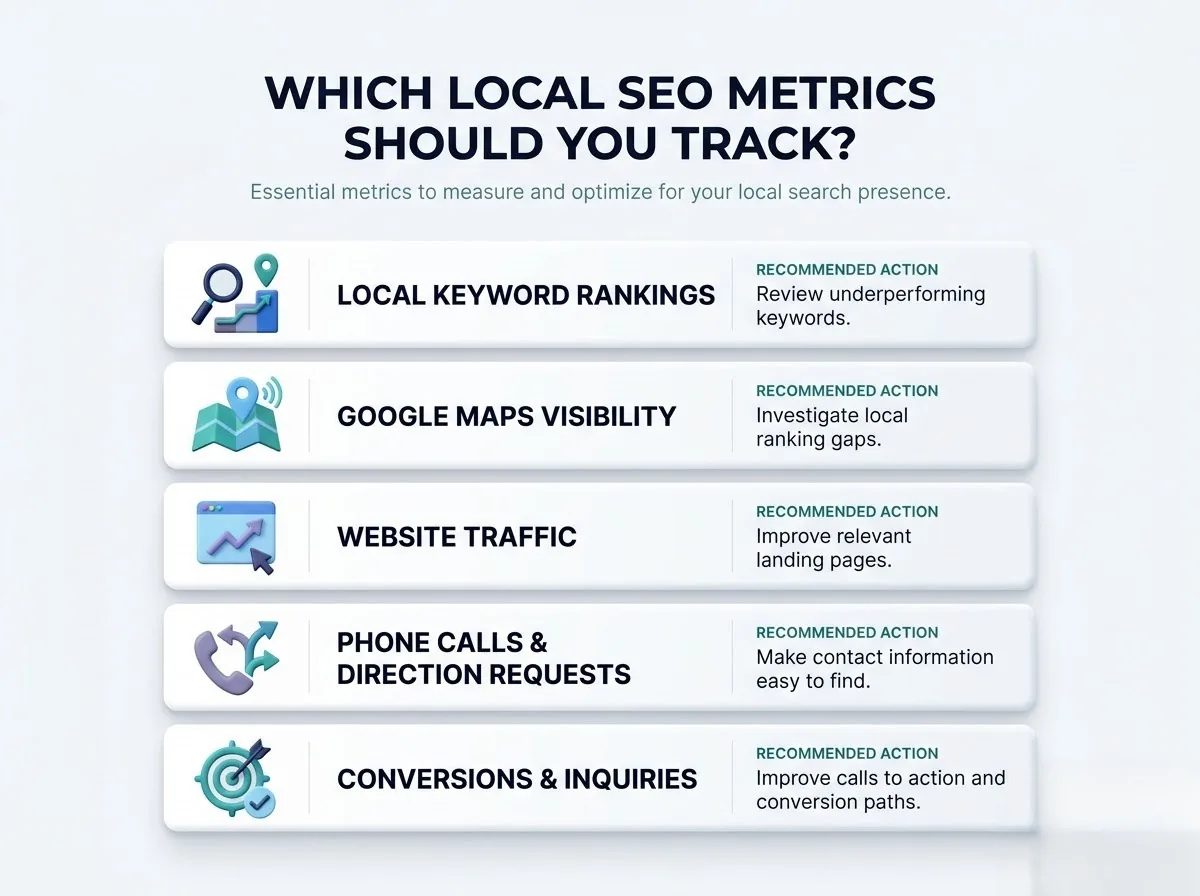
Tracking these local SEO metrics helps you measure visibility, understand customer engagement, and identify opportunities to improve rankings and attract more local customers.
Use available data from tools such as Google Business Profile performance reports and website analytics to understand customer behavior. Remember, higher rankings do not automatically translate into more sales.
Build a Repeatable Local SEO Reporting Routine
I find that a consistent reporting schedule makes it easier to recognize meaningful trends. Check your local SEO reports regularly, compare results with an initial baseline, and record important changes to your website or business profile.
For example, a landscaping company could review its rankings for lawn care searches, compare visibility across nearby neighborhoods, and monitor website inquiries each month. This helps the business understand whether its optimization efforts are moving in the right direction.
Adjust Your Strategy Based on Performance
Reporting is most valuable when it leads to action. If a service page attracts visitors but generates few inquiries, review its content, contact options, and calls to action. If your rankings decline for an important local keyword, investigate possible causes before making changes.
Use local SEO analytics to prioritize improvements based on relevance, customer intent, and business impact. Avoid changing several things simultaneously without documenting them, as this can make results harder to interpret.
Ultimately,local SEO performance tracking helps you build a more focused strategy. By measuring results, identifying weaknesses, and refining your approach consistently, you can work toward stronger Google rankings and more meaningful local customer engagement.
Build a Practical Local SEO Workflow for Long-Term Google Ranking Improvements
Getting better visibility on Google is not a one-time task. I recommend building a repeatable process that helps you identify problems, make improvements, and measure results over time. With the right local SEO software, businesses can organize their optimization efforts and make informed decisions instead of relying on guesswork.
Follow a Simple Local SEO Process
A clear workflow makes local search optimization easier to manage, especially when you have limited time or multiple business locations. Start with these five steps:
- Audit: Review your current Google rankings, Google Business Profile, website pages, and local citations to identify weaknesses.
- Prioritize: Choose the most relevant keywords, service areas, and optimization issues based on customer intent and business goals.
- Optimize: Update inaccurate business information, improve service pages, and maintain a consistent approach to customer reviews.
- Monitor: Use local rank tracking tools to measure keyword performance and review changes in your local search visibility.
- Refine: Evaluate your results, address remaining gaps, and repeat the process regularly.
Avoid Common Local SEO Software Mistakes
Even useful tools can produce limited results when businesses interpret their data incorrectly. I suggest avoiding these common mistakes:
- Checking rankings only once: A single report does not reveal long-term performance trends.
- Targeting irrelevant keywords: Focus on searches that match your actual services and service areas.
- Ignoring website quality: Strong ranking data cannot replace useful content, accurate information, and a good customer experience.
- Expecting instant results: SEO improvements take time, and outcomes vary by market and competition.
- Tracking data without taking action: Reports should help you decide what to improve next.
Avoid treating software as an automatic ranking solution. Its value comes from how effectively you use the information it provides.
Set Realistic Expectations for Ranking Improvements
Google considers several factors when generating local results, including relevance, distance, and prominence. This means a business may perform differently across neighborhoods, even when its overall online presence is strong.
Instead of expecting guaranteed first-page rankings, focus on measurable progress. Track relevant keywords, improve your business information, strengthen your website, and evaluate customer actions over time.
With a consistent workflow and suitable local SEO tools, you can make your optimization efforts more organized, identify new opportunities, and work toward stronger Google ranking performance over the long term.
Conclusion
Improving your Google rankings takes consistent effort, accurate information, and a clear understanding of what works for your business. With the right local SEO software, you can monitor rankings, discover keyword opportunities, analyze competitors, and identify areas where your online presence needs improvement. However, software alone will not guarantee higher rankings. You still need a well-maintained Google Business Profile, useful website content, accurate local citations, and genuine customer reviews.
I recommend making local rank tracking, performance reporting, and regular optimization part of your routine. These activities help you understand your progress and make smarter decisions based on actual data rather than assumptions.
[Happy Rank](/) can help businesses monitor their local search visibility and understand their ranking performance, making it easier to identify opportunities for improvement. Start by reviewing your current local presence, choosing relevant keywords, and establishing a baseline for measuring progress. With a consistent strategy and the right insights, you can work toward stronger Google rankings, increased local visibility, and more opportunities to connect with potential customers.
Frequently asked questions
What is local SEO software?
Tools that help businesses monitor, manage and improve their presence in local search, with features such as local and Google Maps rank tracking, keyword research, competitor analysis, citation management and performance reporting, depending on the platform.
Which businesses benefit most from local SEO software?
Any business that depends on customers from a specific area, including plumbers, electricians, HVAC contractors, restaurants, salons and auto repair shops, as well as businesses comparing performance across multiple locations.
What keywords should I track with local SEO software?
Service-based keywords like 'water heater repair', location-based keywords like 'plumber in Austin', and long-tail keywords like 'emergency plumber for a burst pipe'. Prioritize terms that match your services and customer intent.
Can local SEO software guarantee first-page rankings?
No. Google weighs relevance, distance and prominence, so rankings vary by neighborhood. Software helps you find gaps and measure progress, but results depend on the improvements you make.
What mistakes should I avoid with local SEO software?
Checking rankings only once, tracking irrelevant keywords, ignoring website quality, expecting instant results and collecting reports without acting on them.
What is a good local SEO workflow?
Audit your rankings, profile, pages and citations; prioritize the most relevant keywords and issues; optimize; monitor with rank tracking; then refine and repeat on a regular schedule.