
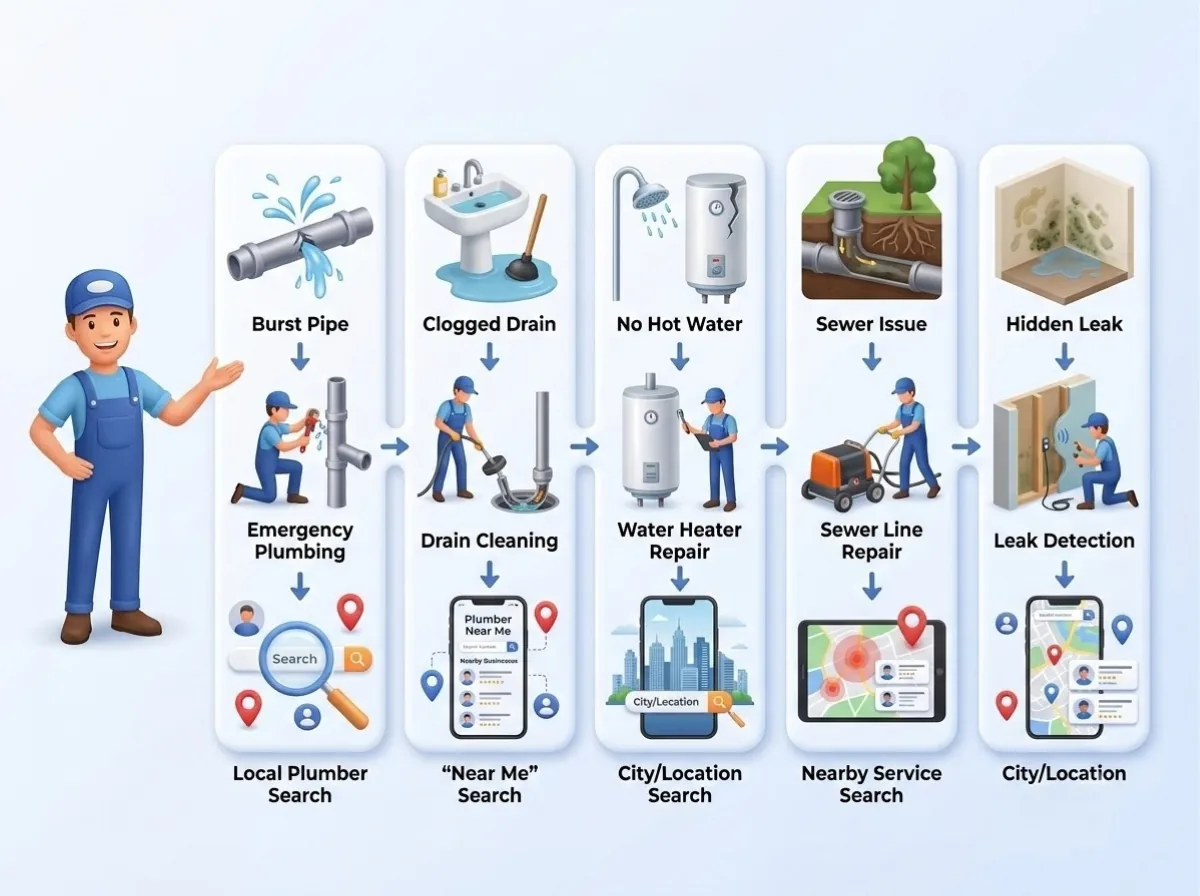
How Plumbers Can Get More Leads With Local SEO
Plumbers can get more leads with local SEO by targeting emergency and service intent keywords, optimizing Google Business Profile, building problem-focused service and location pages, earning reviews, monitoring geo-based visibility, and tracking calls and forms to turn rankings into booked jobs.
When someone’s kitchen sink starts leaking or their water heater suddenly stops working, they usually don’t spend hours comparing plumbing companies. They search for a plumber near me, check a few local results, and contact the business that looks trustworthy and easy to reach. That is why Local SEO for Plumbers can play such an important role in generating consistent plumbing leads.
But getting found locally is only part of the equation. You also need to appear for the right local search terms, show up in the areas you actually serve, build trust through reviews, and make it easy for potential customers to call or request service. So, how do you turn local visibility into real opportunities?
In this guide, we’ll explore how plumber SEO can help you attract high-intent searches, improve your Google Business Profile, strengthen your service-area visibility, build local trust, and track the actions that matter most. We’ll also look at how tools such as HappyRank can help you monitor local rankings, competitors, and customer activity so you can identify what is working and where there is room to improve.
Build Your Local SEO Strategy Around Lead Intent
When I build a Local SEO for Plumbers strategy, I don’t start by chasing keywords with the highest search volume. I start with a simpler question: What does the customer actually want when they search? A homeowner searching for an emergency plumber has very different needs from someone researching water heater replacement costs. Understanding that difference helps you focus your plumbing SEO strategy on searches that can turn into genuine leads.
The goal is not simply to get more people to visit your website. It is to attract people who need the services you provide, in the locations you serve, at the moment they are ready to take action.
Separate Emergency Searches From Research Searches
Not every local search has the same level of buying intent. Some people need help immediately, while others are still comparing options or gathering information.
For example:
| Search Type | Example | Likely Intent |
|---|---|---|
| Emergency | “emergency plumber near me” | Immediate service |
| Service | “drain cleaning near me” | Looking for a specific service |
| Location | “plumber in [city]” | Finding local providers |
| Problem | “water heater leaking” | Looking for a solution |
| Research | “water heater repair cost” | Gathering information |
| Comparison | “best plumber near me” | Evaluating businesses |
If someone searches for “24 hour plumber near me,” they may be ready to call within minutes. Someone searching for “how much does water heater repair cost” may need more information before contacting a business.
I wouldn’t ignore informational searches, though. They can introduce your company to potential customers earlier in the decision-making process. The important thing is to understand the intent behind each search and provide an appropriate next step.
Match Plumbing Services With Local Search Demand
Once I understand search intent, I connect those searches to the actual services the plumbing business offers. This is an important part of local SEO for plumbing businesses because a single generic service page shouldn't have to compete for every plumbing-related search.
For example:
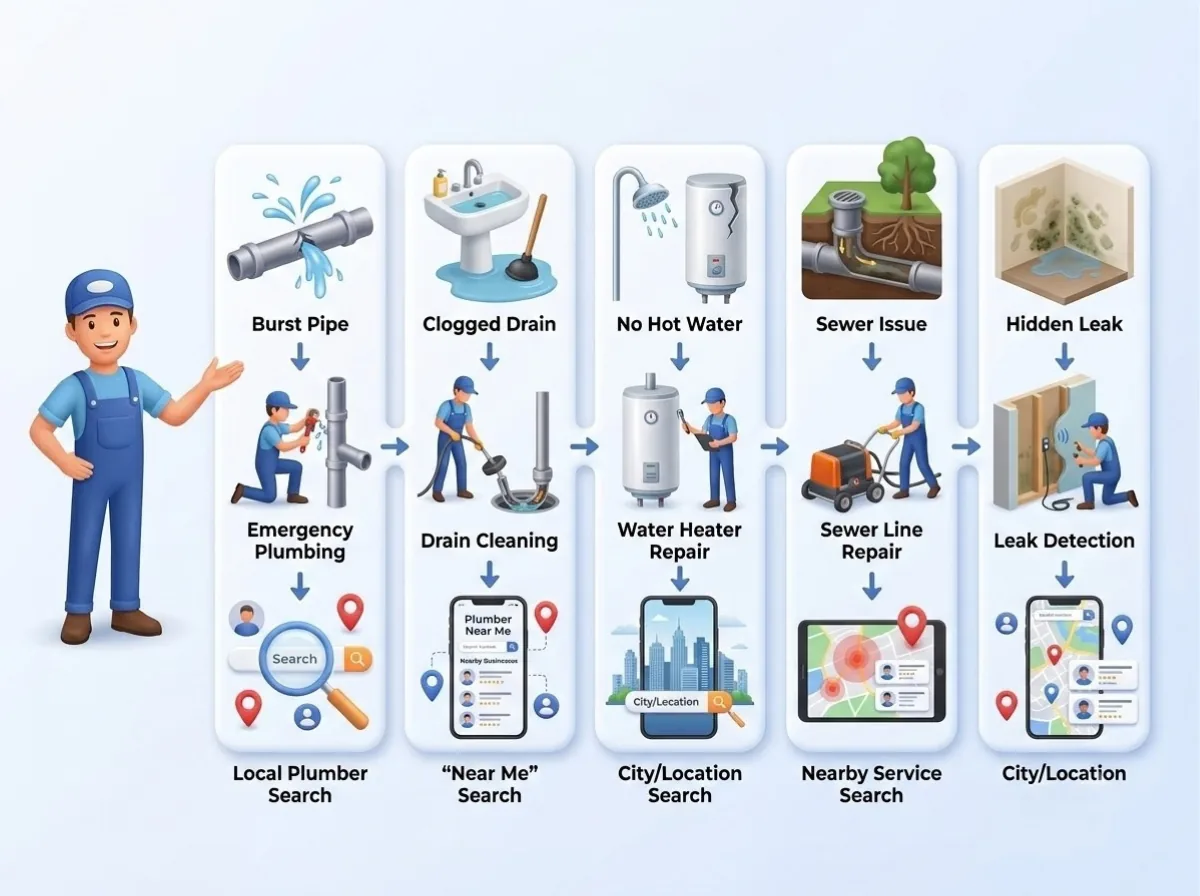
This creates a much clearer connection between the customer's problem, your service, and the location you serve.
I’ve found that problem-based searches can also reveal valuable opportunities. Customers don't always know the technical name of the plumbing service they need. They may simply search for something like “water heater making strange noises” or “sink keeps backing up.”
Creating useful content around these problems can help you capture customers earlier in their search journey.
Prioritize Keywords That Can Become Real Business
Search volume alone shouldn't determine your keyword priorities. A keyword with thousands of searches may bring traffic but very few qualified plumbing leads.
When evaluating plumber SEO keywords, I look at:
- Search intent
- Service value
- Local relevance
- Urgency
- Competition
- Conversion potential
For example, searches such as “emergency plumber near me” or “water heater repair [city]” may have stronger commercial intent than a broad informational query.
The objective is to build a keyword strategy that connects local search visibility with actual business opportunities. Once you know which searches matter most, you can create better pages, target the right locations, and make smarter SEO decisions.
That shift from simply chasing rankings to understanding lead intent is what makes a local SEO strategy much more valuable for a plumbing business.
Turn Local Visibility Into Reasons to Choose Your Plumbing Business
Getting your plumbing business to appear in local search results is a great start, but visibility alone does not guarantee plumbing leads. I’ve seen businesses rank well and still struggle to generate calls because their Google listing or website doesn't give potential customers enough confidence to take the next step. Once you earn that visibility, you need to turn it into a reason to choose your business.
Make Your Google Business Profile Work Like a Lead Channel
Your Google Business Profile is often one of the first things a potential customer sees when searching for a plumber. For someone dealing with a leaking pipe or blocked drain, this profile can influence whether they call you or keep looking.
I recommend making sure your profile clearly communicates:
- Your primary and relevant secondary categories
- The plumbing services you provide
- Accurate business hours
- Service areas
- Phone number and website
- Recent, genuine business photos
- Customer reviews
- Relevant business updates
Think of your profile as a mini landing page. If a customer can quickly understand what you do, where you operate, and how to contact you, you've removed several barriers to conversion.
It is also useful to monitor actions such as calls, website clicks, and direction requests. These Google Business Profile insights can help you understand whether local visibility is translating into customer activity.
Build Landing Pages Around Customer Problems
I prefer creating service pages around the problems customers actually experience rather than stuffing a page with every possible local SEO keyword.
For example, instead of relying only on a generic “Plumbing Services” page, you could create focused pages for:
- Emergency plumbing
- Drain cleaning
- Water heater repair
- Leak detection
- Sewer line repair
- Toilet repair
- Pipe repair
Each page should clearly explain the service, who it is for, the areas you serve, and what the customer should do next.
You can also address common questions and concerns. If someone searches for “water heater leaking near me,” they should find useful information about the problem and a clear path to requesting professional help.
This approach improves both plumber SEO and the user experience because visitors aren't forced to search through unrelated information.
Give Local Visitors a Clear Next Step
Once someone lands on your website or Google Business Profile, make contacting you easy. I always look at this from the customer's perspective: if I need a plumber right now, how many clicks would it take me to request help?
Your website should make important actions obvious, including:
- A prominent click-to-call option
- Simple contact or service-request forms
- Clear service information
- Strong but natural calls to action
- Customer reviews and testimonials
- Service-area information
- Mobile-friendly navigation
For emergency services especially, unnecessary friction can cost you a lead.
The bigger picture is simple: local search rankings get your plumbing business in front of potential customers, but your Google profile and website need to convince those customers to act. By combining local visibility with clear information, trust signals, and easy contact options, you can turn more searches into genuine local plumbing leads.
Expand Your Reach Across the Areas You Actually Serve
One mistake I often see in local SEO for plumbers is treating a service area as if it were a single point on a map. In reality, a plumbing business can be highly visible in one neighborhood and almost invisible a few miles away. If you serve several cities, suburbs, or neighborhoods, your local search visibility needs to reflect the areas where you actually want to generate business.
Understand Where Your Plumbing Business Is Actually Visible
When I evaluate plumber SEO, I don't rely on a single Google search from the business address. Local results can change depending on where the searcher is located, which means your ranking may look strong in one area and weak in another.
A better approach is to monitor visibility across different points within your service area.
Look for:
- Neighborhoods where your business consistently ranks well
- Areas where competitors dominate the local results
- Locations where your rankings are improving
- Service areas where your visibility is unexpectedly weak
- High-value areas where you want more plumbing leads
For example, imagine a plumber ranks in the top three for “emergency plumber” near their office but drops significantly in a nearby suburb. That doesn't necessarily mean the overall SEO strategy is failing. It may reveal a specific geographic opportunity that deserves attention.
This is where local rank tracking and geo-based monitoring can provide a much clearer picture than checking rankings from one location.
Find Neighborhoods Where You Are Losing Visibility
Once you understand how your rankings vary geographically, you can identify areas where competitors are getting more attention.
I like to compare locations based on a few simple questions:
| What to Check | What It Can Reveal |
|---|---|
| Local rankings | Where your business is visible |
| Competitor rankings | Who is capturing local demand |
| Search coverage | Which areas have ranking gaps |
| Service demand | Where specific services may be valuable |
| Ranking changes | Whether visibility is improving or declining |
This information can help you prioritize your next local SEO strategy rather than making changes based on assumptions.
For instance, if several competitors consistently outrank you for “drain cleaning near me” in a particular neighborhood, that area may deserve closer attention. You could review the relevant service page, local signals, reviews, and competitor positioning before deciding what to optimize.
Create Location Content That Adds Real Local Value
If your plumbing business serves multiple locations, location pages can support local plumbing SEO, but only when they provide genuine value.
A useful location page might include:
- Services available in that area
- Common plumbing problems customers experience
- Relevant service information
- Areas or neighborhoods served
- Genuine customer experiences
- Frequently asked questions
- Clear contact options
- Links to relevant plumbing services
I would avoid creating dozens of pages where only the city name changes. Search engines and customers both benefit more from unique, useful local content.
The goal isn't to create a page for every possible location simply to increase your keyword count. It is to build useful resources for the communities your plumbing business genuinely serves.
Ultimately, expanding your local reach is about understanding where you are visible, where competitors are winning, and where new opportunities exist. When you combine geographic insights with useful location content and ongoing local SEO monitoring, you can make your service-area strategy much more targeted and turn visibility gaps into potential plumbing leads.
Use Local Signals to Build Trust Before the First Call
When someone needs a plumber, they are not only looking for a business that appears in search results. They want to know whether that business is reliable, professional, and worth contacting. In my experience, local SEO for plumbers works best when visibility is supported by strong trust signals. Reviews, local reputation, and competitor insights can all influence whether a potential customer decides to make that first call.
Make Customer Reviews Part of Your Local SEO Strategy
Reviews can do more than strengthen your online reputation. They can help potential customers feel more confident about choosing your business when several plumbers appear in the same local search results.
I recommend making review generation a consistent part of your customer follow-up process rather than asking for reviews only when you remember.
Focus on:
- Asking satisfied customers for honest feedback
- Making the review process simple
- Monitoring new reviews regularly
- Responding professionally to positive and negative feedback
- Looking for recurring customer concerns or compliments
- Using customer feedback to improve your service experience
For example, if customers repeatedly mention that your technicians arrive quickly or explain repairs clearly, those comments can help you understand what differentiates your plumbing business.
It is important to keep review requests genuine and permission-based. The goal is to collect authentic customer experiences, not manufacture positive feedback.
Respond to Reviews Without Sounding Automated
I also pay attention to how businesses respond to reviews. A generic response such as “Thank you for your feedback” may technically acknowledge the customer, but it does little to demonstrate that someone is actually paying attention.
A better response should be relevant to the customer's experience.
For positive reviews, you can acknowledge the specific service or experience they mentioned. For negative reviews, respond professionally, avoid arguing publicly, and provide an appropriate way to continue the conversation privately.
This can help strengthen your local business reputation while showing future customers that you take feedback seriously.
If managing a growing number of reviews becomes difficult, tools that help draft personalized responses can make the process more manageable while keeping the final response under your control.
Watch the Competitors Winning Your Local Searches
Trust isn't built in isolation. I also recommend looking at the plumbing businesses appearing alongside you in Google Maps and local search results.
Instead of simply asking, “Who is my competitor?” ask:
“Which businesses are consistently winning the searches and locations I care about?”
Compare factors such as:
- Customer reviews and ratings
- Services and categories offered
- Local Maps visibility across target areas
- Reputation and review response quality
Your competitor analysis becomes more useful when you look beyond rankings alone. Review how competing plumbing businesses perform across reviews, services, local visibility, and reputation to understand what may be helping them attract customers in your target areas.
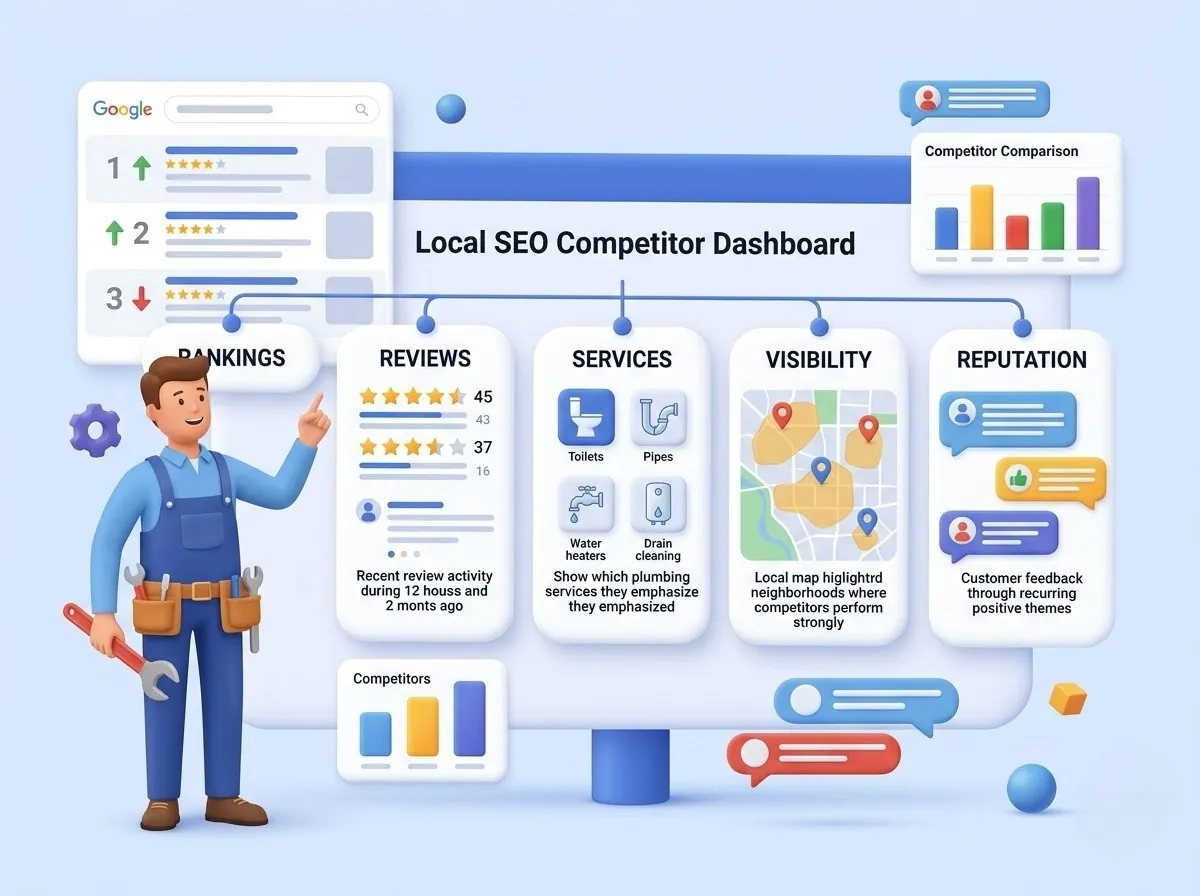
This type of competitor analysis can reveal opportunities you may otherwise miss. If another plumbing company consistently outranks you in a valuable area, examine what they are doing well before deciding how to respond.
Ultimately, local SEO is not just about getting your plumbing business seen. It is about giving potential customers enough confidence to choose you. By combining authentic reviews, thoughtful responses, strong local reputation, and ongoing competitor monitoring, you can turn local search visibility into stronger trust and more opportunities for qualified plumbing leads.
Measure Local SEO by Leads, Not Rankings Alone
One of the biggest mistakes I see in local SEO for plumbers is treating rankings as the final goal. Rankings matter, but they only tell you whether your business is becoming more visible. They don't necessarily tell you whether that visibility is producing phone calls, service requests, or paying customers. I prefer to look at the complete journey, from local search rankings to customer action, so I can understand which parts of the strategy are actually contributing to business growth.
Track the Local SEO Metrics That Matter to Plumbers
Before making changes to your plumber SEO strategy, decide which metrics will help you understand performance. I usually separate visibility metrics from lead-generation metrics because both tell a different story.
| Metric | What It Tells You |
|---|---|
| Local keyword rankings | Where your business appears for important searches |
| Google Maps visibility | How often you appear in local results |
| Google Business Profile actions | Whether searchers engage with your listing |
| Website clicks | Whether local searchers visit your website |
| Phone calls | Whether visibility is generating direct inquiries |
| Form submissions | Whether visitors are requesting information or service |
| Direction requests | Whether customers are showing local intent |
| Lead conversion rate | How effectively traffic becomes leads |
For example, if your rankings improve but phone calls remain unchanged, I wouldn't immediately celebrate the ranking increase. I would investigate whether you're appearing for the right search intent, whether your profile is convincing enough, and whether your website makes contacting you easy.
Compare Ranking Movement With Customer Actions
This is where local SEO reporting becomes much more useful. Instead of reviewing rankings in isolation, compare them with customer activity over the same period.
Consider these scenarios:
| Scenario | What to Investigate |
|---|---|
| Rankings improve but calls stay flat | Search intent match, profile persuasiveness, and contact friction |
| Visibility and actions grow together | Which keywords, areas, and pages drove the lift |
| Rankings dip but leads hold steady | Whether high-intent areas still convert and where competitors shifted |
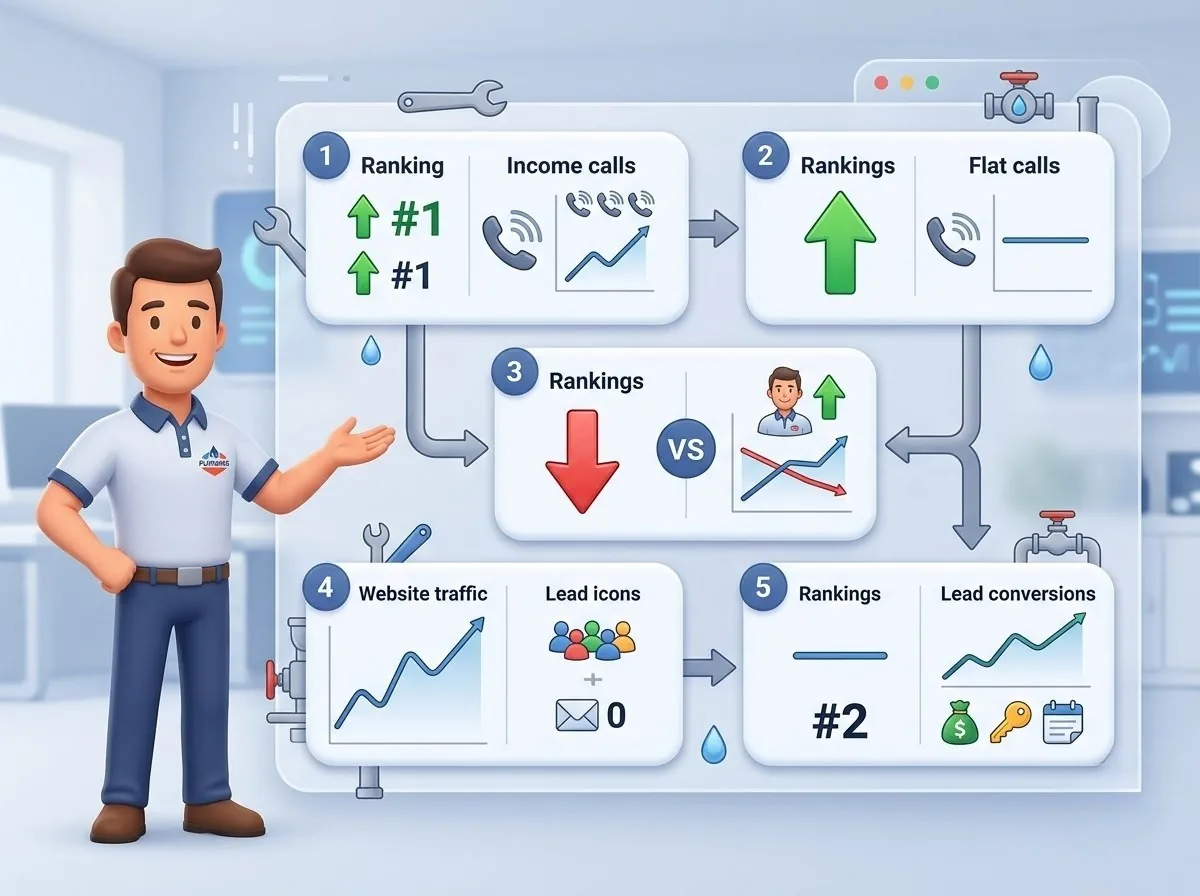
I've found that this approach creates better questions. Instead of asking, “Why didn't my ranking increase?” you can ask, “Why aren't these additional impressions producing more plumbing leads?”
That is a much more useful business question.
Turn Local SEO Data Into Your Next Action
The final step is turning your data into decisions. I like to keep the process simple:
For example, if a plumber performs well around their main location but has weak visibility in a valuable service area, the next step might be reviewing geographic coverage and relevant local pages. If rankings are strong but calls are low, the focus may need to shift toward Google Business Profile optimization, website conversion elements, or trust signals.
Tools such as HappyRank can make this ongoing process easier by helping businesses monitor local rankings, competitor movement, Google Business Profile activity, and performance trends in one place.
The real value of local SEO for plumbing businesses comes from continuous improvement. When you measure what is happening, identify where performance is weak, and use that information to guide your next optimization, you're no longer treating SEO as a one-time task. You're building a repeatable system designed to turn local search visibility into more qualified leads and better business opportunities.
Conclusion
Getting more plumbing leads from search isn't just about ranking for “plumber near me.” As we’ve discussed, effective Local SEO for Plumbers starts with understanding search intent, targeting valuable local keywords, improving your Google Business Profile, strengthening service-area visibility, building trust through genuine reviews, and tracking the actions that turn visibility into plumbing leads.
The real opportunity comes from consistently measuring what works and improving where your local search rankings or conversions fall short. That’s where HappyRank can help you monitor local performance, competitor movement, and customer actions, giving you clearer insights into what to optimize next.
So, instead of asking whether your plumbing business is visible online, ask a better question: Is your local visibility bringing you more customers?
Frequently asked questions
What local SEO matters most for plumber leads?
Focus on high-intent searches like emergency, service, and location queries, match them to specific services you offer, and prioritize keywords by intent, urgency, service value, and conversion potential rather than search volume alone.
How does a Google Business Profile generate plumbing leads?
A complete profile with correct categories, services, hours, service areas, phone, photos, reviews, and updates acts like a mini landing page, helping customers understand what you do, where you operate, and how to call quickly.
Should plumbers create separate service and location pages?
Yes. Build focused pages for emergency plumbing, drain cleaning, water heater repair, leak detection, and other core services, plus useful location pages for areas you genuinely serve with services, FAQs, and clear contact options.
How do reviews affect plumber local SEO and trust?
Reviews help you stand out when several plumbers rank together. Ask satisfied customers consistently, monitor and respond personally to positive and negative feedback, and use recurring compliments to understand what differentiates your business.
How should plumbers measure local SEO success?
Measure leads, not rankings alone. Track local keyword rankings and Maps visibility alongside calls, website clicks, form submissions, direction requests, and conversion rate, then compare ranking movement with customer actions over the same period.