
Get More Restaurant Customers With Local SEO
Restaurants win more customers with local SEO by optimizing their Google Business Profile, targeting local restaurant keywords, earning and responding to reviews, improving Google Maps visibility with geo-grid tracking, keeping business information consistent, and measuring calls, direction requests, reservations, and orders alongside rankings.
Ever wondered why some restaurants seem to appear everywhere when customers search for places to eat nearby? A strong menu and great food matter, but customers first need to find your restaurant online. That is where local SEO for restaurants comes in.
In this guide, we explore how restaurant local SEO improves local search visibility, helps you appear in Google Maps, attracts customers through location-based searches, and turns online searches into real visits, calls, orders, or reservations. We cover optimizing your Google Business Profile, targeting local keywords, managing restaurant reviews, improving your website, tracking competitors, and measuring local rankings, and how tools like Happy Rank help you understand where your business stands and where there is room to improve.
What Is Local SEO for Restaurants?
When I talk to restaurant owners, I start with a simple question: what happens when someone nearby searches for the type of food you serve? If your restaurant does not appear prominently, that customer may never know you exist. Restaurant local SEO is the process of improving your online presence so you appear in relevant local search results, Google Maps, and location-based searches, combining your Google Business Profile, website, reviews, business information, and other local signals. Customers search for 'Italian restaurant near me', 'best restaurants in New York', 'pizza near me', 'brunch restaurants near me', or 'family restaurant in Canton', and that local intent means SEO is not simply a website exercise: how you appear across the whole local ecosystem matters.
Why Local SEO Matters for Restaurants
Think about the last time you searched for a restaurant: you checked a few businesses in Google Maps, looked at ratings, browsed photos, checked the menu, and compared locations. A strong local presence helps you appear for relevant 'near me' searches, improve Google Maps visibility, reach customers searching specific cuisines or dishes, build trust through reviews, make menus, hours, locations, and contact details easy to find, and encourage calls, directions, reservations, orders, or website visits. Rankings are not the same everywhere, either: you might rank very well close to your business but much lower in another neighborhood, so simply checking whether you 'rank' is not enough. You need to know where you rank across the areas you serve, a geographic perspective that reveals opportunities a standard ranking check misses.
10 Local SEO Strategies Restaurants Can Use to Get More Customers
Restaurants get better results focusing on a few practical improvements consistently rather than optimizing everything at once. These strategies strengthen visibility, make your restaurant easier to evaluate, and bring more nearby customers through the door.
1. Optimize Your Google Business Profile
Your Google Business Profile is often the first thing customers see, so check the basics first using a Google Business Profile optimization checklist: business name, category, address, phone, website, hours, menu, photos, and attributes should all be accurate and current.
2. Target Local Restaurant Keywords
Build your keyword strategy around how people actually look for food: 'Italian restaurant in Canton', 'pizza near me', 'best brunch in Los Angeles', 'restaurants near me', and 'family restaurant near me'. Use these phrases naturally across your website rather than forcing keywords into every paragraph.
3. Make Your Menu Search-Friendly
Your menu supports SEO when important information is accessible online. Include clear details about popular dishes, cuisine, dietary options, specialties, meal types, and seasonal offerings so customers discover relevant choices through local searches and can quickly decide whether your restaurant fits what they want.
4. Build and Manage Restaurant Reviews
Reviews are one of the first trust signals I notice when comparing listings. Consistently request genuine reviews, respond professionally, thank customers for positive feedback, address concerns constructively, and monitor recurring feedback. Strong reviews make a listing more convincing, so learn how to get more Google reviews and reply well, including AI-assisted review replies where appropriate. When handling negative Google reviews, stay constructive and solution-focused.
5. Improve Your Google Maps Visibility
For restaurants, Google Maps visibility directly influences discovery: customers search nearby, compare businesses, check directions, and explore profiles without visiting your website first. Maps rankings vary by searcher location, so follow a Google Maps ranking strategy for 2026 and track geographic differences to reveal where visibility is strong and where it needs work.
6. Create Useful Local Content
Give Google and customers more context with genuinely useful local content instead of publishing for keywords: local dining guides, neighborhood dining options, cuisine-specific topics, seasonal dining, special occasions, dietary preferences, and local events. The goal is answering questions potential customers already ask.
7. Keep Your Local Business Information Consistent
Small inconsistencies create unnecessary confusion, so keep your name, address, phone, hours, website, and menu links consistent across your website, Google Business Profile, and directories, following citation and NAP consistency best practices. Regularly verify details so customers can easily contact or visit you:
| Information | What to Check |
|---|---|
| Business name | Use the correct business name |
| Address | Keep location details accurate |
| Phone | Use the correct contact number |
| Hours | Update holiday and seasonal hours |
| Website | Link to the correct page |
| Menu | Keep menu links current |
8. Use Photos and Google Business Profile Updates
Restaurants have a major advantage because food is highly visual. Regularly showcase authentic, high-quality food and dish photos, interior and exterior images, new menu items, seasonal dishes, events, and business updates rather than relying on one outdated photo. Fresh visual content makes your listing more appealing when customers compare options.

9. Track Local Competitors
Look at restaurants competing for the same customers and examine their visibility, reviews, categories, keywords, and presence across neighborhoods. The goal is not copying them but identifying gaps you can address more effectively.
10. Measure Customer Actions, Not Just Rankings
Rankings are useful but not the final goal; what matters is whether visibility encourages action. Track website visits, phone calls, direction requests, menu visits, reviews, reservations, online orders, and local ranking changes together. A move from page two to the top of local results is progress, but the real question is whether it generates meaningful customer activity, which is exactly what measuring local SEO ROI is about.
How Restaurants Can Build Stronger Google and Local Search Visibility
Getting listed is only the starting point; the bigger challenge is building a consistent presence that helps customers discover, evaluate, and choose you across Google Maps, your website, reviews, and local results. Treat your Google Business Profile as an extension of your restaurant: verify name and primary category, address and service area, opening and holiday hours, phone and website, menu and ordering information, relevant attributes, high-quality photos, and recent reviews, and keep it active with seasonal dishes, hour changes, and events. A complete profile does not guarantee the top position, but it gives Google and customers reliable information and reduces friction between discovery and visiting.
Use Geo-Grid Tracking to Understand Local Rankings
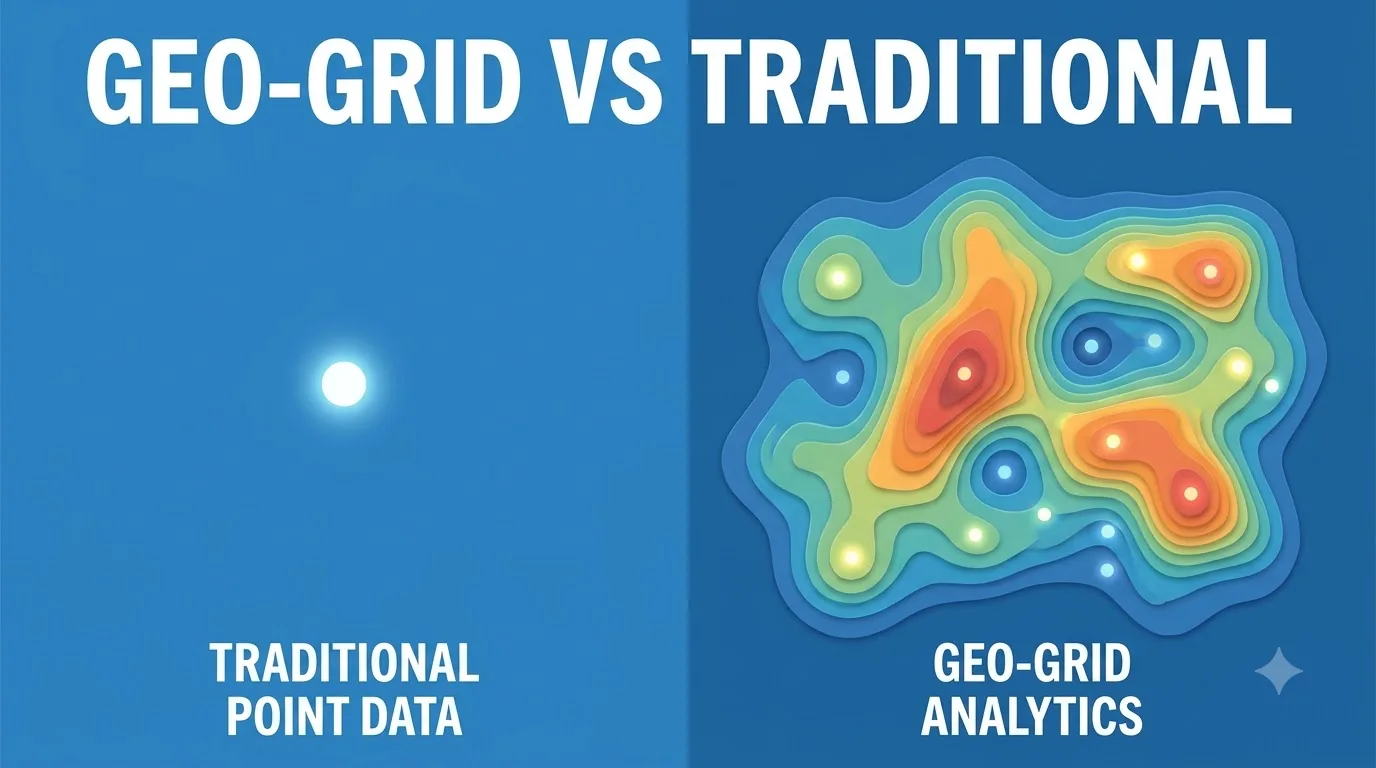
Local rankings are geographic: you may rank very well two blocks away but completely differently several miles away. Geo-grid tracking shows performance across multiple points in a defined area, revealing strong rankings around your restaurant, weaker nearby neighborhoods, competitors dominating specific areas, keywords where you excel, and zones needing optimization. Knowing where a '#3 ranking' actually exists is far more actionable than the number alone, as confirmed by independent research like the Whitespark Local Pack study.
Make Your Website and Reviews Work Together
Your profile helps customers discover you while your website provides what they need to decide: location, hours, menu, cuisine and specialties, contact information, reservation or ordering options, parking or accessibility details, and local dining experiences, all mobile-friendly so phone searchers find your menu without pinching or zooming. Mention city, neighborhood, cuisine, and services naturally without stuffing repetitive location keywords. Then turn visibility into trust with recent genuine reviews, professional responses, accurate information, current photos, clear menu details, consistent contact data, and helpful content, because visibility gets customers to your listing but trust helps them choose you.
How to Measure Restaurant Local SEO and Find Growth Opportunities
Once you invest in local SEO, ask whether it actually works: are more people discovering your restaurant, visiting your website, calling, or asking for directions? Look beyond position to search visibility, website visits, calls, directions, menu views, reviews, reservations, and orders together, since a small ranking improvement plus more direction requests and visits beats position alone.
| Area | What to Analyze |
|---|---|
| Rankings | Where competitors appear for important local searches |
| Reviews | Rating, volume, recency, and customer feedback |
| Google Maps | Visibility across nearby locations |
| Categories | Primary and relevant business categories |
| Keywords | Searches where competitors appear prominently |
| Content | Topics, services, and location information they cover |
You compete most directly with businesses targeting the same customers, cuisine, neighborhoods, and occasions, so compare their rankings, reviews, Maps visibility, categories, keywords, and content for gaps: perhaps a rival dominates one neighborhood but is weak elsewhere, or has many reviews but outdated content. Keep the process straightforward: Find, Analyze, Prioritize, Optimize, Track, Improve. If rankings improve but actions stay flat, your photos, reviews, menu, website experience, or calls to action may need attention rather than visibility itself. Good reporting explains what is happening, why, and which optimization deserves attention next.

Common Restaurant Local SEO Mistakes and How to Avoid Them
Most problems come from outdated information, inconsistent optimization, or treating local SEO as a one-time task rather than one major failure. Watch for inaccurate GBP categories, outdated holiday hours, inconsistent name, address, or phone data, ignored reviews, poor or outdated photos, relying entirely on 'near me' keywords, inaccessible menu information, ignored mobile users, single-location rank checks, and thin repetitive location pages. I often see restaurants celebrate one top-three ranking while overlooking poor visibility elsewhere, so run a regular local SEO audit and treat optimization as a cycle: optimize, monitor, compare with competitors, improve, and repeat as behavior, competitors, reviews, seasons, and rankings change.
Frequently asked questions
What is local SEO for restaurants?
Restaurant local SEO improves your online presence so your restaurant appears in relevant local search results, Google Maps, and location-based searches. It combines your Google Business Profile, website, reviews, business information, and other local signals to help search engines understand where you are and what you serve.
Why does Google Maps visibility matter so much for restaurants?
Diners compare Maps listings, ratings, photos, menus, and directions in seconds before choosing. Maps rankings also vary by searcher location, so tracking geographic visibility with geo-grid data reveals which neighborhoods you win and where competitors dominate.
How do reviews help restaurants get more customers?
Reviews are a first trust signal when diners compare nearby options. Consistently requesting genuine reviews, responding professionally, thanking customers, addressing concerns, and monitoring recurring feedback make listings more convincing and highlight operational strengths or issues.
What metrics should restaurants track beyond rankings?
Track website visits, phone calls, direction requests, menu views, reviews, reservations, online orders, and local ranking changes together. A small ranking gain combined with more direction requests and visits is a stronger success signal than position alone.
What are common restaurant local SEO mistakes?
Common mistakes include inaccurate GBP categories, outdated holiday hours, inconsistent name, address, and phone data, ignoring reviews, poor photos, relying only on 'near me' keywords, hidden menu information, ignoring mobile users, checking rankings from one location, and thin location pages.